
Your agent needs to read and write Google Sheets. Until recently that meant the Sheets API v4 and nothing else. Google now ships a first-party remote MCP server for Sheets, alongside dedicated servers for Gmail, Drive, Docs, Slides, Calendar, and Chat. Both paths work. They are not interchangeable, and the difference that matters most for production agents is not in the tool list.
Two objects, two different maturity levels. The MCP server is months old and gated. The API has been the spreadsheet integration surface for a decade.
Google's Sheets MCP server is a Google-hosted remote endpoint at sheetsmcp.googleapis.com/mcp/v1, transported over HTTP, authenticated with OAuth 2.0. You enable two services in a Google Cloud project: sheets.googleapis.com and sheetsmcp.googleapis.com. Then you register your own OAuth client and point an MCP host at the endpoint.
Tool calls run as the authenticated user and inherit that user's Drive and Sheets permissions. Official reference: the Sheets MCP server guide at developers.google.com/workspace/sheets/api/guides/configure-mcp-server.
The Sheets API v4 is a compact REST surface at sheets.googleapis.com: 17 methods across four resources. spreadsheets covers create, get, getByDataFilter, and batchUpdate. spreadsheets.values covers ten methods including append, batchGet, batchUpdate, and the data-filter variants. Two more resources handle developerMetadata and sheets.copyTo.
Auth accepts any Google OAuth credential: Authorization Code per user, or a service account with domain-wide delegation for headless work. Official reference: developers.google.com/workspace/sheets/api/reference/rest.
The MCP server ships under the Google Workspace Developer Preview Program. Enrollment is an application form tied to a specific Workspace account and Google Cloud project, with a turnaround measured in days. Service accounts cannot be enrolled.
The program terms are the part to read closely. Preview features may not be included in public applications before the general availability announcement, and members may not grant end users outside their own domain or company access to applications built on pre-GA APIs. For an internal agent, that is fine. For a B2B product, it is a hard stop.
Four dimensions decide this: what the agent can call, what auth path you inherit, what you operate, and what the quota costs you.
The naive read of "six tools versus seventeen methods" is wrong. update_spreadsheet is a wide envelope, so mutation coverage is close to parity. The gaps sit in reads, creation, and discovery.
update_spreadsheet maps to spreadsheets.batchUpdate and accepts 69 documented request types, from addChart and setDataValidation to addSlicer and refreshDataSource. Anything the batch endpoint can do, the MCP server can do.
The cost is that the model authors the request JSON. Instead of calling a tool named for the action, it constructs a repeatCell request with a nested cellFormat and a fields mask. That is a tool calling accuracy problem wearing a capability disguise. Wrong mask, silent no-op. Wrong index base, wrong cells.
Every MCP tool takes a spreadsheet ID. None of them resolves a name. Google's own Sheets test prompt uses a literal ID; the cross-product prompt that starts from a spreadsheet title routes through drive.search_files on the Drive MCP server first.
So a working Sheets agent registers two Developer Preview servers, or three once Google's separate Universal Search MCP server enters the picture. Multi-server composition is the default case, not the edge case.
The MCP server is OAuth 2.0 only, and you bring your own client ID and secret with a redirect URI that matches the host. Google documents a distinct callback path per client: one for Antigravity, another for Claude, where adding the custom connector also requires an Enterprise, Pro, Max, or Team plan.
The API takes the same Authorization Code grant and adds the option that matters for background work: a service account with domain-wide delegation, no browser, no user present. The preview program will not register a service account, which pushes headless Sheets agents toward the API by construction.
Google's setup guide has you add four scopes for the Sheets MCP server: drive.readonly, drive.file, spreadsheets.readonly, and spreadsheets.
Those are not equivalent in verification terms. Google classifies spreadsheets and spreadsheets.readonly as Sensitive, which means justification and a demo video. It classifies drive.readonly as Restricted, and storing or transmitting Restricted-scope data on your servers requires a third-party security assessment. drive.file is the only non-sensitive one in the set. If you can serve your use case with drive.file and spreadsheets, do that, and keep the Restricted scope out of your consent screen.
Both paths draw on the same budget: 300 read requests and 300 write requests per minute per project, and 60 of each per minute per user per project. Each MCP tool call bills as exactly one read or one write.
The asymmetry is in batching. A batch request, including every subrequest inside it, counts as one API request. Reading eight named ranges through values.batchGet is one unit; reading them through get_values is eight. For a reporting agent looping over 40 tabs, that is the difference between staying inside the per-user ceiling and hitting 429 mid-run.
Standard Sheets API use is free today. Google has stated that exceeding quota limits is planned to generate Google Cloud billing charges later in 2026, under its standardized tiering model for Workspace agent tools and APIs. Quota adjustments already landed for Gmail, Calendar, and Drive in May 2026.
Versioning cuts the other way. The API is pinned at v4 and has been stable for years. MCP tool schemas are a managed contract on a preview cadence you do not control. For a deterministic pipeline where an unannounced schema change is an incident, that distinction is the whole argument. The broader tradeoffs between these approaches are explored in the difference between MCP and APIs.
Nothing in the Sheets API v4 surface subscribes to anything. There is no watch method and no event resource. The MCP server has no event surface either.
Change signals come from the Drive layer: Google Workspace Events API subscriptions on Drive resources are generally available and deliver file-edited events through Cloud Pub/Sub. Those events tell you a spreadsheet changed, not which cell. Cell-level diffing still means reading the sheet and comparing.
The split is cleaner here than for most tools, because the preview gate does most of the deciding for you.
Naming it plainly: both paths hand you a token per user and then stop.
Google gives you the right security posture. Every call runs as the authenticated user, constrained by that user's Drive sharing and Sheets permissions. What the user can't do, the agent can't do. That is the model an enterprise security reviewer wants to see, and it is the same on both paths.
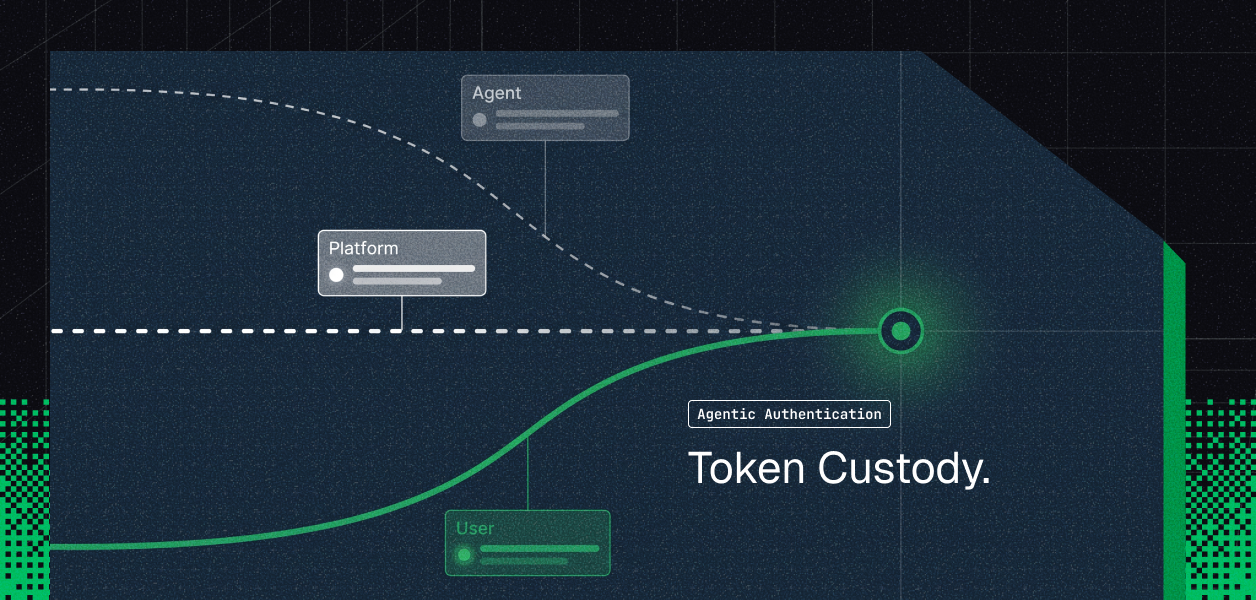
Google does not store, refresh, rotate, or revoke those tokens on your behalf. Forty customers means forty Google refresh tokens, encrypted at rest, isolated per tenant, and never written to a log. Access tokens expire on Google's one-hour cadence. Refresh tokens get revoked from a user's account settings with no notification to you, and your agent finds out through a 401 mid-run.
Refresh has to be proactive. Waiting for the 401 creates a race where several agent threads attempt refresh at once, each unaware of the others. That failure mode is identical whether the token came from an MCP consent flow or a direct API grant. The patterns behind handling token refresh for AI agents apply equally to both paths.
Scalekit's Google Sheets connector runs the per-user OAuth flow, vaults the tokens, refreshes them, and injects the right credential at execution time. Credentials never touch the agent runtime or the LLM context. The connector ships 48 tools over the Sheets API, so the surface is decomposed into named actions rather than one batch envelope.
The setup is one connection per environment and one connected account per user. Prerequisites: a Google Cloud project with the Sheets API enabled, and a connection created in the Scalekit dashboard under AgentKit and Connections.
The connection_name string in code must match the connection name in the dashboard character for character. That mismatch is the single most common integration error.
Before the tool code, the distinction worth being precise about: this is not loading a connector catalog. list_scoped_tools returns the tools this specific user's connected account is authorized to call, and the Google Sheets connector has 48 of them. Handing all 48 to the model is roughly 9,600 tokens of schema before the agent does any work, and a decision space no model handles well.
An allowlist is how a reporting agent narrows that to five.
Scalekit's LangChain adapter wraps the same scoped surface as StructuredTool objects, each bound to the caller's connected account at construction time. No Google token enters agent code or model context.
For a deterministic pipeline where the model is not choosing anything, call the tool directly. Same connected account, same vaulted credential.
Some Sheets endpoints have no named tool in any library, and the data-filter methods are the usual case. The connector's proxy request path sends an authenticated call to the raw API using the same connected account, so you do not fall back to managing a token yourself.
Three things carry the weight here: composition across servers, per-user isolation without per-user infrastructure, and an accountability record after the fact.
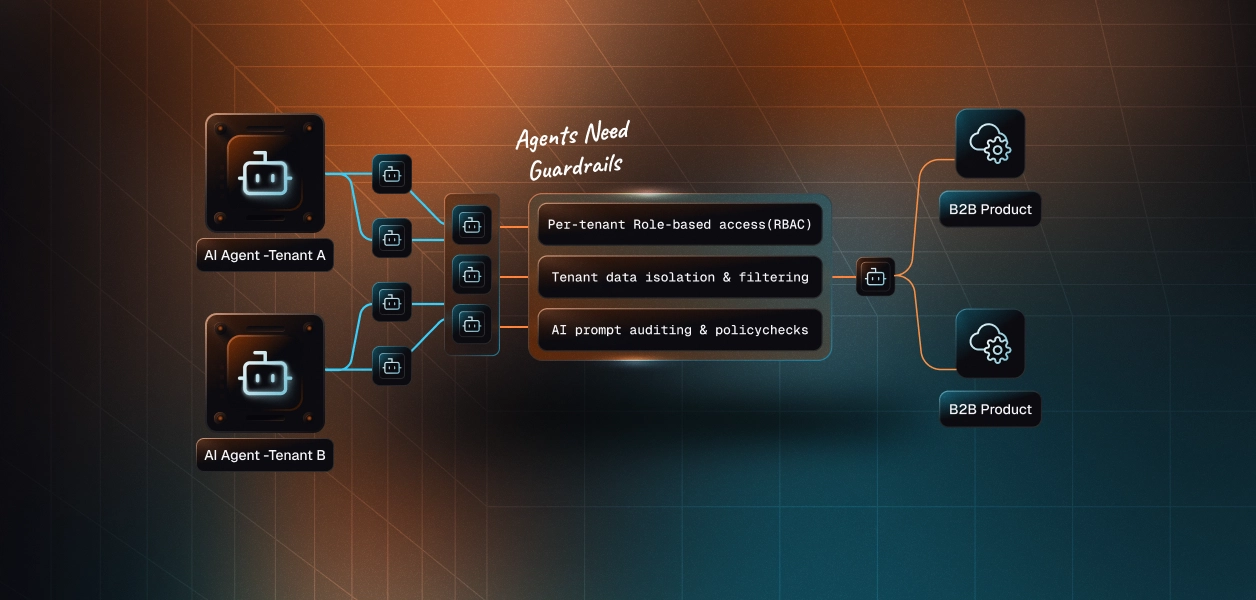
Google's model is one MCP server per product, so a Sheets agent that also touches Drive and Slack is three endpoints, three OAuth clients, three consent flows, and every tool on all three exposed to the model. Scalekit's Virtual MCP servers invert that: you declare the connections and the exact tools once per agent role and get one static mcp_server_url.
Per-user isolation runs through session tokens. One server definition serves every user, and each run gets a short-lived token scoped to that user's connected accounts.
Before each run, confirm the user's connections are still active, then mint the token.
A misconfigured database query leaks data passively. A misconfigured spreadsheet agent overwrites a range. The question afterwards is who authorized the call and which user's credential it ran under, and Google's OAuth log events answer neither at tool granularity.
Scalekit's downstream tool call logs carry that attribution on every entry: the authorizing user, the agent that ran it, the tool, and the response, exportable to your SIEM with failures separated by source. More on the reasoning in agent tool observability and audit-grade access control for multi-tenant agents.
Forty-eight Sheets tools in context is an accuracy problem and a cost problem at once. The model picks googlesheets_update_values when it needed googlesheets_append_values, and you pay for the schema on every turn.
Scoping to the five tools a revenue tracker actually calls cuts the schema overhead by roughly 80% and shrinks the decision space to what is relevant for this user and this task. The fix is not better prompting. It is surface reduction. Model upgrades help; they are not the lever. Related reading: how tool calling auth changes when you move from single-tenant to multi-tenant and what an MCP gateway is and when to use one.
For most tool comparisons the answer depends on the use case. Here the preview gate settles it, and what is left over is a credential decision.
If the agent stays inside your own Workspace domain and a human is present, the Sheets MCP server is the faster route, and Google's permission inheritance is worth having. Register the Drive server alongside it and accept that both are pre-GA and unversioned.
If you ship to customers, the decision is already made. The preview terms exclude external end users until general availability. The API is also where creation, cross-file sheet copying, data-filter targeting, service-account execution, and quota-efficient batch reads live.
Forty tenants means forty Google grants to vault, refresh, and revoke, plus a tool call record that survives an audit. Neither path gives you that. It is infrastructure, and it deserves a deliberate decision rather than accretion.
Start with the Google Sheets connector docs, the Google Sheets agent connector overview, and the full connector catalog. Building across Workspace? The same pattern applies in Google Drive MCP vs API and Google Calendar MCP vs API. Volume estimates live on the pricing page.
Spreadsheet agents fail in specific ways: an off-by-one row index, a fields mask that silently no-ops, a refresh token revoked three weeks ago that nobody noticed.
Bring yours to the Scalekit Slack community and compare notes with people running the same connectors in production. If you are working against a deadline and want an engineer on it directly, use Talk to us. Want a running starting point instead? The revenue forecast commentary agent and CRM AI agent templates both read and write structured data on a user's behalf.