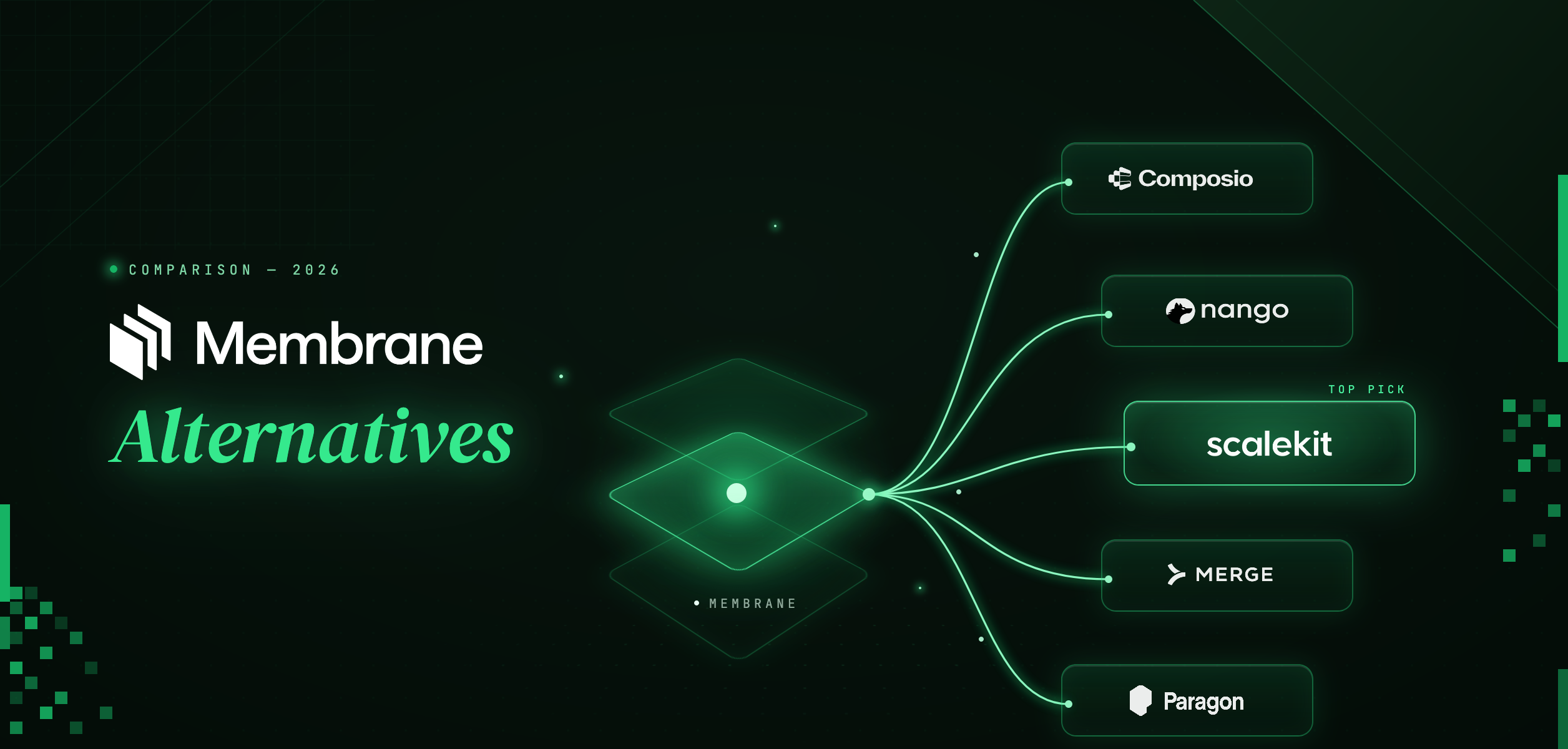


Every other platform in this category — pre-built catalogs, code-first repos, embedded iPaaS — shares one assumption: a human decides, ahead of time, which integrations exist and what their tools look like. Membrane's bet rejects that assumption directly. Point an agent at software it's never seen before, and Membrane lets it read the documentation and generate a standardized MCP server for that tool on the spot — no pre-built connector, no engineer writing a function ahead of time.
The real question isn't whether dynamic tool generation is impressive — it clearly is. It's whether a tool an agent generated for itself, at runtime, from documentation it read a moment earlier, is something you'd want sitting between a customer's credentials and their production data without a human ever having reviewed it.

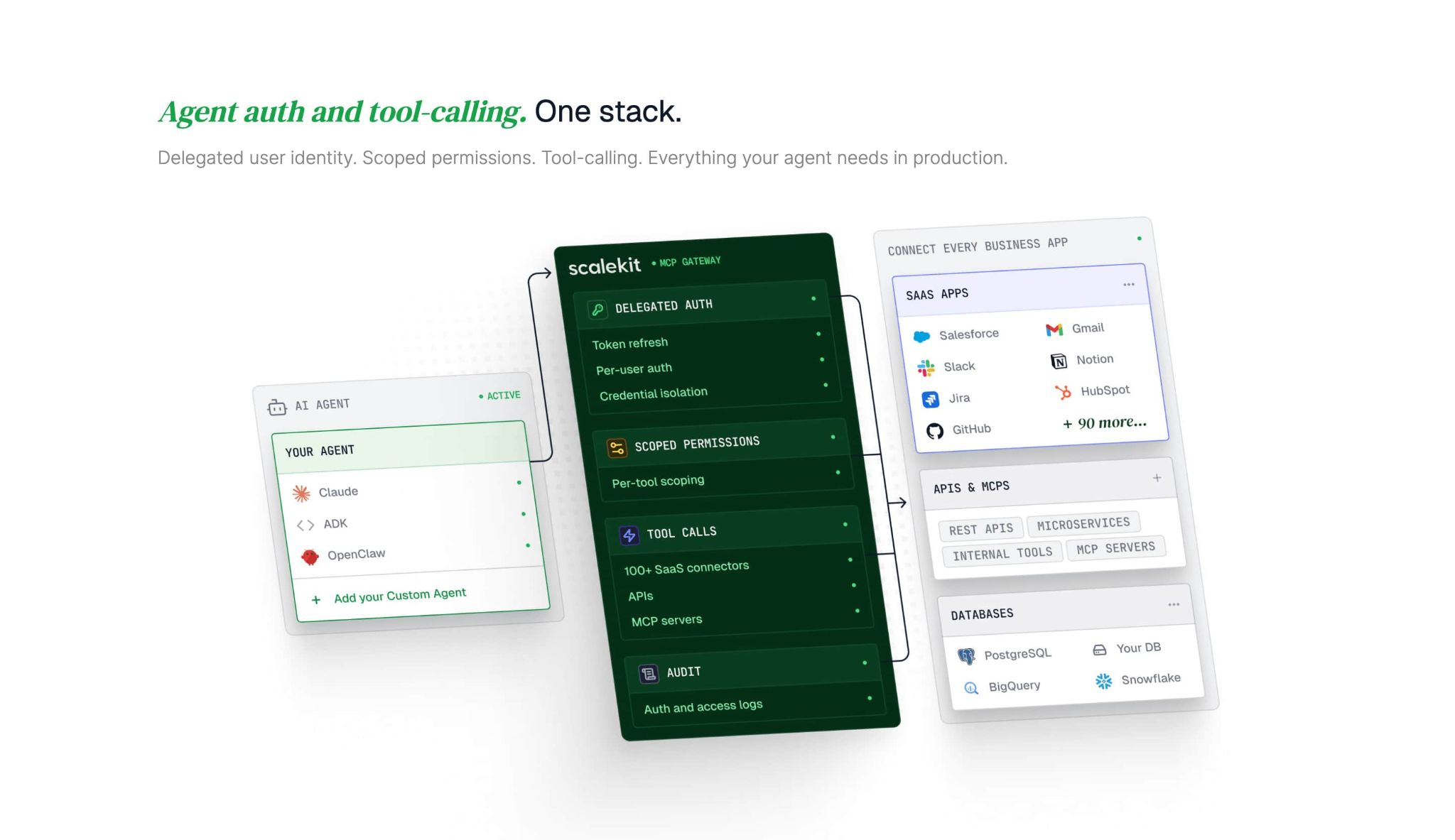
Where Membrane bets on agents generating their own tools at runtime, Scalekit bets on the opposite discipline: every connector is built, reviewed, and maintained deliberately, with authorization enforced the same way — per-connector, per-org scope configuration, verified before the API is ever touched — regardless of which connector or which tenant is calling.
Where it directly answers Membrane's biggest risk: every tool is reviewable, versioned, and behaves identically for every tenant calling it — the opposite of a tool generated fresh per encounter. Every call resolves a credential from an AES-256 encrypted, per-tenant vault, and the full delegation chain logs natively and streams to your own SIEM.
Virtual MCP Servers scope a single endpoint to exactly the tools an agent role needs, with a fresh session token per run — a deliberate, reviewable scope, not a generated one.
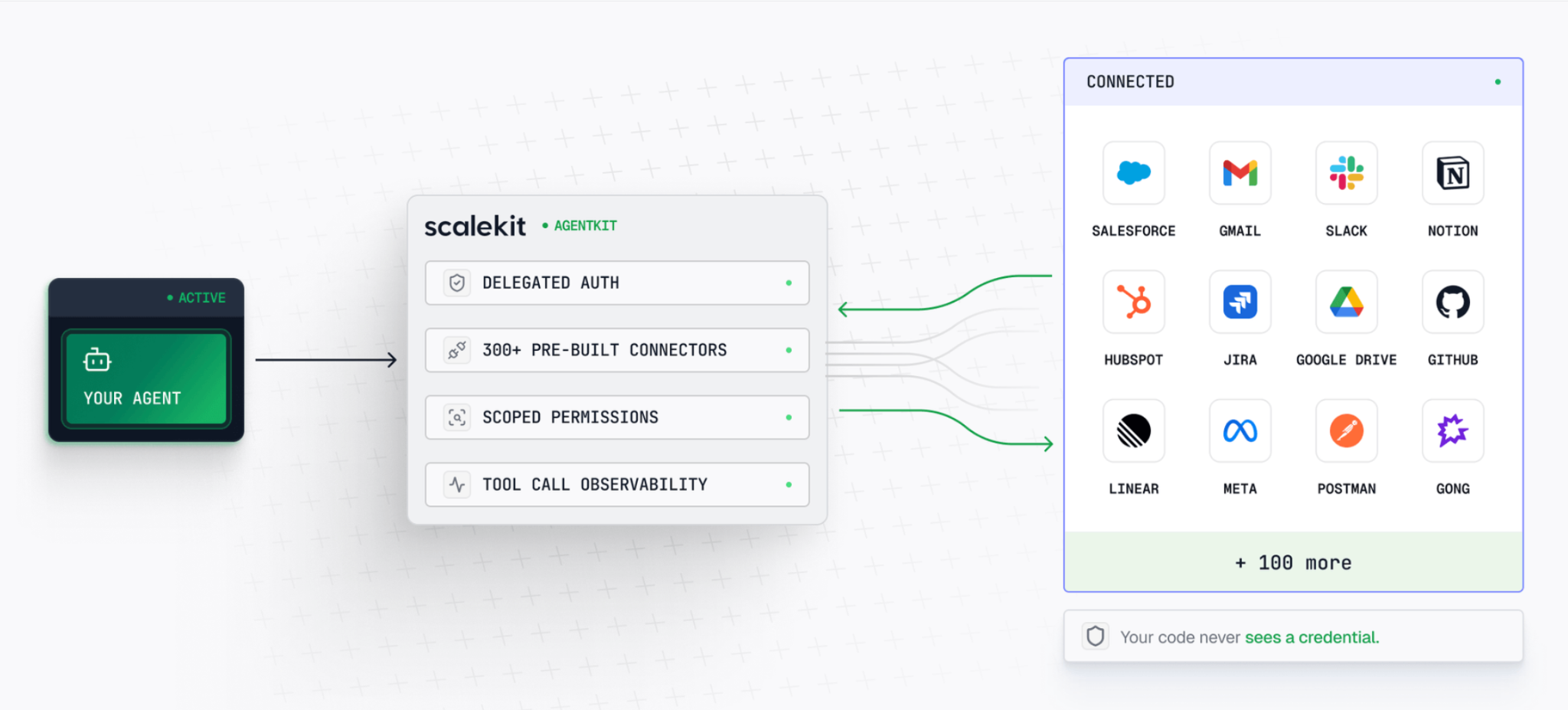
Where the trade-off runs the other way: Membrane's core bet — an agent can integrate with software nobody's configured before — is a real capability Scalekit doesn't have at all. If your product genuinely needs to connect to long-tail or unpredictable software a fixed catalog can't anticipate, that's Membrane's advantage to make, not something a 500+-connector catalog answers by being larger.
Deployment: cloud-managed, VPC, or fully on-prem/air-gapped.
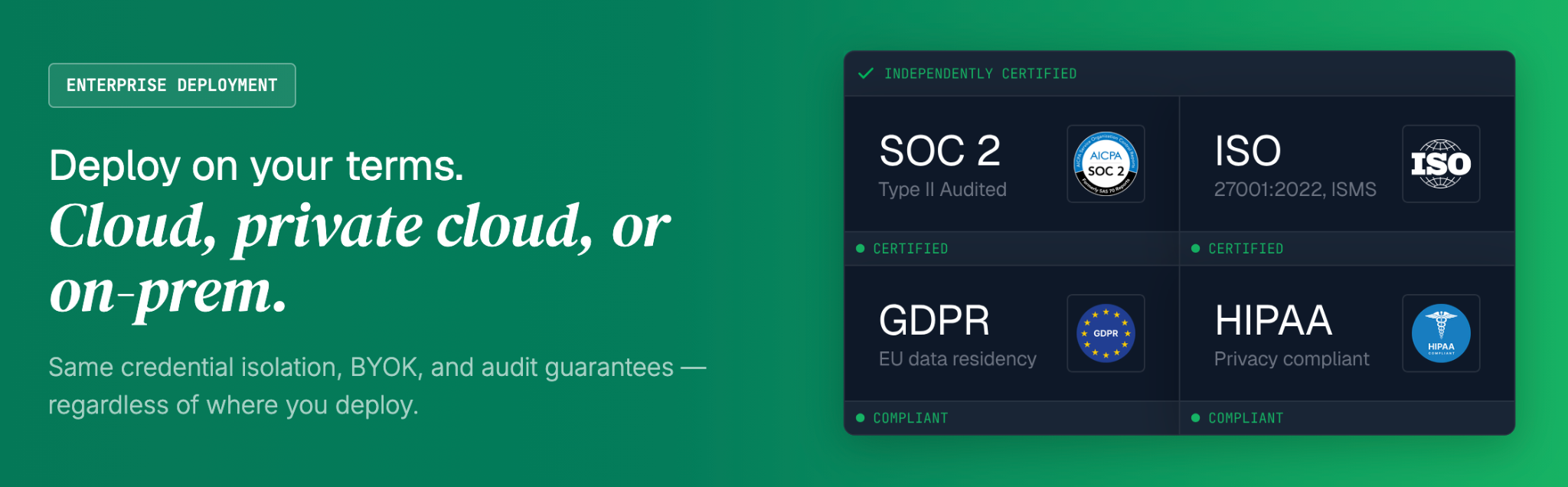
Developer experience: native adapters for LangChain, Google ADK, Anthropic, OpenAI, Vercel AI SDK, Mastra, Claude Managed Agents, and OpenClaw; per-user authenticated MCP URLs; one-command coding-agent plugin install via the Skills CLI.
"We can keep adding tools without ever rebuilding how credentials or tool calling work." — Venu Madhav Kattagoni, Head of Engineering, Von
Best fit: production agent products where every tool's behavior needs to be reviewable, consistent, and identical for every tenant calling it — not generated fresh per encounter.
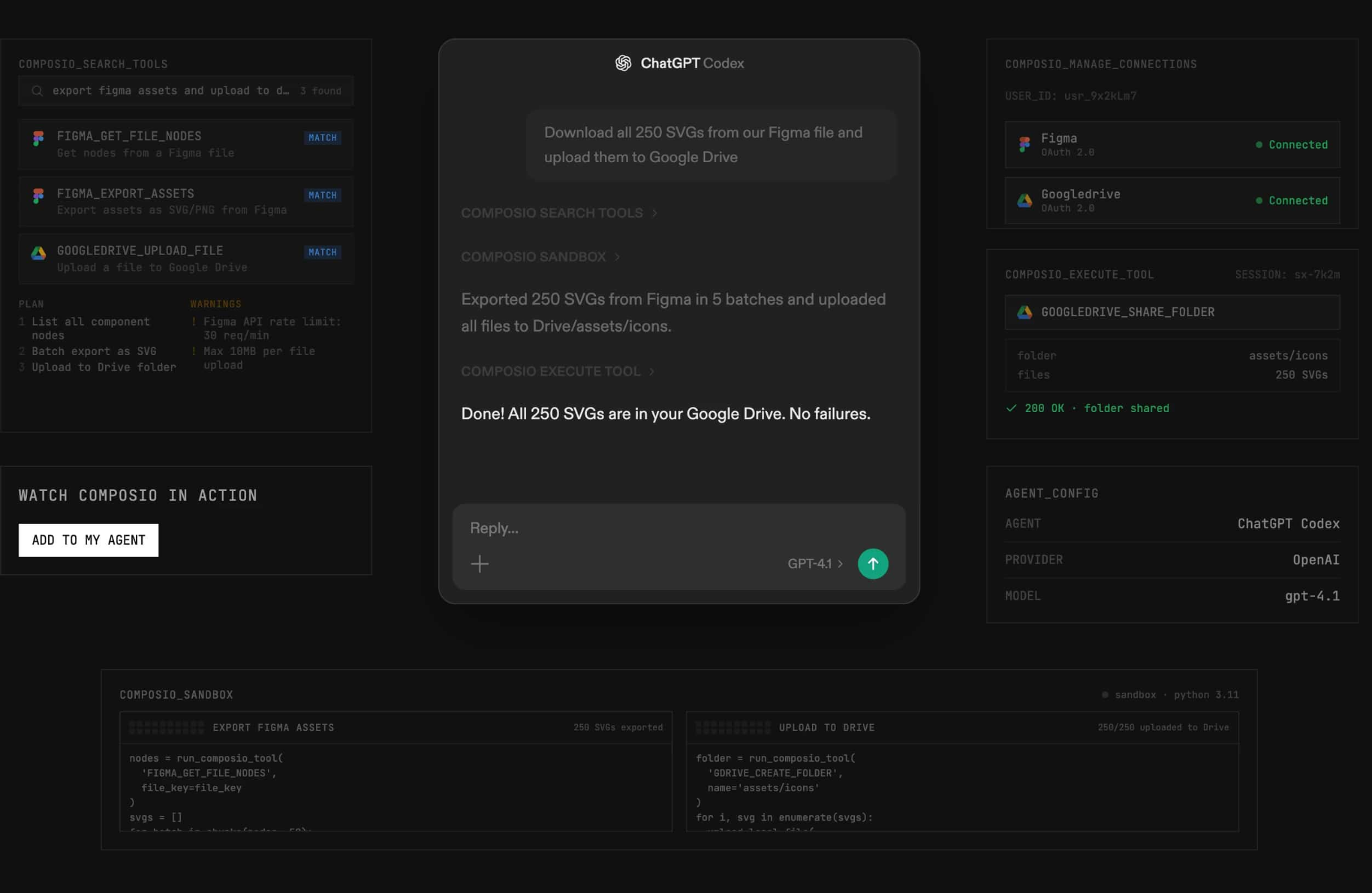
Where it beats Membrane: a large, pre-built, human-maintained catalog (1,000+ integrations) — the more conventional answer to breadth, trading novelty for a track record every tool already has before you're the one calling it.
Where Membrane wins: genuine long-tail reach — software nobody's pre-built a connector for at all. Composio's catalog, however large, is still a fixed list; Membrane's generative model isn't bounded by one.
Neither solves: per-tenant authorization at the platform level.
Best fit: teams wanting breadth from a stable, pre-built catalog rather than generated on-the-fly tools, without per-tenant governance as a primary requirement.

Where it beats Membrane: every tool that exists has been through your own team's review process before it runs — full code ownership, in your own repo, with the strongest observability in this category.
Where Membrane wins: speed to a working integration for software you haven't built a connector for yet — Nango requires someone to write that TypeScript function first; Membrane can generate a starting point from documentation directly.
Best fit: teams wanting full control and review over every tool's behavior, willing to author that logic themselves rather than have an agent generate it.
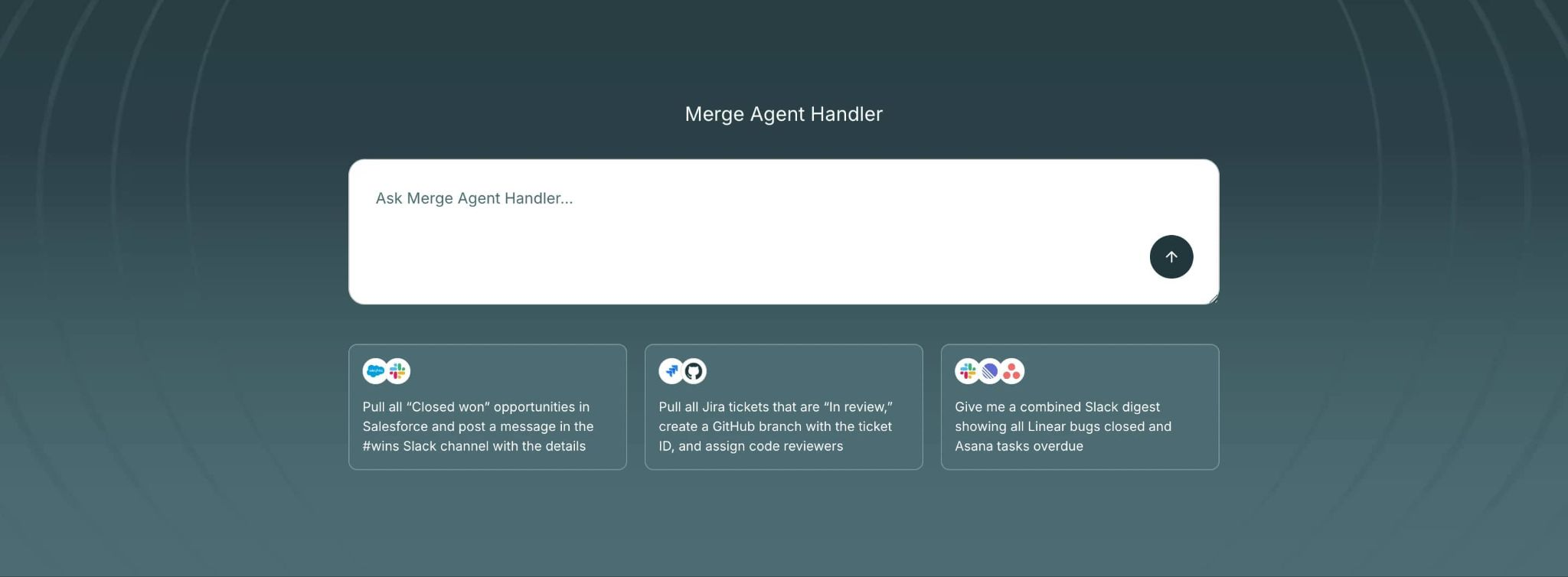
Where it beats Membrane: deterministic, normalized, human-maintained connectors with mature governance and DLP tooling — about as far from Membrane's runtime-generation bet as this category gets, and a real advantage if consistency and vendor maintenance matter more than novelty.
Where Membrane wins: catalog reach beyond Merge's 220+ maintained integrations, and tool specificity — Merge's normalized schemas strip out provider-specific detail that a generated tool, built directly from that provider's own documentation, wouldn't lose.
Best fit: teams already on Merge's Unified API, prioritizing consistency and vendor maintenance over generative flexibility.
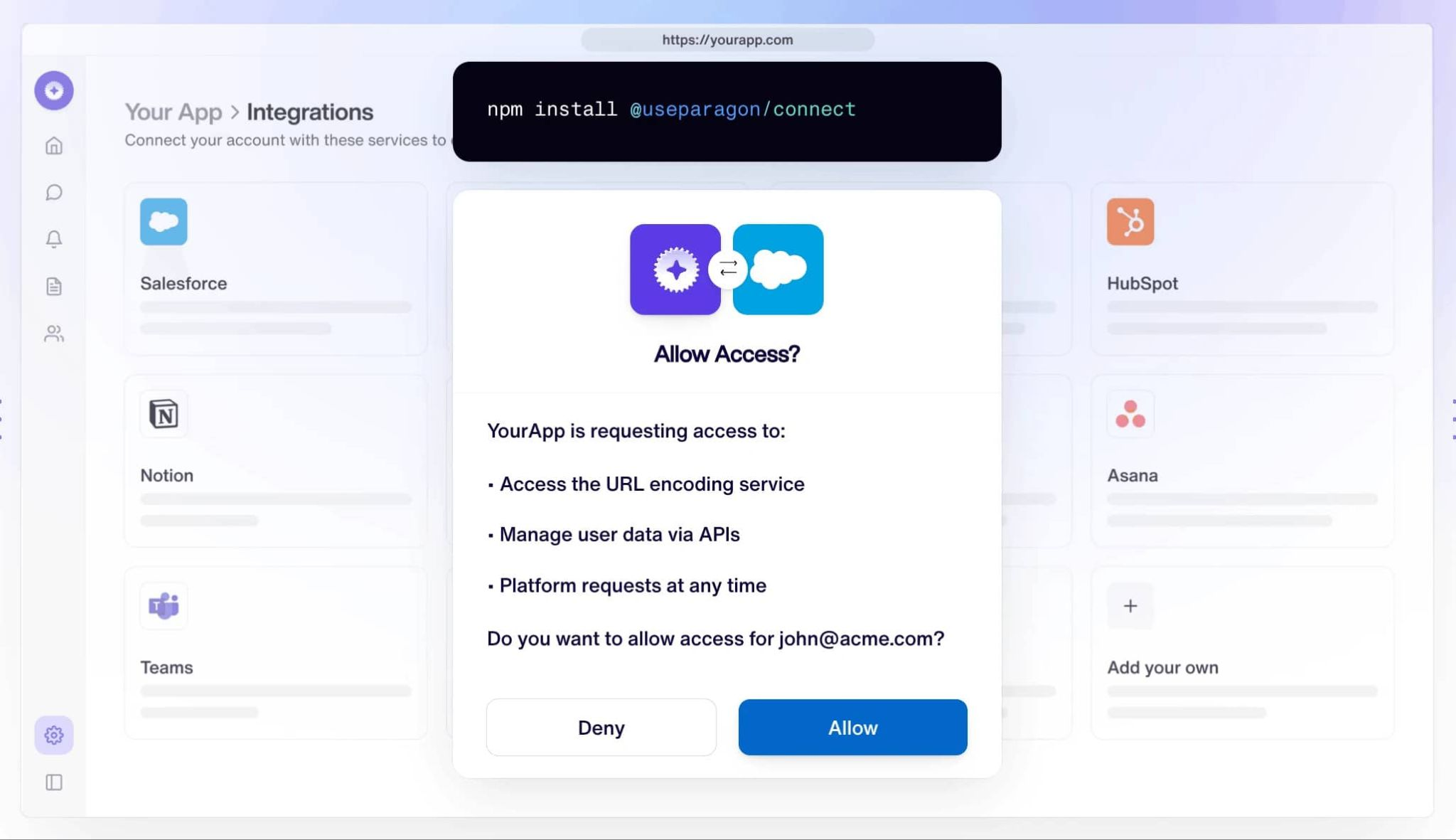
Where it beats Membrane: pre-built, human-maintained tools across 1,000+ integrations with a polished, stable end-user connection experience — real value for ISVs needing that UX as a product surface, which Membrane doesn't offer in the same form.
Where Membrane wins: the same long-tail reach advantage over any fixed catalog, including Paragon's — generative breadth a pre-built list can't match by adding more connectors.
Best fit: ISVs wanting a stable, pre-built catalog with strong end-user connection UX, not runtime-generated tools.
Note: The table above covers the first four platforms. Merge Agent Handler and Paragon (ActionKit) are covered in the detailed sections above. Merge Agent Handler offers SOC 2 Type II, ISO 27001, HIPAA, GDPR — broadest compliance in the category; Paragon's compliance certifications are not extensively documented. Both offer pre-built, reviewed catalogs (220+ and 1,000+ respectively) with no per-tenant authz enforcement as a platform primitive, managed SaaS only deployment, and fixed catalogs.
Membrane's bet is the most genuinely different idea in this entire category, and it's worth taking seriously as exactly that — a different idea, not a strictly better version of what everyone else is doing. The question worth asking before choosing it for a production agent product: does your use case actually need an agent that can integrate with software nobody's ever configured before, or would a smaller set of deliberately built, reviewed, consistently-behaving connectors serve the same customers better, with a security review that doesn't have to reason about tools generated fresh at runtime?
If you're evaluating tool calling auth patterns and production problems across agentic systems, understanding where dynamic generation creates audit complexity versus where a pre-built, versioned connector catalog gives you a stable foundation is the core architectural decision this comparison surfaces. And if agent tool observability is a priority — knowing not just that your agent ran, but what it did, under which identity, and with what scope — the tradeoffs between these platforms become even sharper.
For teams building multi-tenant tool calling into production agent products, the authorization model isn't an implementation detail — it's the architectural foundation that determines whether enterprise customers can pass security reviews, revoke access selectively, and audit every action back to a specific identity. That's where the real evaluation begins.
Related: Best Composio Alternatives for AI Agent Tool Calling (2026) and Best Arcade.dev Alternatives for AI Agent Tool Calling (2026).