

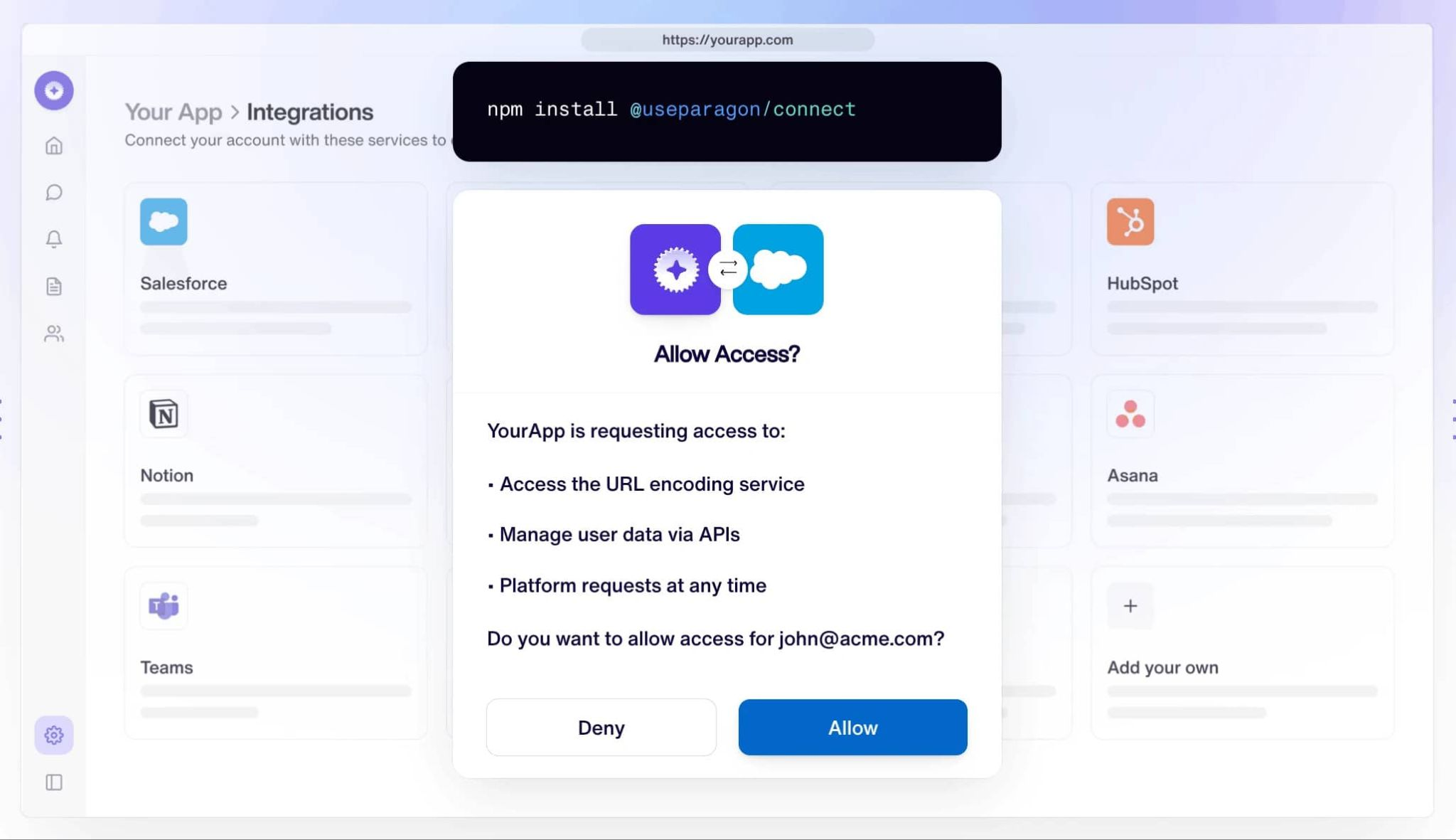
Paragon spent years building embedded iPaaS infrastructure for ISVs — letting a SaaS product's own customers connect their third-party tools through a polished, white-labeled experience. ActionKit extends that same infrastructure into the agent era: a single API surface returning 1,000+ integration tools, with the same Connect Portal ISVs already trust for end-user authorization.
The question worth asking is whether infrastructure built for embedding integrations into a product UI is the same infrastructure an LLM needs to reliably decide which tool to call and with what arguments — because those are different design problems, even when the underlying connectors are the same ones.
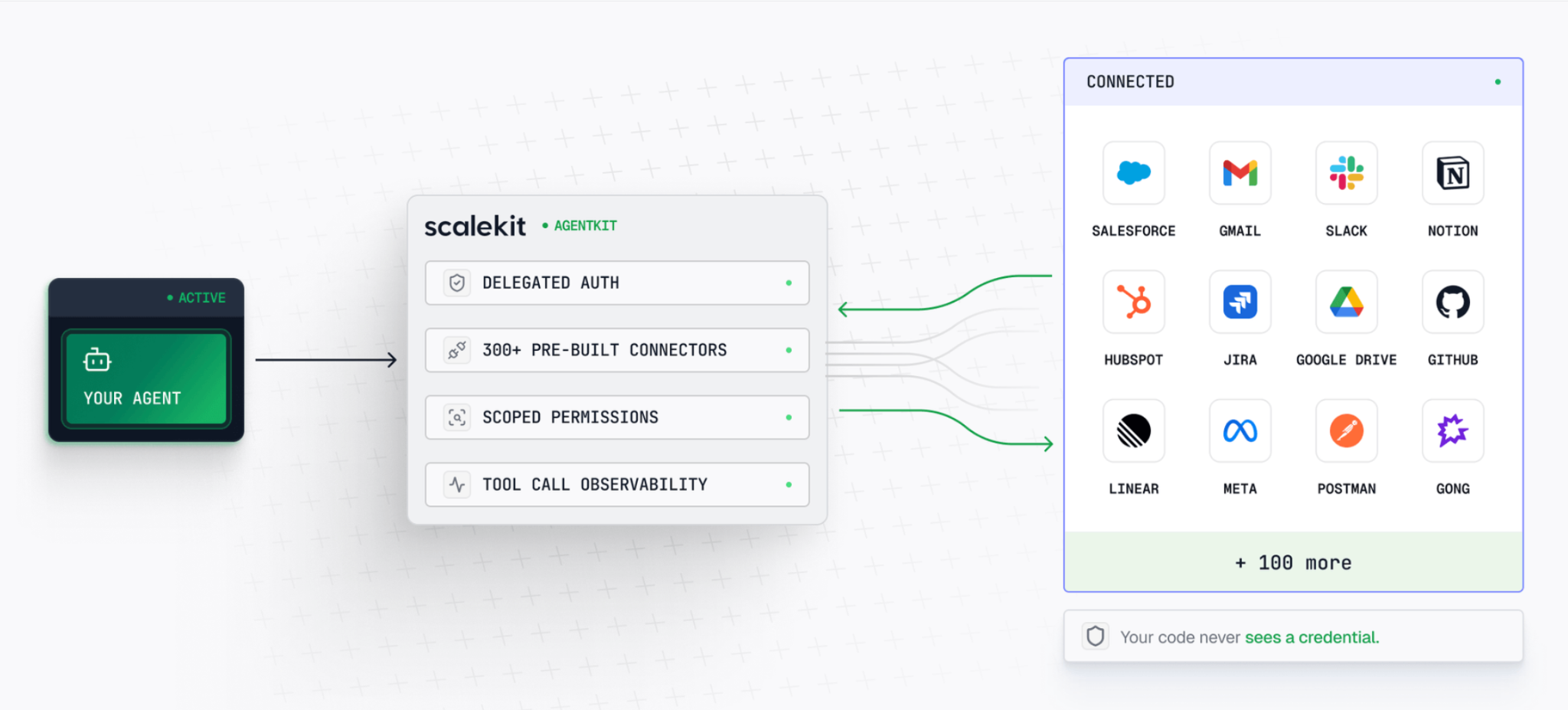
Where Paragon's architecture optimized for a consistent, white-labeled connection experience across every customer, Scalekit's optimizes for the opposite: every customer's agent gets precisely the access that customer's configuration allows, enforced before the API is ever touched.
Where it directly answers Paragon's biggest gap: per-connector, per-org scope configuration means two customers can have entirely different tool behavior from the same underlying connector — deliberately, not as an edge case the architecture works around. Every tool call resolves a credential from an AES-256 encrypted, per-tenant vault, and the full delegation chain logs natively and streams to your own SIEM.
Virtual MCP Servers extend scoping to the tool level: one endpoint definition serving every customer, scoped to exactly what a given agent role needs, with a fresh session token per run — where Paragon's tools are all-or-nothing the moment a connector exists.
Where the trade-off runs the other way: Paragon's white-labeled Connect Portal is a genuinely more polished, purpose-built end-user connection experience than anything Scalekit ships — if your product needs your own customers clicking through a fully branded authorization flow as a product surface, that's real, specific value Scalekit doesn't match out of the box. Catalog count is also close (500+ vs. Paragon's 1,000+), though built on different priorities (depth vs. raw breadth).
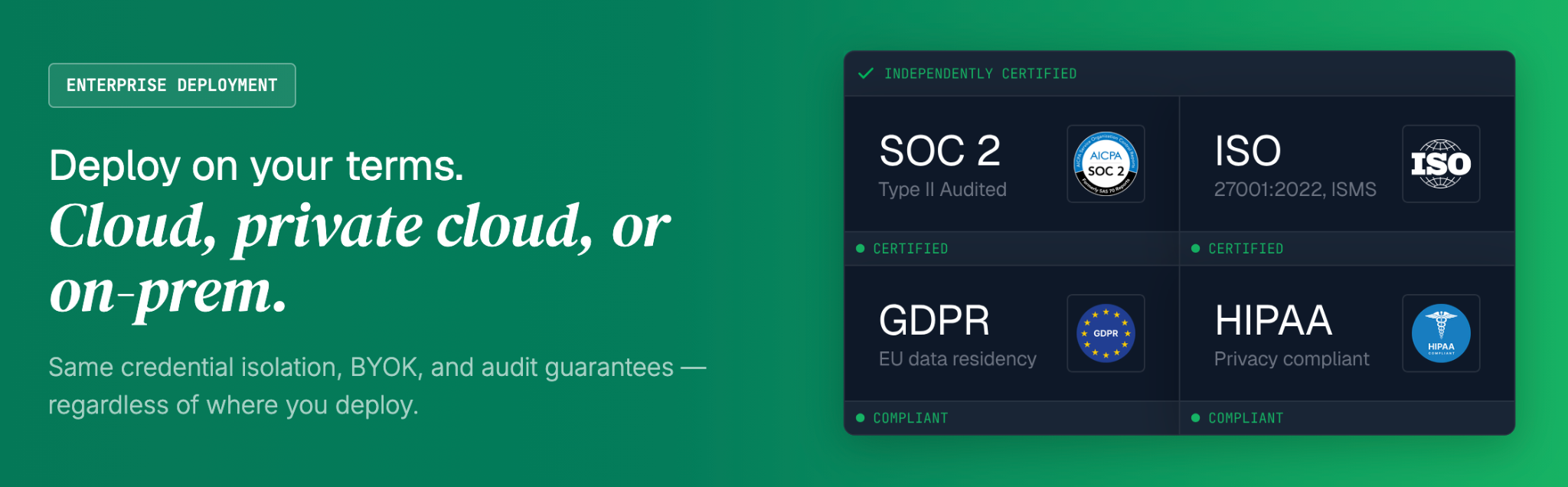
Deployment: cloud-managed, VPC, or fully on-prem/air-gapped, where Paragon is managed-SaaS only.
Developer experience: native adapters for LangChain, Google ADK, Anthropic, OpenAI, Vercel AI SDK, Mastra, Claude Managed Agents, and OpenClaw; per-user authenticated MCP URLs; one-command coding-agent plugin install via the Skills CLI.
"We can keep adding tools without ever rebuilding how credentials or tool calling work." — Venu Madhav Kattagoni, Head of Engineering, Von
Best fit: agent products where per-tenant tool behavior needs to differ by customer, enforced at the infrastructure layer — and the embedded connection UX isn't itself the product differentiator.
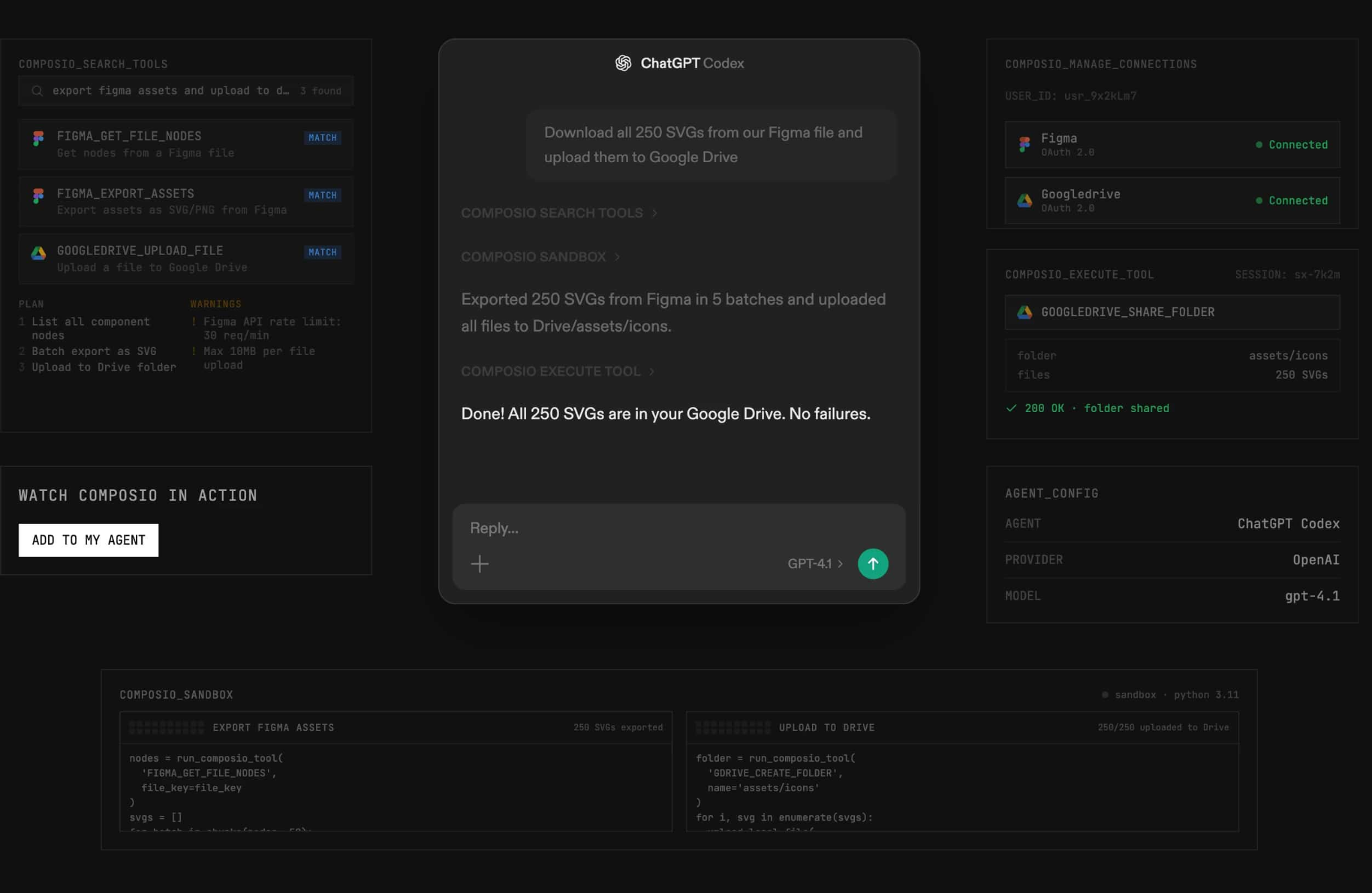
Where it beats Paragon: agent-native tool schemas built from the start rather than extended from an embedded-iPaaS product, and a comparable catalog size (1,000+ both).
Where Paragon wins: the white-labeled Connect Portal — Composio has no equivalent polished, brandable end-user connection flow. Neither platform has a per-tenant authorization layer, so that particular gap is shared.
Best fit: teams that don't need a white-labeled end-user connection experience and want agent-native tooling with fast time-to-first-call. See how Composio stacks up in more detail in our best Composio alternatives roundup.

Where it beats Paragon: full code ownership — TypeScript functions in your own repo — plus the strongest observability of anything in this category, both absent from Paragon's pre-built, closed model.
Where Paragon wins: the embedded white-label connection UX — Nango has no equivalent; you'd build that experience yourself if it matters to your product, which is real engineering work Paragon's Connect Portal removes entirely.
Best fit: teams prioritizing code-level control and observability over a pre-built, white-labeled connection experience.
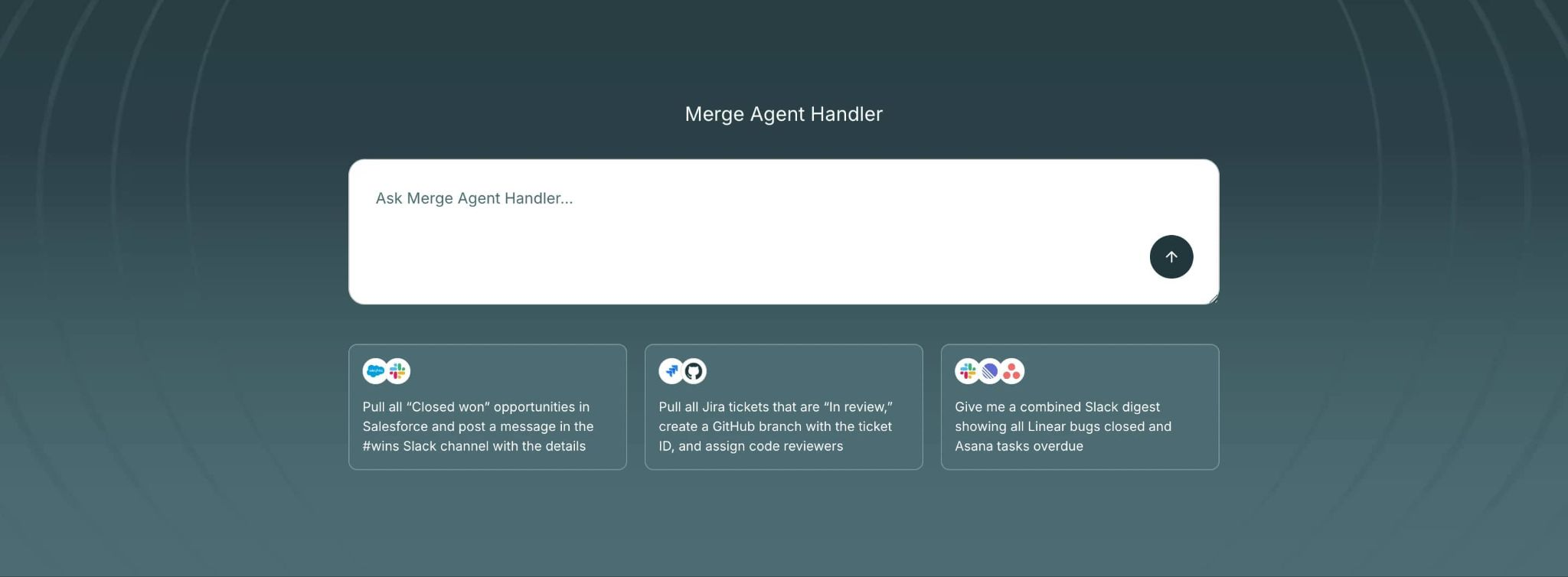
Where it beats Paragon: governance and DLP maturity — PII scanning, per-tool-pack rules, audit logs — plus broader compliance certifications (HIPAA specifically).
Where Paragon wins: pricing tends to be more favorable at growth-stage customer counts than Merge's per-linked-account model, and Paragon's Connect Portal is a stronger end-user experience than anything Merge ships.
Best fit: teams already invested in Merge specifically — not a distinguishing choice against Paragon on its own merits. For a deeper look, see our best Merge.dev alternatives comparison.
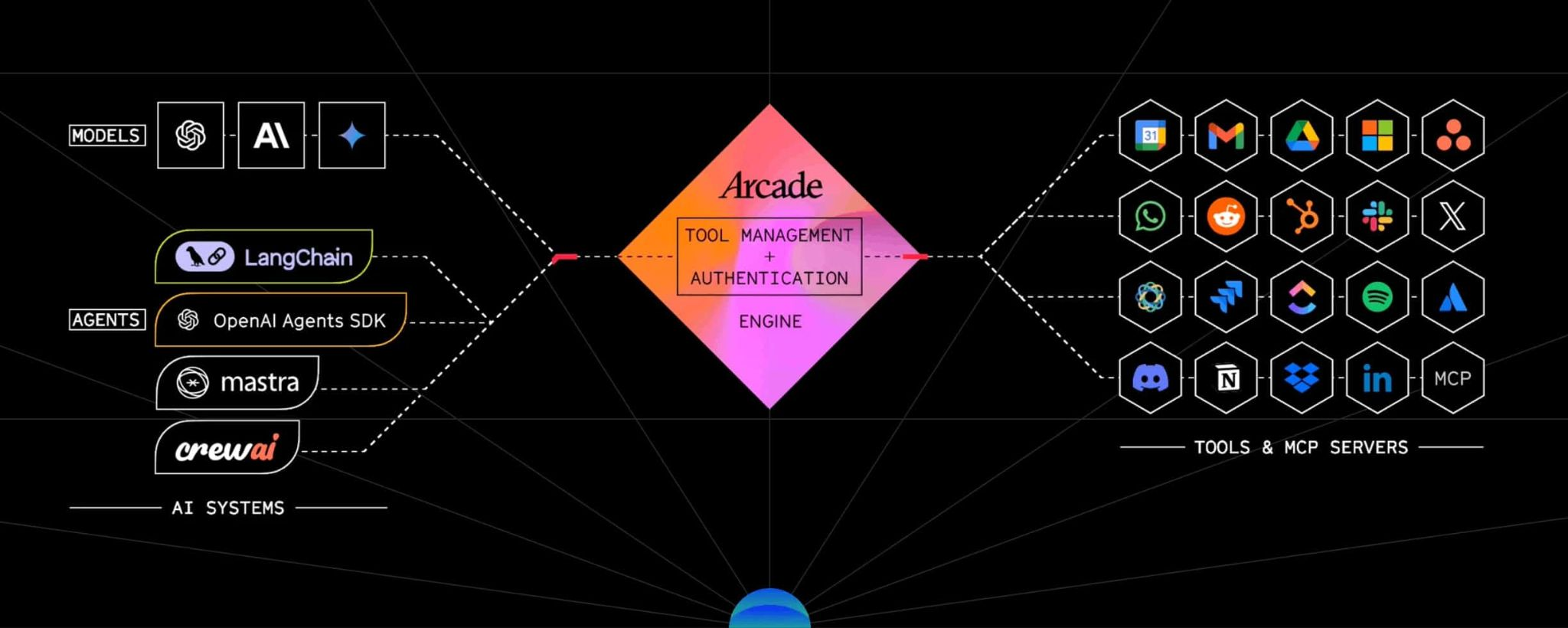
Where it beats Paragon: a materially more rigorous take on authorization — agents act as users through genuine OAuth delegation, where Paragon's auth model reflects its broader tool-and-portal heritage rather than agent-specific delegation design.
Where Paragon wins: catalog size (1,000+ vs. Arcade's ~112) and the white-labeled connection experience Arcade doesn't offer.
Best fit: teams where auth-model correctness is the primary driver and Arcade's catalog covers the integration surface needed. Our best Arcade.dev alternatives guide covers this space in detail.
Paragon's catalog and connection UX are real strengths, built for a real and different problem: letting an ISV's own customers connect their tools through a branded experience. The question worth separating out before choosing it for agent tool calling specifically: are you evaluating Paragon because that embedded-connection UX is genuinely a product requirement for you too, or because the catalog size looked reassuring and the tool-calling fit got assumed rather than tested?
Understanding who holds the token across agent tool-calling patterns is ultimately the architectural question that determines which platform is actually the right fit for your system.