













Enterprise

Enterprise security for agents
‍acting on customer data.

Your agents hold credentials to your customers’ systems and act inside them. Scalekit ships that access with the deployment options, certifications, access governance and evidence an enterprise review asks for.

Four deployment models.
One control plane.

The gateway, SDKs and connector catalogue never change. You choose where it runs, who holds the keys and who controls upgrades.
Managed cloud
Multi-tenant with per-tenant encryption, in a US or EU region. Nothing to operate, residency enforced at the storage layer.
Your VPC
Runs inside your own AWS, GCP or Azure account. Customer data never leaves your cloud, and connector egress originates from your network.
Customer infrastructure
Deployed into your customer's environment, fully isolated. One instance per customer, with keys and upgrade cadence under your control.
Air-gapped
No outbound calls to Scalekit. Offline licence validation and images from your own registry, for classified and disconnected networks.

If it's air-gapped,
‍it's actually air-gapped.

Private deployment is a contractual commitment, not a configuration flag. In an air-gapped install, no data, logs, metrics or telemetry reach Scalekit infrastructure.
Guarantee 1
No data leaves your deployment
Credentials, OAuth tokens, session data and user records are stored and processed entirely within your deployment. No Scalekit server sits in the data path.
Guarantee 2
No telemetry by default
Usage metrics stay in your observability stack, not ours. There is no default outbound metrics channel to discover and disable.
Guarantee 3
Logs are optional and configurable
You decide whether any logs are exposed to Scalekit for support. The default configuration grants no log access.
Guarantee 4
Not a sub-processor
With no Scalekit component in the data path, we do not process your customer data and are not a sub-processor for that deployment.

Certifications, controls,
and what happens to data.

The posture behind the product, and the evidence that supports each part of it.
Compliance frameworks
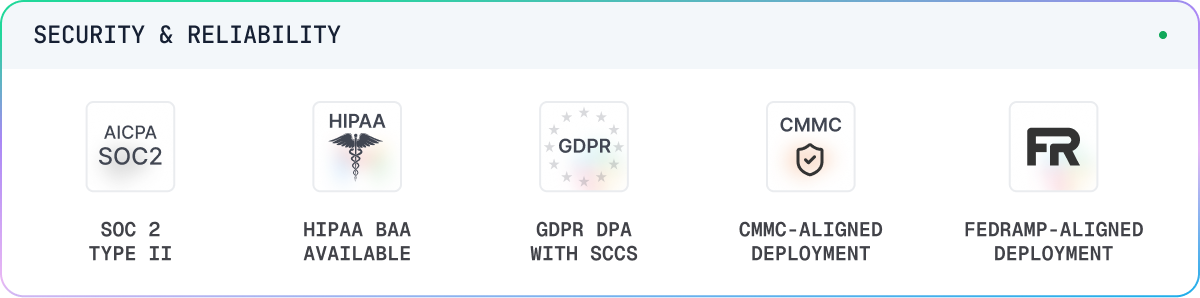
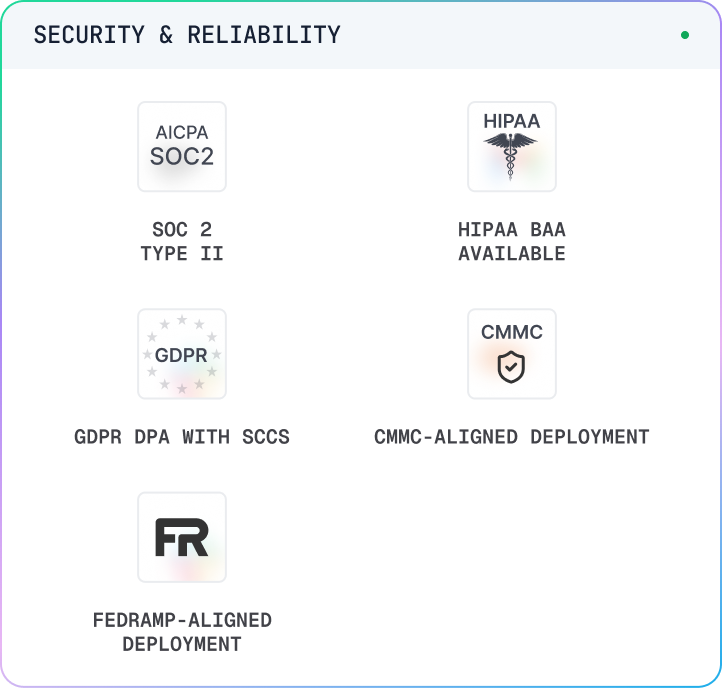
Meet SOC 2 Type II, HIPAA and GDPR requirements. Sign a BAA and DPA with SCCs.
Encryption
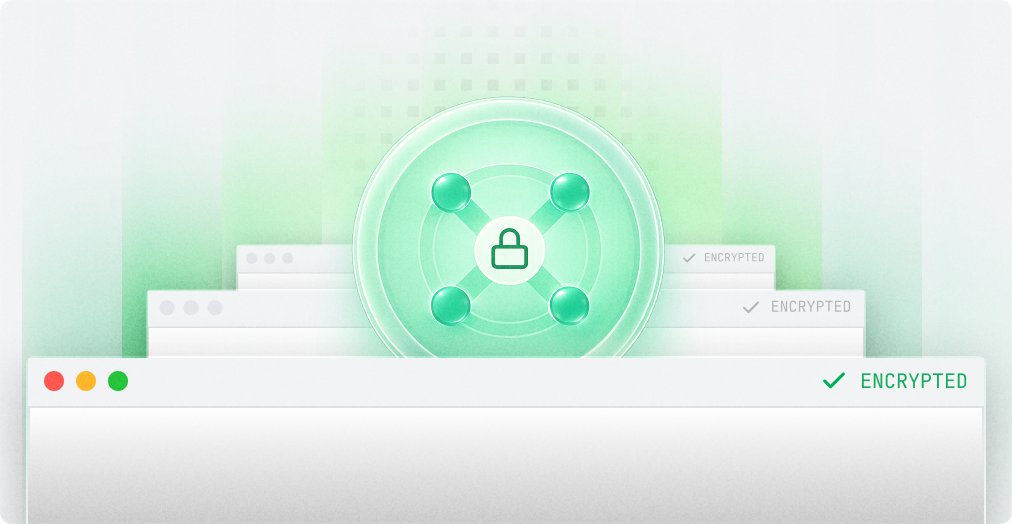
Encrypt with AES-256-GCM at rest and TLS 1.3 in transit. Double-wrap credentials, or bring your own keys.
Data residency
Pin data to US or EU regions, enforced at the storage layer. Go private to keep it anywhere.
Retention and deletion
Set retention per environment. Delete an account to wipe its credentials and call history.
Sub-processors
Track every sub-processor in a public register, with notice before material changes. Go private to have none.
Defense in depth
Rely on segregated networks, unique credentials per person and service, and logged, reviewed least-privilege access.
Penetration testing
Get an annual third-party pen test with tracked fixes, plus continuous automated scanning.
Vulnerability disclosure
Report in-scope issues straight to our security team. Get acknowledgement on a set timeline.

Every certification,
‍on request.

A security review starts with a document request. Rather than routing it through your account team, request what you need directly and receive it under NDA where required.
SOC 2 Type II
Penetration test summary
DPA & SCCs
HIPAA BAA
Security questionnaire
Sub-processor register
Architecture documentation

Credentials never touch your agent. Or your agent's context.

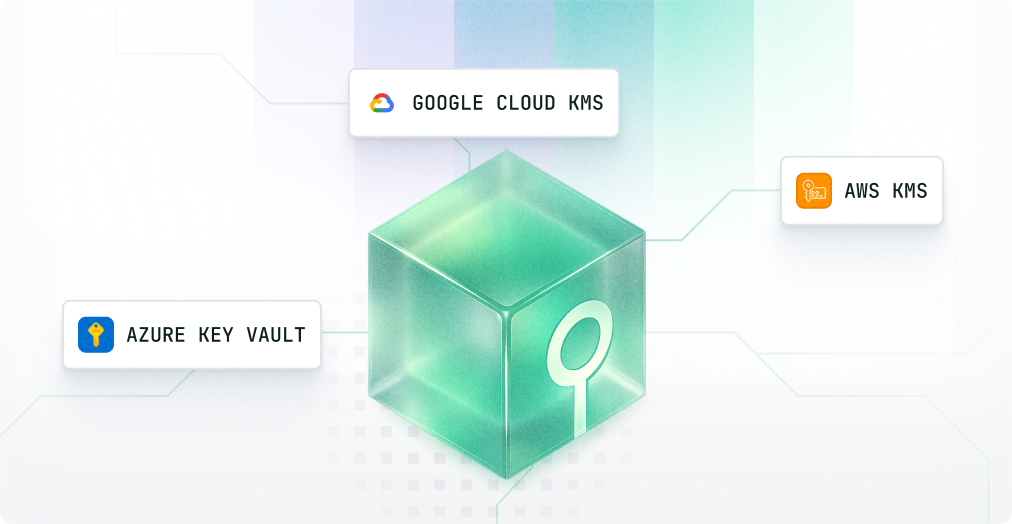
Tokens live in an encrypted vault and are attached at call time. The key that protects the vault can stay inyour own KMS.
Isolated token vault
Encrypted per tenant. Never in your code, logs or prompts.
At rest
AES-256-GCM
,per-tenant data key
In transit
TLS 1.3
to every connector
Server
Attached by the gateway at call time
Bring your own KMS
Your key, in your KMS. Revoke it and stored tokens are unreadable.
Supported
Grant
Encrypt and decrypt operations only
Key material
Never transmitted to Scalekit

Govern who can change what.
And keep the record.

Control who in your organisation uses the dashboard, what they can change, and keep a record of it.
SAML single sign-on
Dashboard access through your own identity provider, with your organisation's session and MFA policies enforced.
SCIM provisioning
Users and groups provisioned and deprovisioned automatically from your directory. Access ends when employment does.
Role-based access control
Restrict what each user can view and change by assigned role, so connector configuration and production credentials are not open to everyone.
Admin audit trail
Full accountability for every action taken in the dashboard — who changed a connector, rotated a key or altered a role, and when.
Scoped API credentials
Separate keys per environment and per team, independently revocable, so a compromised development key never reaches production.
IP allowlisting
Restrict gateway and dashboard access to your own network ranges, alongside the per-call authorization model.

A forward-deployed engineer, agent. not a ticket queue.

Enterprise deployments come with a named engineer who knows your architecture, joins your security review, and stays with the account after it goes live.
Named engineer
One person accountable for your deployment, from architecture review through to production and upgrades.
Expert-Led Answers
Your security questionnaire comes back filled in by the team that built the system, not paraphrased from a help centre.
Architecture review
A working session on your deployment topology, network boundaries and residency constraints before signing.
Named escalation path
A defined route and response commitment for production incidents, agreed in the contract rather than discovered during one.

Pre-sales
Technical questions

Does a private deployment require outbound internet access?

Scalekit gives your agents authenticated and scoped access to third-party apps — Gmail, Slack, Salesforce, GitHub, Notion, and 100+ more. Scalekit handles the delegated OAuth flow, token storage, and the tool call on behalf of your user. No service accounts, or hardcoded credentials.

What does it run on?

When a user authorizes a connector, Scalekit creates a connected account — a per-user token store tied to that user's identity. Every tool call your agent makes uses that specific user's credentials. Actions appear as that user in the target app, and access is limited to exactly what they've authorized.

How is data retained and deleted?

500+ pre-built connectors covering productivity (Gmail, Google Calendar, Outlook), project management (Jira, Linear, Asana, Notion), CRM (Salesforce, HubSpot), data (Snowflake, BigQuery), code (GitHub, GitLab), and many more. Each connector comes with a ready-to-use tool library.

Can we license one isolated instance per customer?

Yes, we recommend bringing your own credentials for production agents — set it up once and Scalekit handles per-user token storage, refresh, and state tracking automatically. We also offer managed OAuth for a few applications so you can test the workflow easily.

Who owns the credential when an agent chains multiple tools?

Scalekit is framework-agnostic — tool schemas work with any LLM API. Native integrations are available for LangChain, Google ADK, Anthropic, OpenAI, Vercel AI, and Mastra. Node.js and Python SDKs are available too.

Is scalekit a sub-processor?

Yes. You can build them. Add a custom tool to an existing connector, or bring your own connector entirely by defining its auth pattern and tool schemas. Scalekit manages credential storage and injection — your custom connector works exactly like a built-in one.


Start the security review.
We will meet it.

Tell us your deployment constraints and the framework you assess against. You will get an engineer, the documentation, and a completed questionnaire.