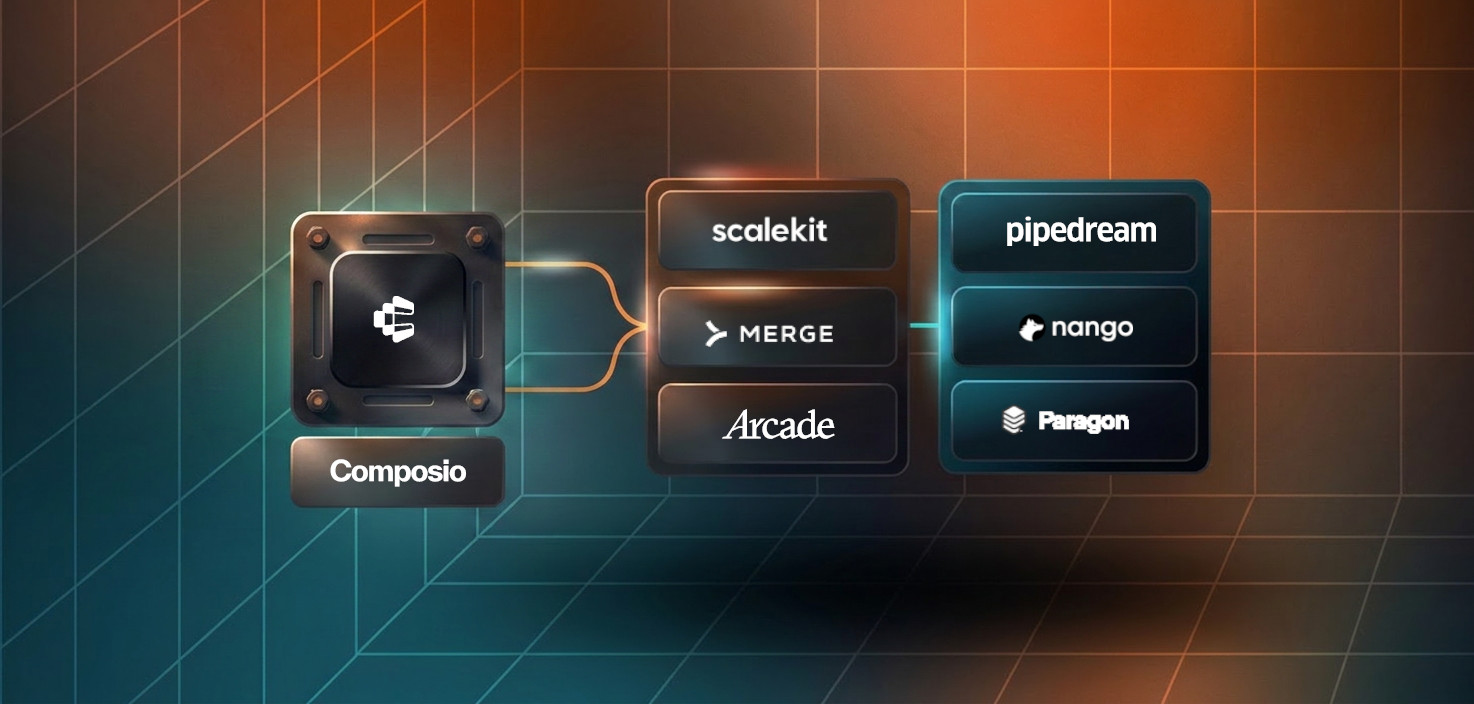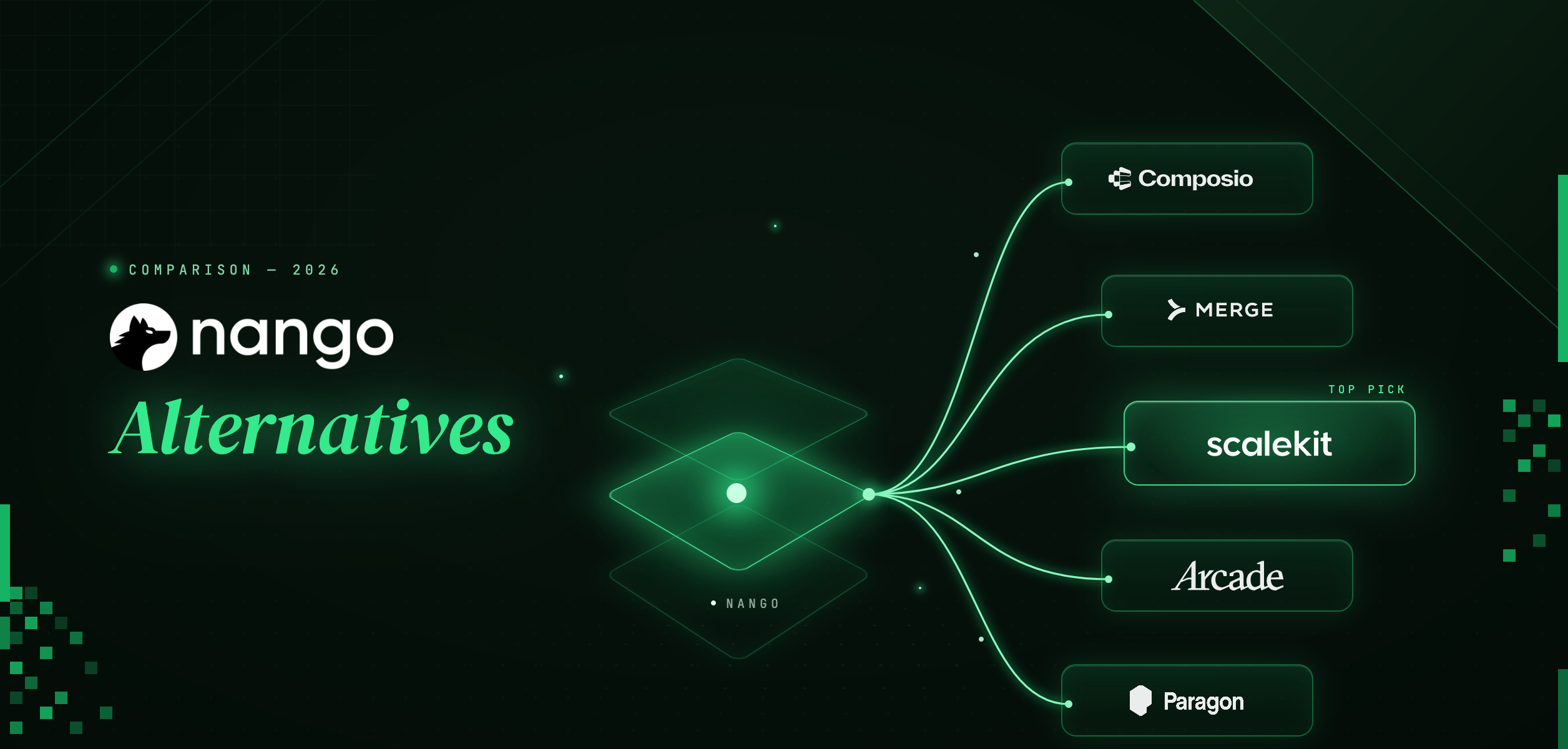


Nango made a real bet: integration logic should live in your repo, not inside a vendor's black box. Tool definitions are TypeScript functions you write — or have a coding agent write — deployed to Nango's runtime, with OAuth, retries, and rate limiting handled underneath. It's open source, self-hostable, and priced usage-based rather than per-linked-account. For a category full of closed, pre-built-only platforms, that's a genuinely different position.
The question worth asking isn't whether code ownership is good. It's whether owning the integration code also means owning problems that a managed connector layer would otherwise absorb — and whether that trade is still worth it once you're not the only engineer maintaining forty of these functions.
Every "you own the code" pitch undersells the same handful of things that come free with a managed connector, and cost real engineering time to build yourself:
None of this makes Nango a bad choice. It makes "code ownership" a real trade, not a strictly better default — higher ceiling, genuinely higher floor too.

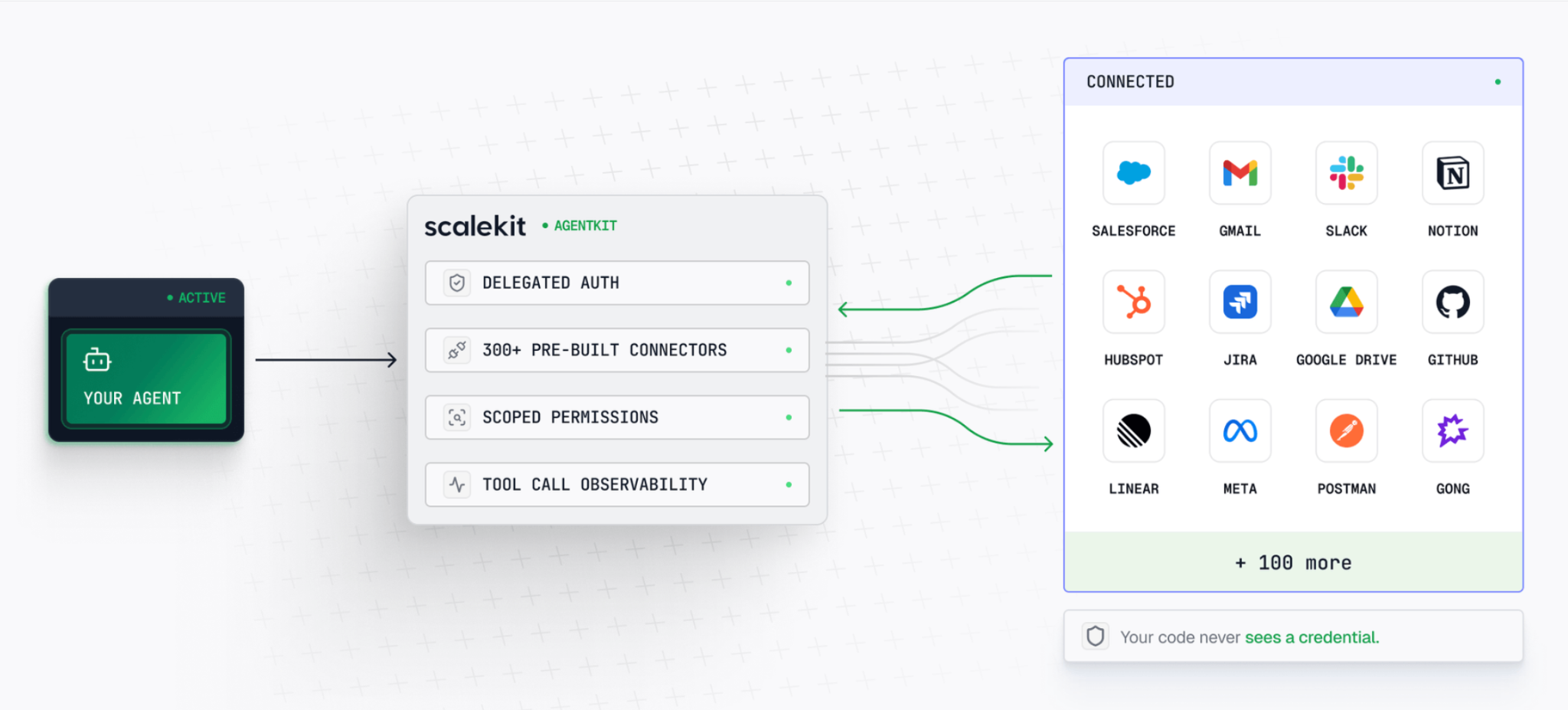
Where Nango's bet is "write the integration yourself, own everything," Scalekit's bet is the opposite starting point: authorization is the hard part, so solve it once, at the infrastructure layer, and let every connector inherit it automatically rather than re-implementing the check inside forty separate functions.
Authorization and credentials. Every tool call resolves a credential from an AES-256 encrypted, per-tenant vault — no raw token ever enters agent code — and verifies scope against per-connector, per-org configuration before the call touches the real API. This is the direct answer to Nango's biggest gap: where Nango leaves "is this tenant's agent allowed to call this" as something you write into the function, Scalekit enforces it as a platform primitive, the same way for every connector, without exception.
Tool scoping goes below the connector, down to the tool. Virtual MCP Servers let you define a single endpoint scoped to exactly the tools a given agent role needs — a summarizer gets read access, nothing else — rather than exposing everything a connection could theoretically do. A 40-tool connection can cost an agent roughly 8,000 tokens of context before it's done any real work; scoping to 5–10 tools cuts that by about 80%. One definition serves every customer, with a fresh session token resolving to the right person's credentials on every run — the multi-tenant version of the isolation Nango handles well at the credential level, extended to the tool-exposure level too.
Where it's more opinionated than Nango, by design. You're consuming built connectors rather than authoring TypeScript functions — less flexibility if you need a bespoke integration behavior Scalekit hasn't built yet, and more assurance that what exists has been built to a consistent standard rather than however carefully (or not) your own team wrote it. That's a real trade-off in the other direction from Nango's, worth naming honestly rather than pretending there's no cost to either approach.
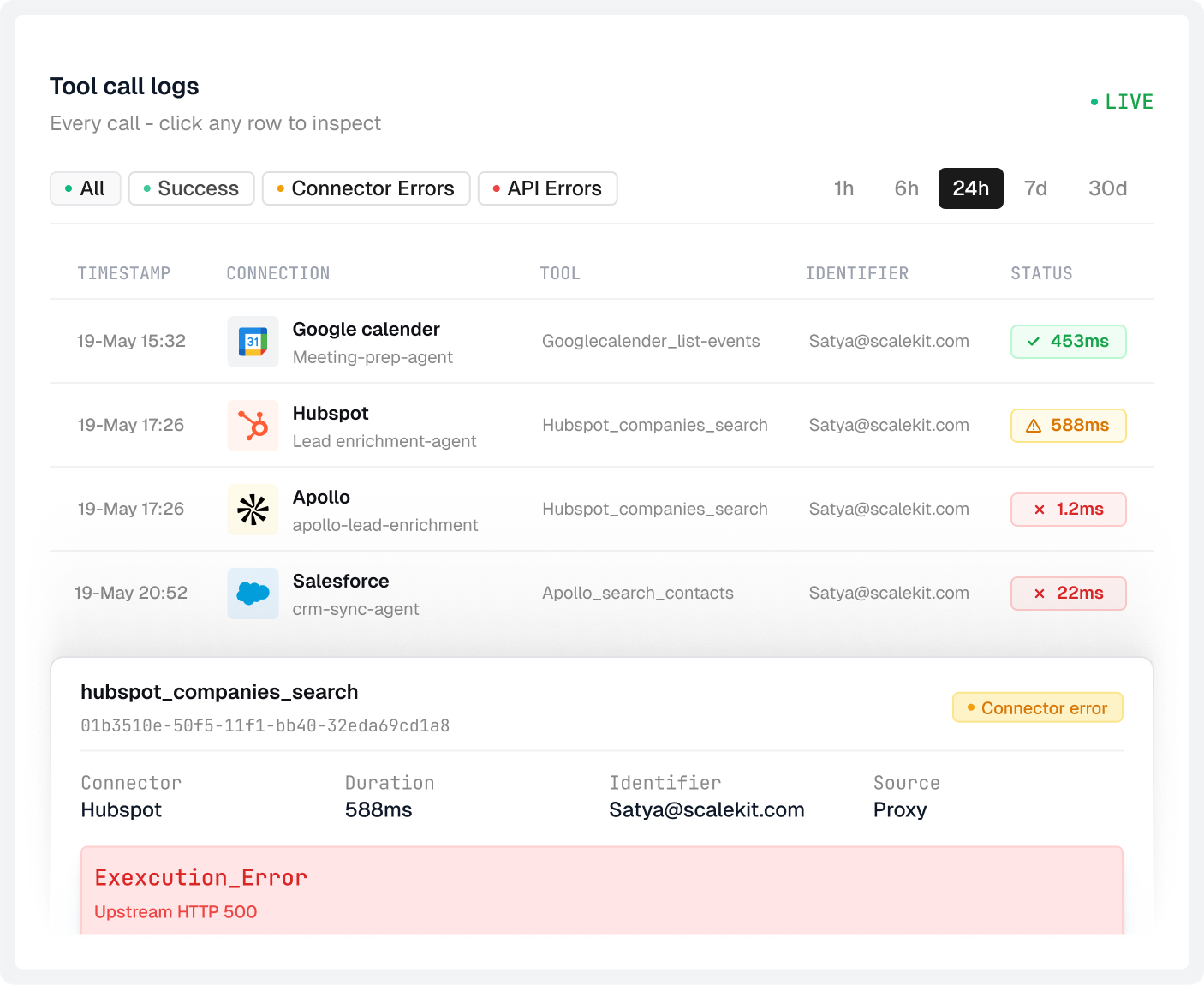
Observability and audit. The full delegation chain — agent, connector, scope, tenant, action, result — logs natively and is queryable inside the platform, with streaming to your own SIEM or data warehouse. Not quite Nango's request/response-level granularity, but paired with enforcement Nango doesn't have at all.
Deployment and connector depth. 500+ connectors, built depth-first rather than racing toward the widest catalog. Deployment spans cloud-managed, VPC, and fully on-prem/air-gapped — relevant for any team where Nango's open-source self-hosting covers the code-ownership need but not the managed-enterprise-support need.
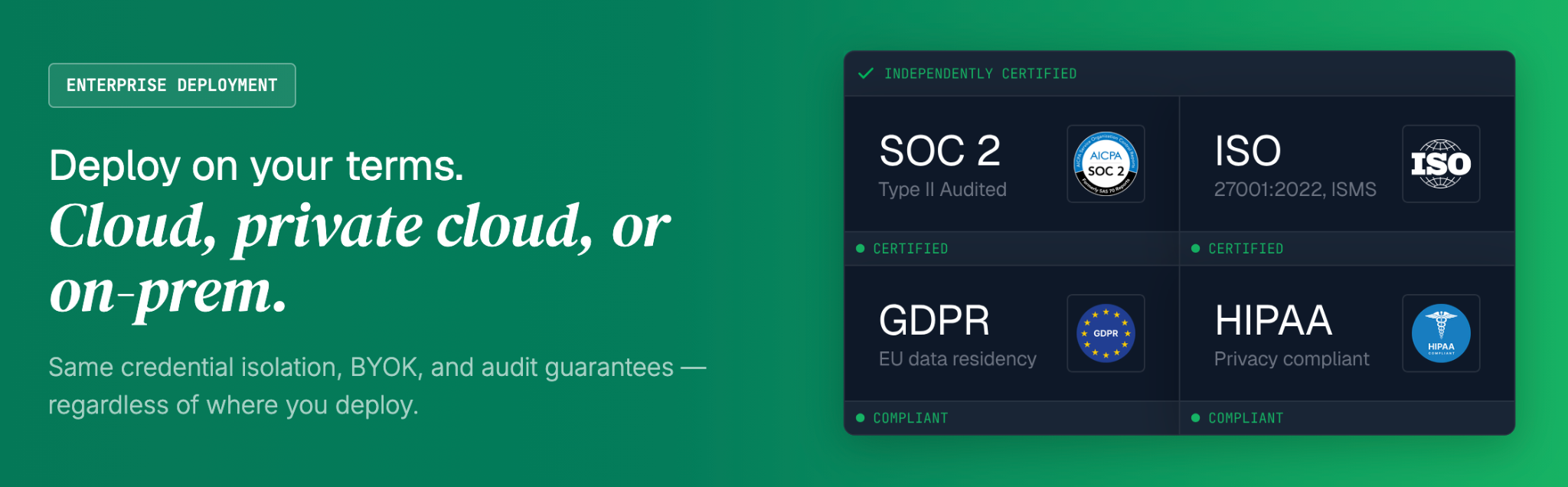
Developer experience: native adapters for LangChain, Google ADK, Anthropic, OpenAI, Vercel AI SDK, Mastra, Claude Managed Agents, and OpenClaw; per-user authenticated MCP URLs generated by the platform; one-command coding-agent plugin install via the Skills CLI.
Von, an AI revenue intelligence platform, runs agents across Salesforce, Gong, HubSpot, and Google Drive on behalf of individual sales reps this way:
"We can keep adding tools without ever rebuilding how credentials or tool calling work." — Venu Madhav Kattagoni, Head of Engineering, Von
Best fit: teams that want authorization, tool-level scoping, and audit solved once at the platform level — and are willing to trade some of Nango's build-it-yourself flexibility for that.
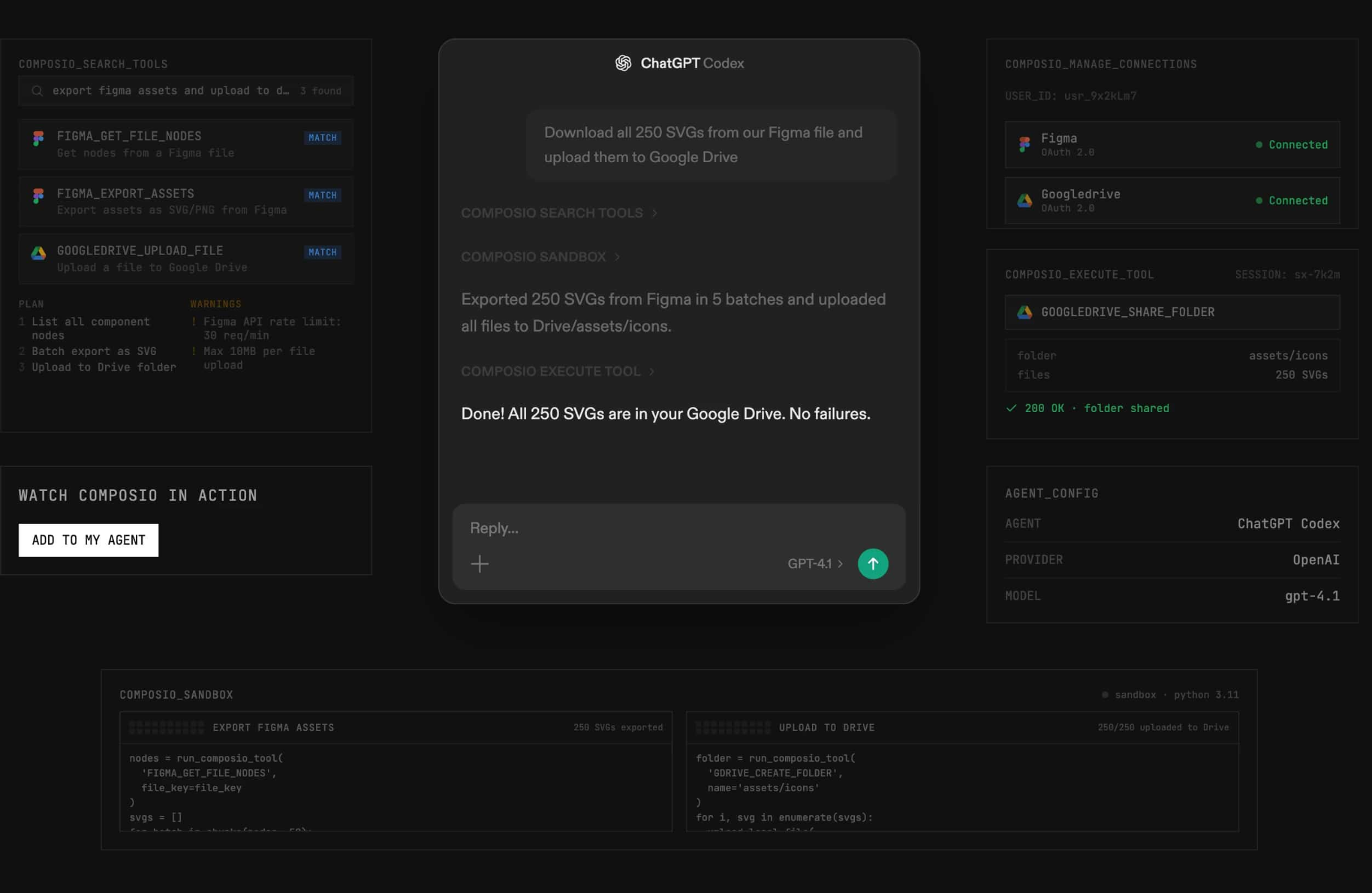
Composio inverts the trade almost completely: a much larger pre-built catalog (1,000+ integrations vs. Nango's 700+ APIs) and dramatically faster time-to-first-tool-call, in exchange for owning none of the tool logic — closed, black-box tools you configure rather than author.
Where it's stronger than Nango: raw catalog size, and the speed of getting a first integration working without writing any integration code at all. SOC 2 Type II certification at the enterprise tier gives it a compliance story Nango doesn't lead with.
Where it's weaker: no per-tenant authorization layer at all — a meaningfully bigger gap than Nango's "you build it yourself," since with Composio there's no mechanism to build it even if you wanted to. Observability stops at the surface — no request/response visibility, no OpenTelemetry — which is the opposite of Nango's strongest ground. And because tools are closed, you can't work around a tool that's close-but-not-quite-right for your agent's needs the way you could always rewrite a Nango function.
Best fit: prototypes and single-tenant products where speed to a working tool call matters more than code ownership, per-tenant governance, or deep observability. For more detail, see our comparison of Composio alternatives.
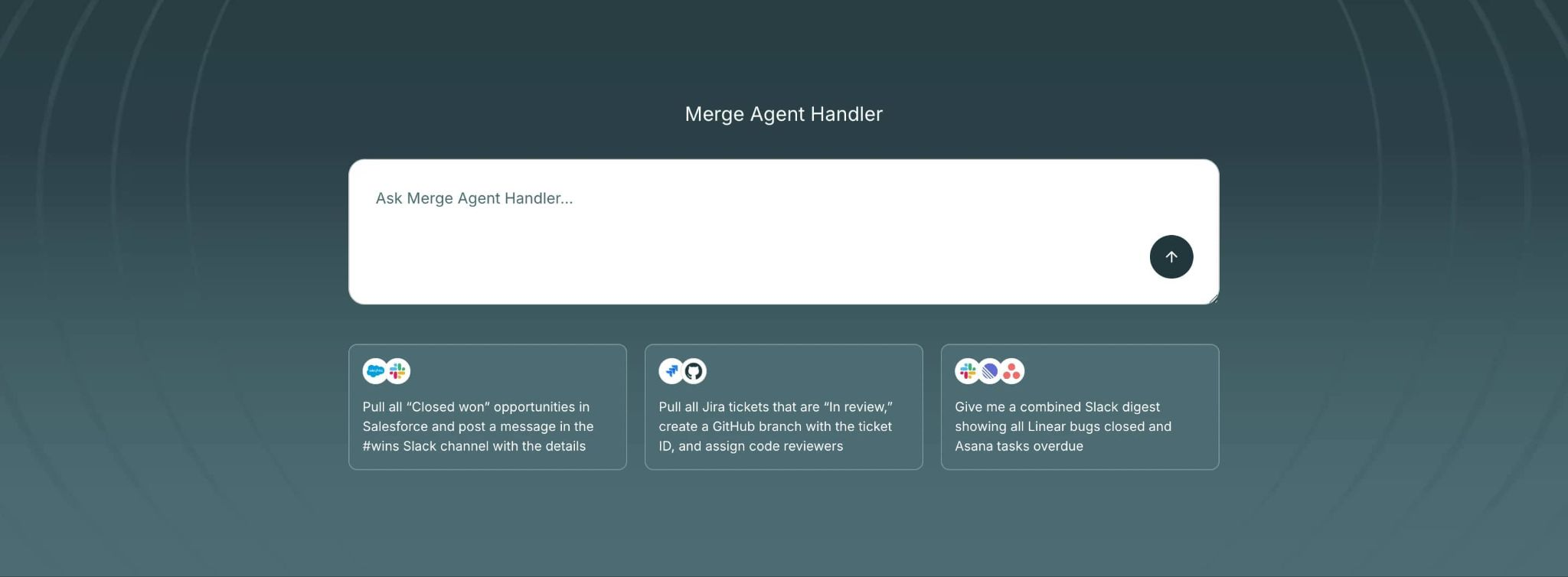
Merge's governance and DLP tooling — PII scanning, per-tool-pack rule enforcement, granular audit logs — is more mature out of the box than anything Nango ships natively, and it comes with enterprise compliance certifications (SOC 2 Type II, ISO 27001, HIPAA, GDPR) that a code-first, developer-centric platform like Nango doesn't foreground the same way.
The real architectural difference from Nango: Merge's tool definitions sit on top of a unified API built for normalized, deterministic SaaS integration — the opposite instinct from Nango's "write exactly what you need, in your own repo" philosophy. That normalization is a feature for scheduled, deterministic sync jobs and a liability for an LLM that needs provider-specific semantic detail to call a tool correctly.
Where it's clearly weaker than Nango: no code ownership at all — Merge's connectors are maintained by Merge, full stop — and pricing that scales per linked account ($65 each past the first 10) in a way Nango's usage-based model specifically avoids.
Best fit: teams already on Merge's Unified API layering on agent capabilities — not a green-field pick against Nango on the merits. See our full breakdown of Merge alternatives for a deeper comparison.
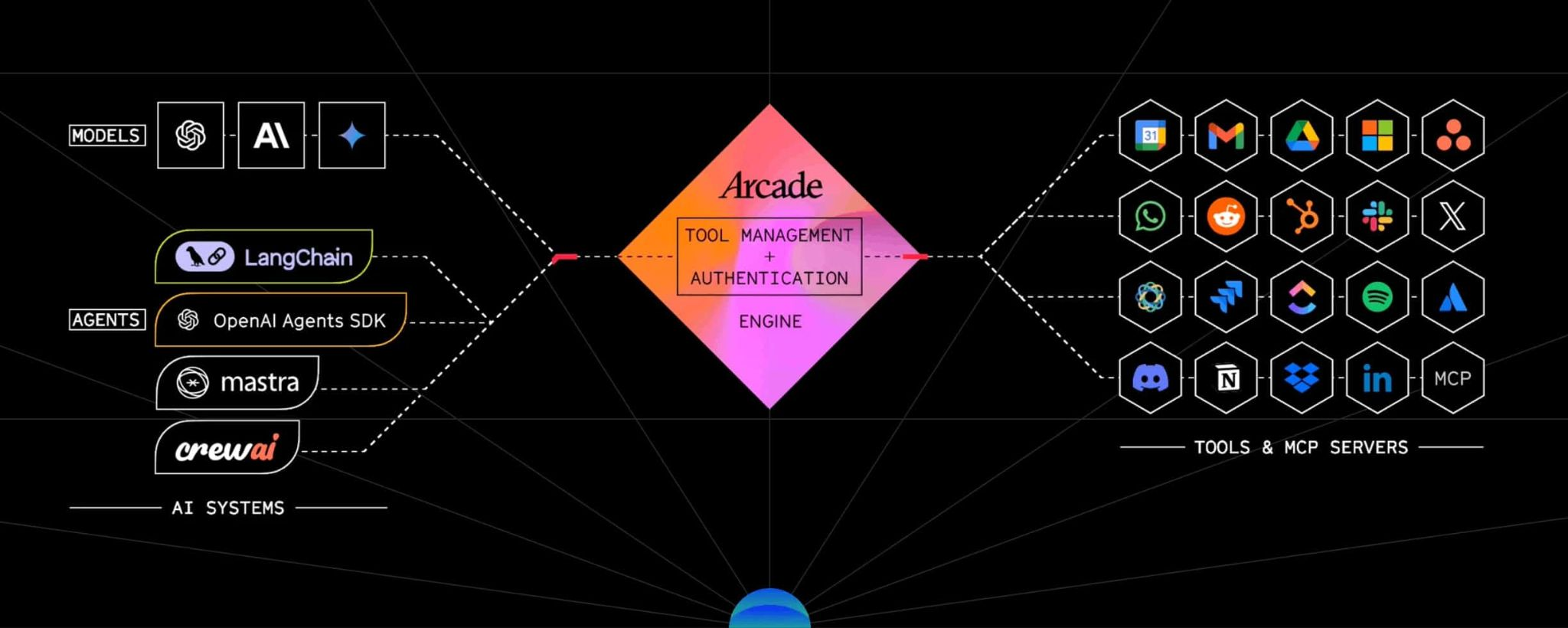
Arcade shares more philosophical ground with Nango than any other option here — both treat tool-calling infrastructure as something to build properly rather than paper over, just from different angles. Arcade's is OAuth delegation done correctly (agents act as users, verified against real permission scope, not service accounts); Nango's is code ownership.
Where Arcade goes further than Nango: genuine per-user OAuth delegation as a platform primitive, not something you'd have to implement yourself inside a function, plus a CI/CD-style tool evaluation framework for testing tool-calling behavior before deployment — a category capability Nango doesn't have an equivalent for.
Where it falls short of Nango: catalog size (~112 first-party integrations against Nango's 700+ APIs), a closed-source execution runtime where Nango's is fully open and inspectable, and enterprise governance — org-level credential hierarchies, SIEM-exportable logs — that's still developing.
Best fit: teams for whom auth-model correctness specifically is the deciding factor and whose integration needs fit inside Arcade's smaller catalog. Our guide to Arcade alternatives covers this space in more depth.
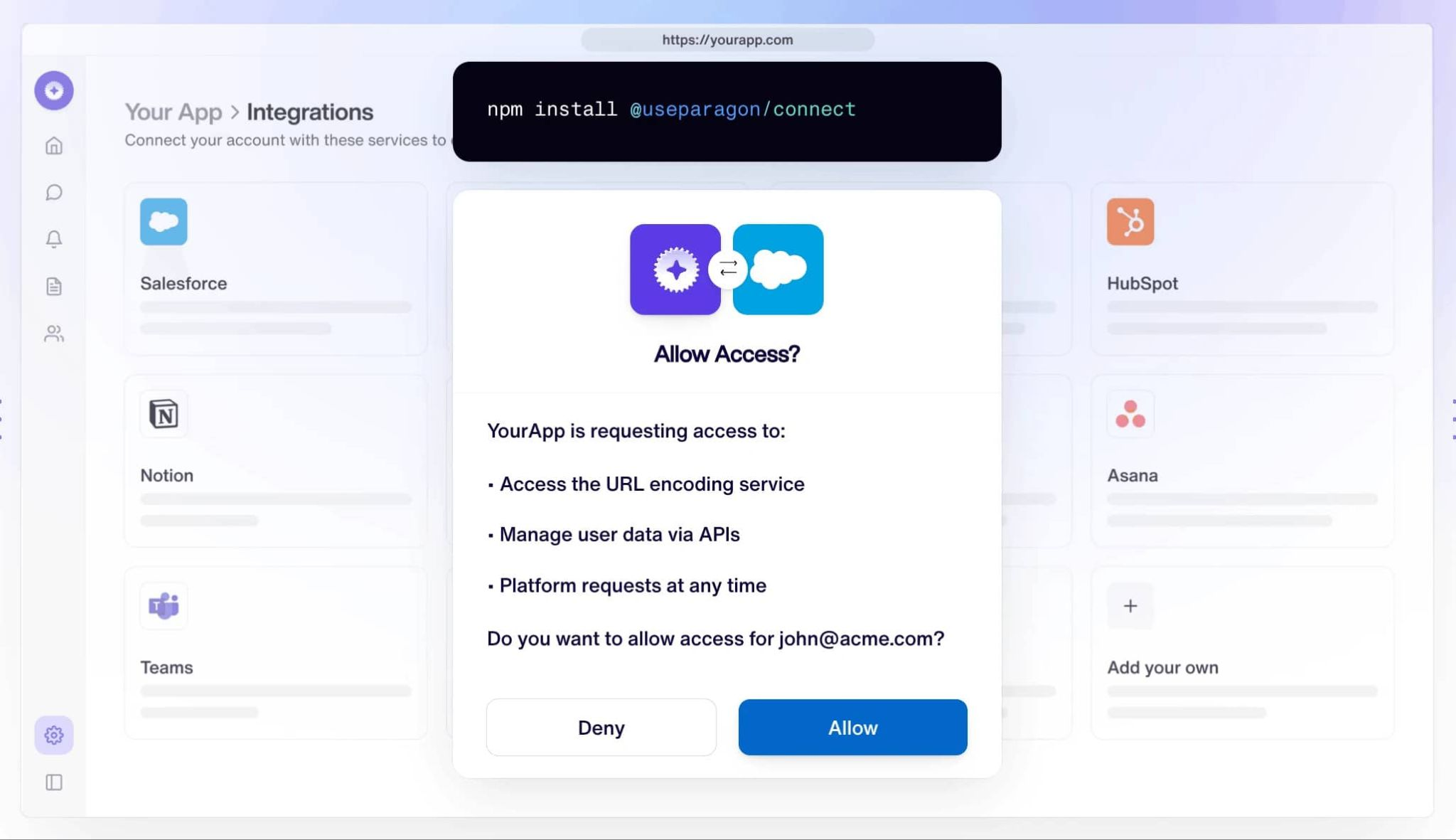
Paragon's white-labeled Connect Portal is a stronger out-of-the-box end-user connection experience than anything Nango ships — genuinely useful if that UX is itself a product surface, the way it often is for ISVs whose own customers need to authorize connections inside a branded flow.
Where it's stronger than Nango: the polish of that embedded connection experience, and a larger raw catalog (1,000+ integrations).
Where it's weaker: the tool definitions reflect an embedded-iPaaS heritage rather than Nango's write-your-own-logic model — you're consuming what Paragon built, the same constraint Merge has, and per-tenant customization is similarly limited. No code-level ownership path at all if a pre-built tool doesn't match what your agent needs.
Best fit: ISVs where the end-user connection experience is a product differentiator and pre-built tools cover the integration surface needed.
Teams evaluating Nango alternatives are rarely questioning whether code ownership has value — it does. They're testing whether they actually want to be the ones maintaining authorization logic and credential ownership across every integration indefinitely, or whether that's exactly the work a platform built identity-first should be absorbing instead. Nango is the right answer to the first question. It's worth being honest about which question you're actually asking before choosing it.
If you're also weighing how agent tool observability fits into your architecture, or how tool calling auth patterns evolve in production, those are worth reading before you commit to any platform.