

Most gateway rankings mislead. Search for the best MCP gateway and you get leaderboards: ten products, a feature grid, a latency number, a winner. For a weekend project that is fine. For a team putting agents in front of customer data, it is the wrong instrument, because it answers "which has the most features" when the real question is "which architecture fits my constraints."
Before architecture, start here — it's the fastest filter and the one most rankings skip entirely. Whatever brought you to this page, you're almost certainly doing one of two things:
Building an agent product? You need a runtime gateway your agent calls to reach tools on behalf of whoever's using it — potentially thousands of different end users, each with their own connected accounts. This is a decision you make while building, before the first customer shows up.
Governing agents your own employees have already adopted? You need a control plane that sits in front of every agent already running across your company — Claude, Cursor, ChatGPT, whatever gets adopted next — so nothing connects to anything without going through one auditable point. This is a decision you usually make after the fact, once agents are already sprawling across your teams.
Both get called "MCP gateways." They're not the same job, and a product built for one rarely does the other well. The profiles below are grouped by which of these two you're actually doing.
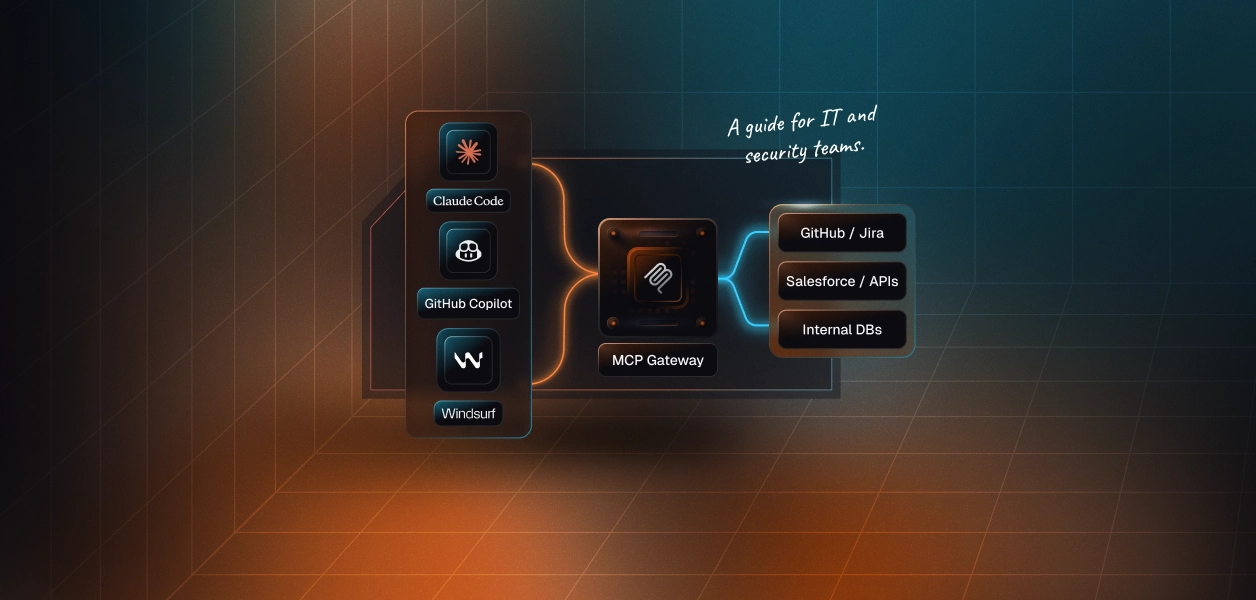
An MCP gateway sits between your agents and the tools they call, and centralizes the things you do not want scattered across every agent: authentication, authorization, routing, observability, and policy.
"Add a tool once, rotate a credential once, enforce a rule once."
That consolidation is the core value, and it is why teams that skip it in prototyping almost always add one before they ship.
A reasonable question is whether your existing API gateway already does this. It mostly does not, because the traffic shape is different. Traditional API traffic is stateless request-response, while MCP traffic is stateful, multi-turn, and action-oriented, with a discovery-then-call cycle the gateway should understand at the protocol level rather than just the HTTP level. Gateway patterns are now on the MCP roadmap itself, which is a signal that this layer is becoming formal infrastructure rather than an add-on.
Most products in this space did not start as MCP gateways. They started as something else and added MCP support later, and that heritage still shapes what they are good at. Six categories cover the field — tagged here by which situation each typically fits:
No category is best in the abstract. Each is the right answer to a different question, so the practical method is: start with what you're trying to do, find the category that matches your dominant constraint within that half, then choose the strongest option within it.
Feature lists blur these together, so it helps to separate the axes that change an architecture decision:
Three more axes rarely make the feature grid but cause real incidents or real frustration:
Performance overhead matters too, but for most product teams it is a tiebreaker, not the deciding axis.
One more thing worth naming directly: some queries in this space ask for a single control plane that federates MCP, A2A agent traffic, and traditional REST/gRPC APIs together, or that runs across multiple clouds and regions without deploying a separate stack per region. None of the 11 products profiled below is built primarily for that — it's a distinct architectural bet, and IBM ContextForge is the one option that takes it on directly (multi-protocol federation, auto-discovery across distributed, multi-cluster deployments). It's covered in full in Best Open Source MCP Gateways, not duplicated here, since evaluating it needs different criteria than the products in this list.
Many gateways treat the agent as a routing client: they hold a credential, often a shared service account or a passed-through client token, and forward calls. That centralizes secrets, which is genuinely better than scattering them, but it leaves a gap. The agent can usually do far more than the human who triggered it.
A human with read-and-update access to a CRM does not accidentally export fifty thousand records; an agent with the same token can. When the credential is shared or broadly scoped, an identity layer cannot tell one user's action from another's, and the audit trail cannot answer what the agent did on whose behalf. Treating the agent as an identity actor closes that gap: the agent acts as a specific user, with that user's scoped credential, isolated per tenant, and every action attributable.
Security-first products sit alongside this axis rather than on it. Tools such as Lasso Security inspect traffic for prompt injection, tool poisoning, and data exposure, and they are valuable, but they are usually layered onto a governance or identity gateway rather than replacing one.
These are the products a developer reaches for when their agent needs to call tools on behalf of many different end users — a build-time decision, made before the first customer shows up.
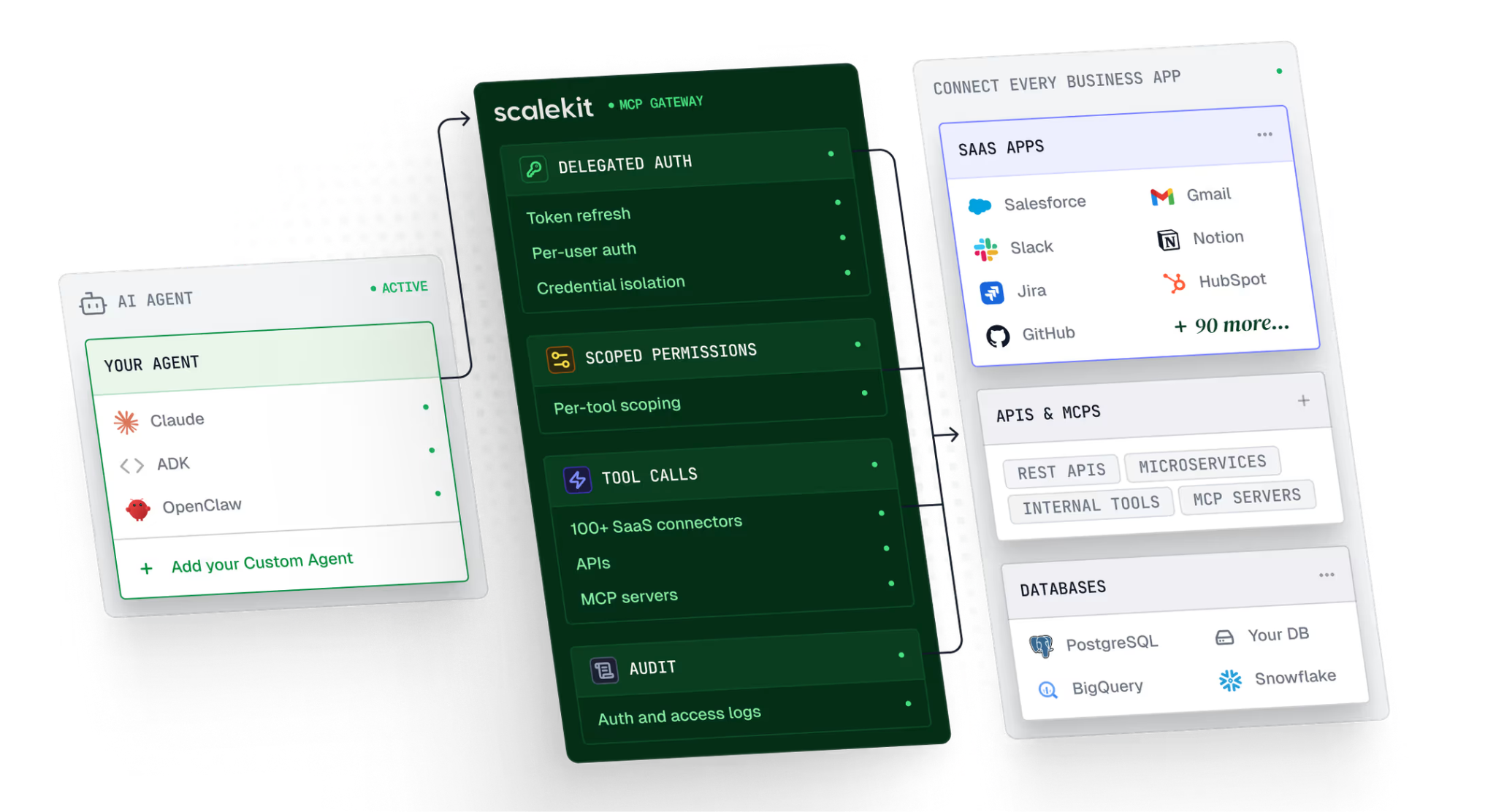
Scalekit approaches the problem from the identity layer rather than the network layer. When a user authorizes a connector, Scalekit creates a per-user connected account, and every tool call then runs under that specific user's credential, scoped to what they approved and isolated per tenant. The agent is modeled as a real identity acting on someone's behalf, across delegated-user, service, and token-exchange flows. Credentials sit in a per-tenant AES-256 vault that your code and the model never touch, and every action lands in a delegation chain you can export to a SIEM.
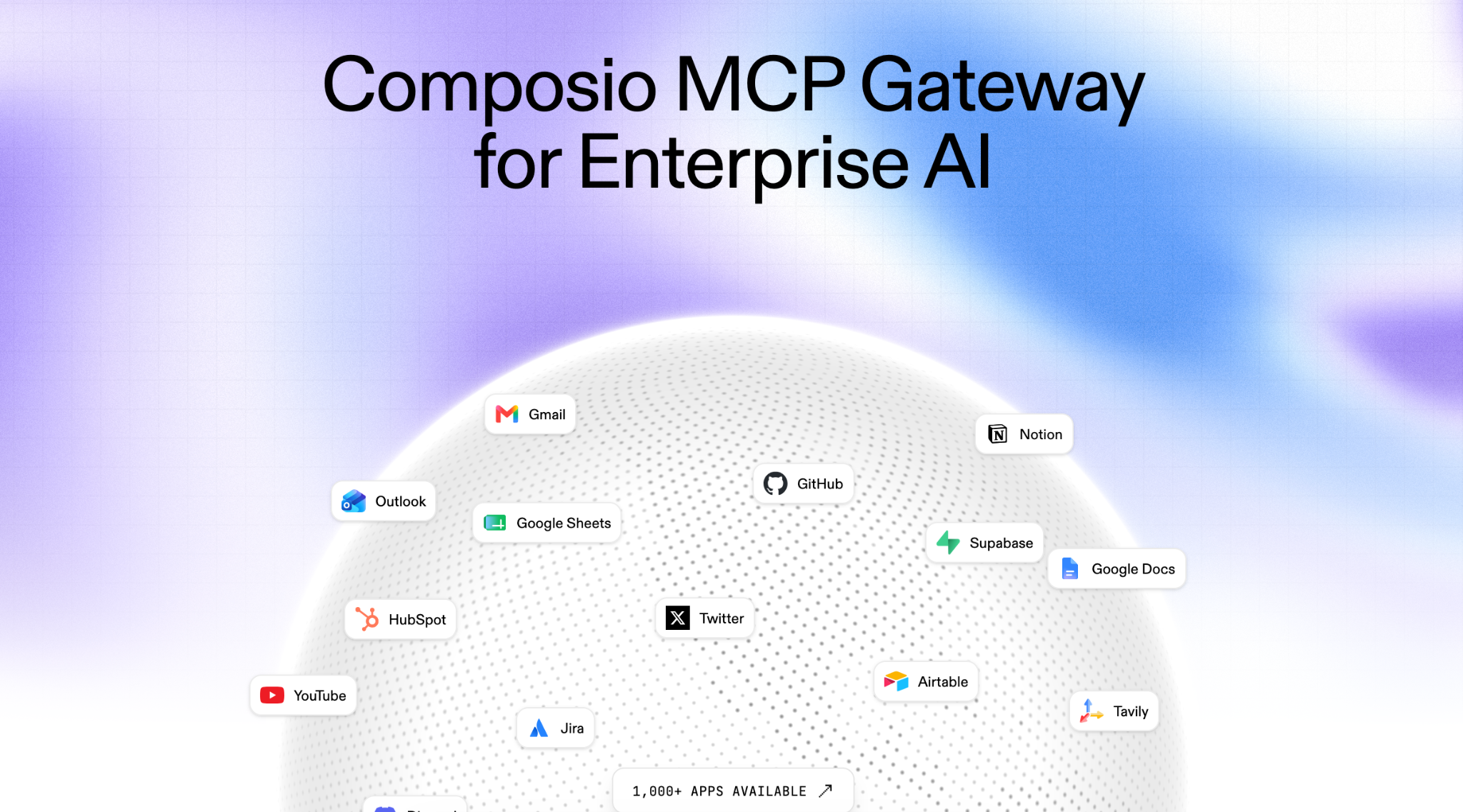
Composio is an agentic integration platform whose strength is breadth. It maintains 900-plus connectors, operating the OAuth flows, token refresh, and schema drift so your team does not. Its Tool Router exposes a single MCP endpoint with dynamic discovery and routes intelligently so a model is not flooded past the roughly thirty-tool comfort zone. Architecturally it behaves more like a managed integration platform that speaks MCP than a control or identity plane, which is the right trade when wiring many tools quickly matters more than owning the layer.
The May 2026 security incident: Composio disclosed a security incident in which roughly 5,241 API keys and 5,001 GitHub OAuth tokens were likely exposed — about 0.3 percent of active connections — with credentials rotated and revoked in response. It belongs in this comparison for an architectural reason: it maps onto where credentials live and the blast radius when a boundary fails, and any gateway that stores tokens in a central cache inherits those questions. The decisive failure was egress rather than execution. For teams reassessing: OAuth tokens cannot transfer during migration, and each user must re-consent once.
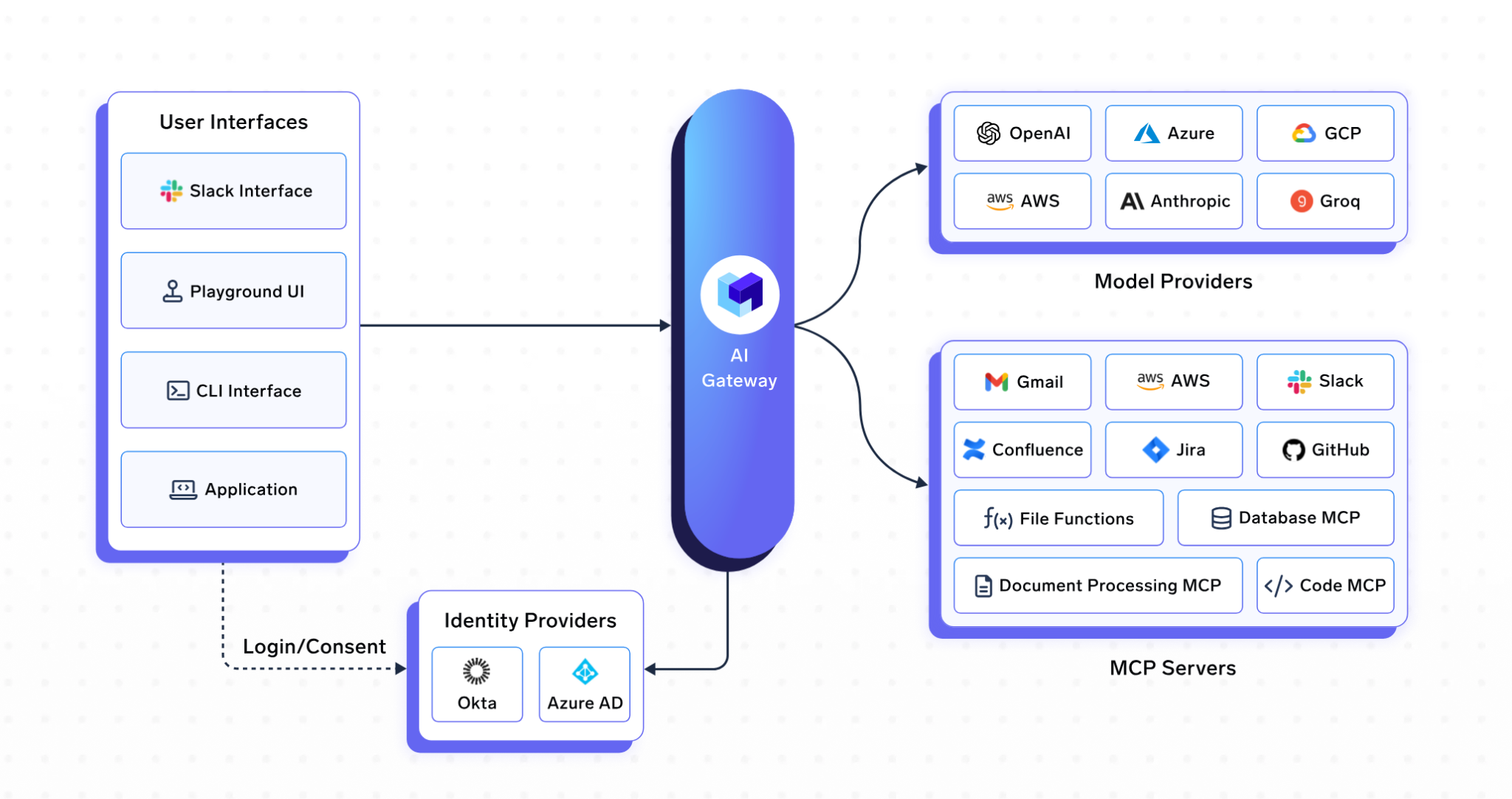
TrueFoundry is an MLOps and agentic-AI platform whose MCP gateway is one module beside model serving, fine-tuning, and LLM routing. Its calling card is performance: it handles authentication and rate limiting in memory rather than through database lookups, publishing sub-3-millisecond latency under load and figures like 350 requests per second on a single vCPU. For a team that wants one vendor across the whole AI lifecycle, the integration story is tight, since model traffic and tool traffic share one control plane, governance, and observability.
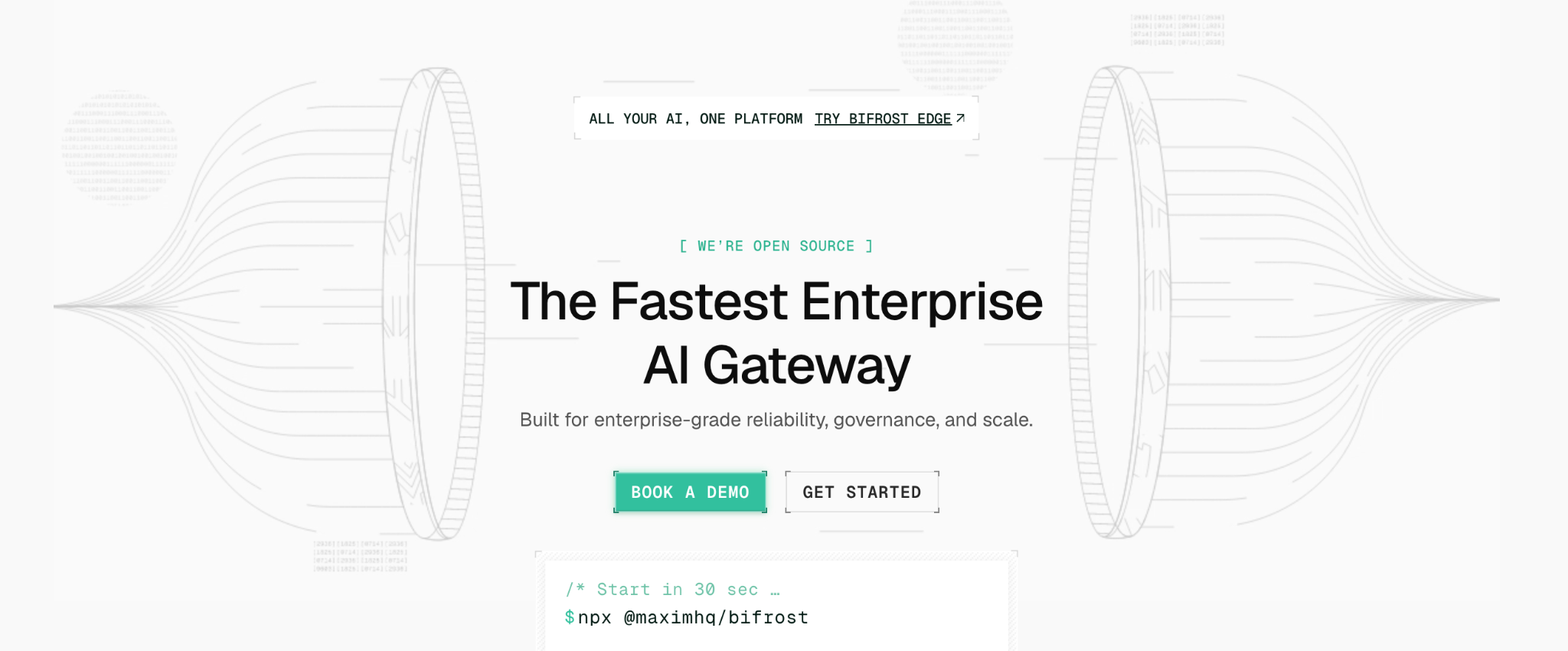
Bifrost is an open-source gateway that runs an LLM gateway and an MCP gateway as a single binary, governed by one virtual-key system, one audit log, and one observability pipeline. The architectural argument is genuine: a single agent turn interleaves model calls and tool calls, so routing them through two systems doubles the operational surface, splits cost data, and fragments traces. A notable security property is stateless, explicit tool execution, where the model's tool calls are treated as suggestions and execution requires a separate authenticated call from the application.
The Docker MCP Gateway runs each MCP server in an isolated container with restricted privileges, network, and resources, and manages the full lifecycle, spinning servers up on demand. It is open-source, ships inside Docker Desktop's MCP Toolkit, and runs standalone via the docker mcp CLI. Its catalog offers 300-plus verified, containerized servers with versioning, provenance, SBOMs, and supply-chain checks, and profiles scope which servers a given client can see. Security at the supply-chain and isolation layer is its strongest dimension — genuinely useful while you're building and testing integrations, before they reach production governance.
These are the products a platform, IT, or security team reaches for once agents are already running across a company — the rollout-governance decision, usually made after adoption has already started, not before.
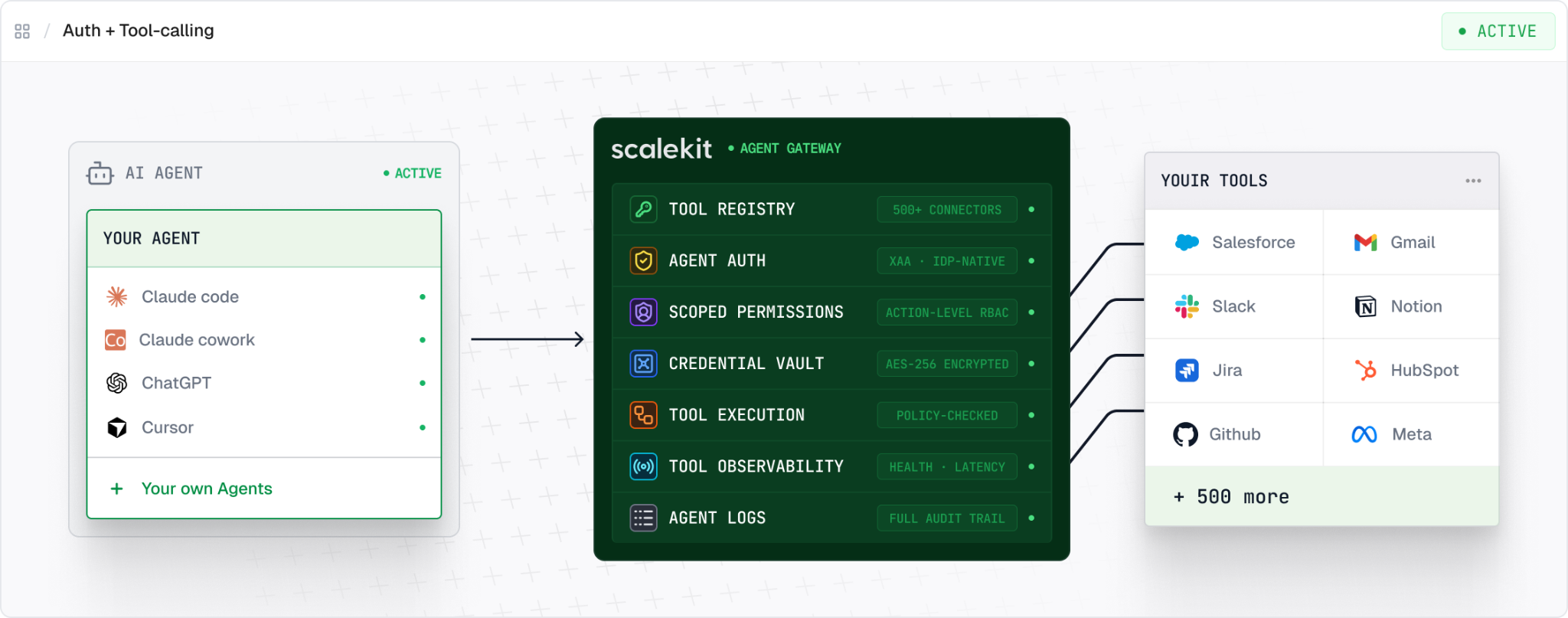
Where AgentKit models the agent as a specific user calling tools your product built, Agent Gateway applies the same identity-first premise to agents your own employees are already running — Claude, Cursor, ChatGPT, whatever gets adopted next. Access syncs from Okta or Google Workspace directly, enforced at the action level rather than the app level — a support role can read a customer account without being able to issue a refund — with every call attributed to the actual person, not a shared service account, and revocable in one click.
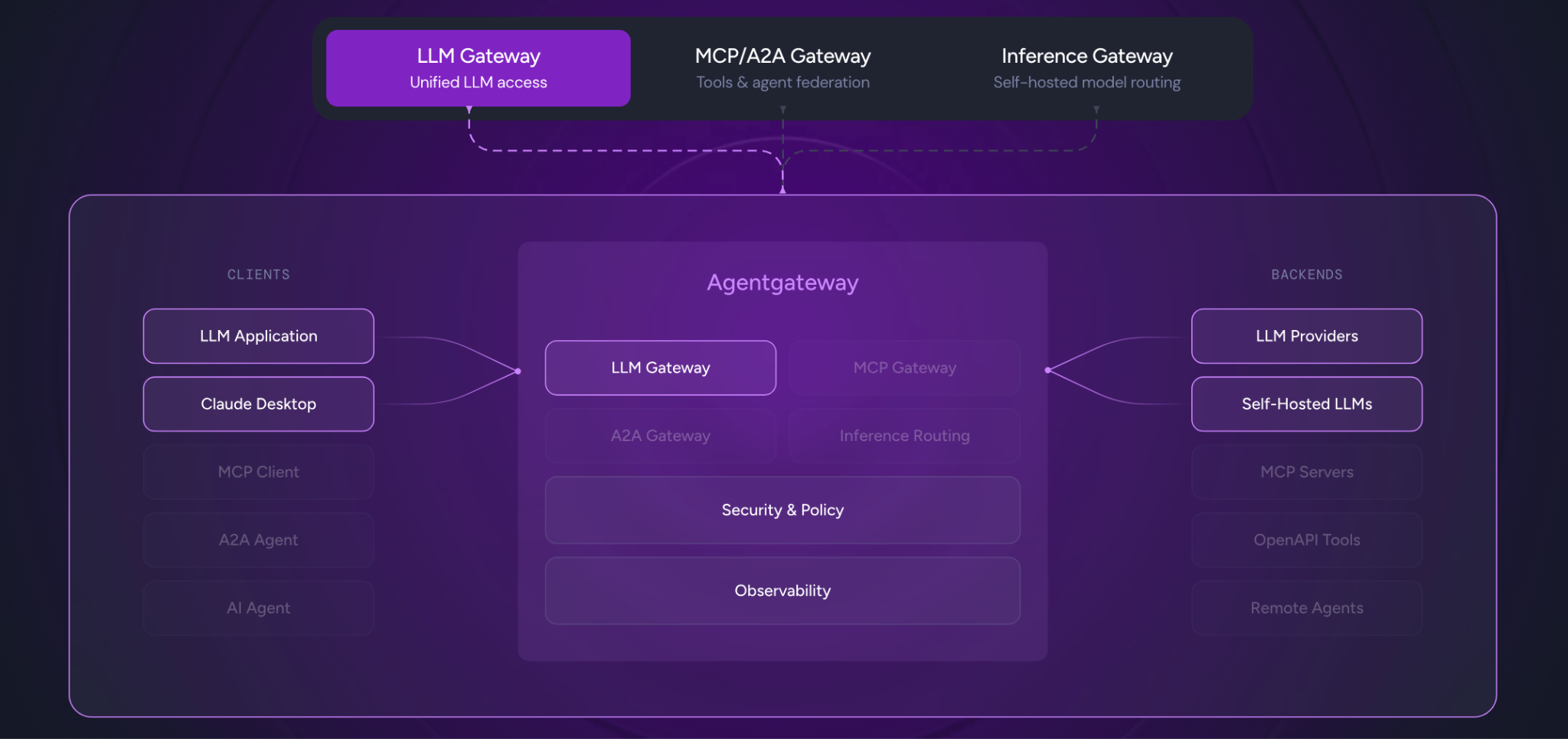
Solo's agentgateway brings Envoy and CEL heritage to MCP and is configured the way platform teams already work, through Kubernetes custom resources attached to an MCP route. Its data-plane primitives are mature: per-tool rate limiting expressed with CEL descriptors that inspect the JSON-RPC body to separate tool calls from other operations, plus layered gateway-level and route-level policies where the tighter route policy wins. For an organization already running Envoy and the Gateway API, it inherits that maturity rather than introducing a new runtime.
MintMCP is built governance-first and aimed squarely at regulated environments. It is SOC 2 Type II and HIPAA aligned, with SCIM-driven RBAC, enterprise SSO through SAML and OIDC, granular audit logs, and high availability with automatic failover. Its one-click deployment turns a local STDIO server into a production endpoint with authentication, logging, and access control configured by default, and it brokers OAuth so individual agents never hold raw credentials. Virtual MCP bundles and hosted connectors round out a data-permissions-first posture.
Honest constraint: it is a gateway and deployment tool, not a full lifecycle platform; there is no server registry or catalog, and pricing is sales-only.
Obot bundles a gateway, a curated catalog, server hosting, and a chat client into one open-source deployment under the MIT license, running on Kubernetes or Docker, or consumed as a managed service. Its built-in catalog is a searchable directory of approved servers with live documentation, capabilities, and IT-verified trust levels, which directly addresses the shadow-MCP problem of developers pasting unvetted URLs into clients. It is close to what a platform team would build for itself given many months.
Founded by Andy Berman (co-founder of Nanit and Vowel, later acquired by Zapier; previously Director of AI at Zapier, where he built Zapier MCP and Agents) and Tal Peretz (formerly leading ML in the Israeli Air Force). Runlayer approaches governance from the discovery side first: it finds the agents and MCP servers already running across a company before it tries to govern them, then scopes access by user, group, role, agent account, client, connector, tool, resource, OAuth state, network, and runtime condition before a call executes.
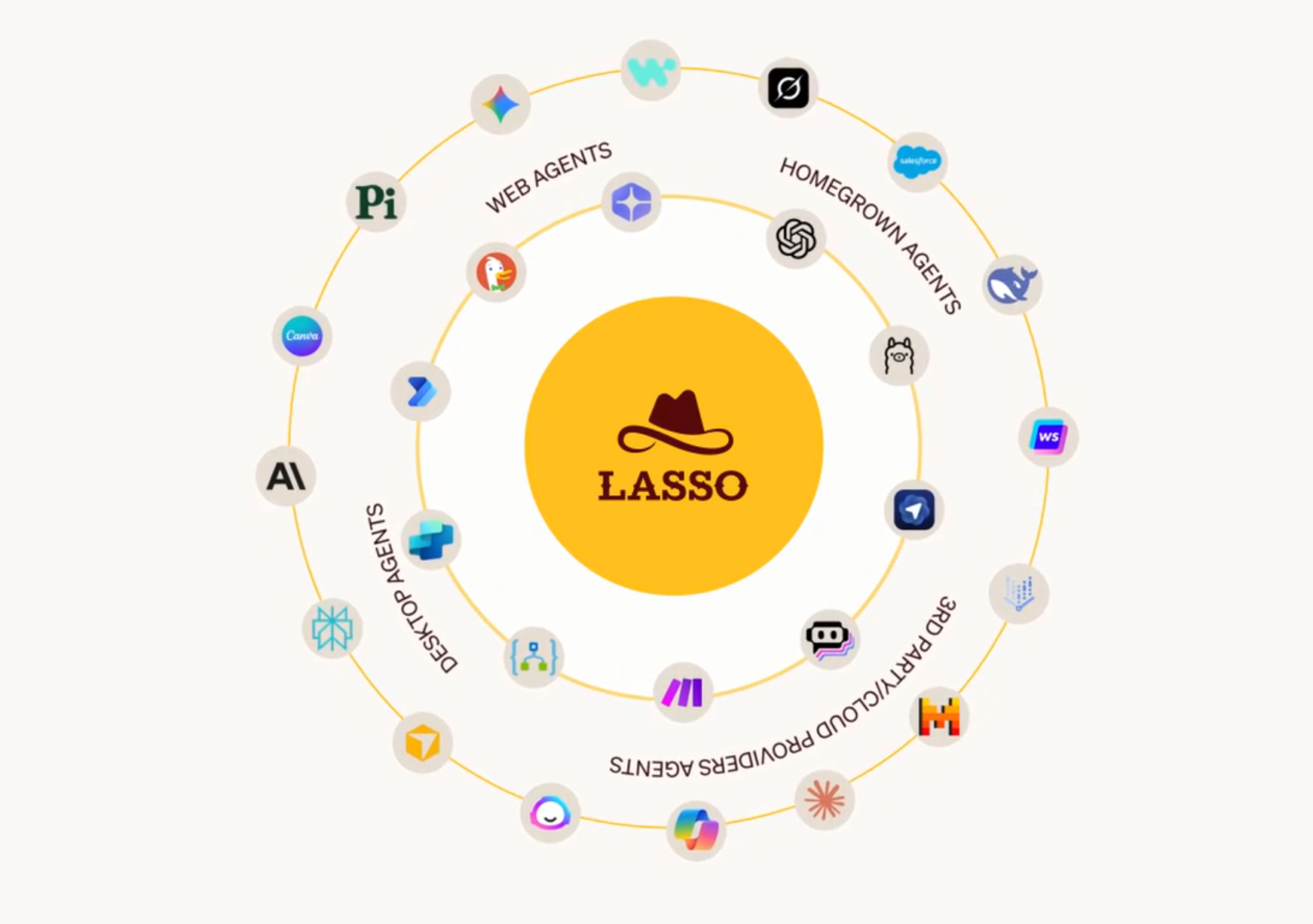
Lasso Security takes a security-first posture, using an open-source, plugin-based architecture to inspect MCP traffic in real time. It detects and mitigates prompt injection, command injection, and sensitive-data exposure, masks and redacts PII in both requests and responses, validates tool-call parameters, and filters network destinations, blocking malicious payloads before they reach the agent or the tool. That depth of inspection is its whole point, and it is positioned to complement rather than replace a governance gateway.
Note: the categories overlap at the edges, and several products reach into more than one. Use the table to choose where to start your evaluation, then test the two or three axes you cannot compromise on against a real workload, not a feature page.
There is no universally best MCP gateway, because the products are answers to different questions for different situations. The fastest way to a good decision is two steps: figure out whether you're building a product or governing an adoption already in motion, then name the one axis you cannot give up within that half — identity, breadth, unified control, infrastructure fit, compliance, or threat detection — and let that select your category before you compare anything else.
We think identity is the axis most teams underweight until it causes an incident, which is why we build both Scalekit products around the agent as an identity actor rather than a routing client — AgentKit for the product you're building, Agent Gateway for the agents your company has already adopted. If that is your binding constraint, start with the MCP security risks overview or the access control for multi-tenant AI agents guide. If it is not, one of the alternatives above is genuinely the better fit, and choosing it deliberately is the whole point of this guide.
No — this guide's whole argument is that "best" depends on what you're trying to do and which architectural axis you can't compromise on within that. A gateway built for identity-first, multi-tenant isolation and one built for Kubernetes-native routing are answering different questions, not competing on the same one.
If you're writing code that calls tools on behalf of your own product's end users, you're a builder. If you're trying to see and control agents your employees have already started using, you're governing an adoption already in motion. Most teams are only one of these at a time, even if the same company eventually needs both.
If more than a handful of people need to discover and request approved MCP servers themselves, a registry matters — without one, every connection is a one-off someone has to already know about by name. Several products in this list, including strong ones on other axes, don't ship one.
Usually, but not cheaply — identity and credential-handling patterns get embedded in agent logic early. Confirm your binding constraint before building rather than after.
Treat it as a starting point, not an answer. Ask specifically: does access resolve to a real person or a shared credential, what does the audit trail actually capture, is enforcement at the tool level or the parameter level, and where does the free or default tier stop versus a paid add-on. Most "MCP support" claims are true and still don't answer any of those.
Not in this list, honestly. MintMCP and TrueFoundry lead on SSO/SCIM/RBAC depth; Runlayer and Lasso lead on real-time threat scanning (tool poisoning, PII masking, command injection). Several products cover pieces of both, but the sharpest version of each capability currently lives in a different product. If you need all three at real depth, plan on layering a scanner like Lasso or Runlayer onto a governance plane rather than expecting one vendor to lead on every axis.
Not among the 11 profiled above — that's a distinct architectural bet from what most of this list is built for. IBM ContextForge is the option built specifically for multi-protocol, multi-cluster federation; see Best Open Source MCP Gateways for that profile.