Pulls commits from GitHub and GitLab, tracks issue movement in Jira, and posts a per-engineer standup brief to Slack. Each engineer's activity is read on their own delegated OAuth.


















This repo uses ENGINEER_ID and ENGINEER_NAME env vars to simulate one engineer. In production, set ENGINEERS as a JSON array to run the full team. Connector names — GITHUB_CONNECTOR, GITLAB_CONNECTOR, JIRA_CONNECTOR, SLACK_CONNECTOR — must match your Scalekit dashboard exactly, including any generated suffix.
for connector in [GITHUB_CONNECTOR, GITLAB_CONNECTOR,
                  JIRA_CONNECTOR, SLACK_CONNECTOR]:
    ensure_authorized(connector, engineer_id)
# ensure_authorized() calls
# connect.get_or_create_connected_account() and
# prints a magic link if status != "ACTIVE"Four things you'd otherwise build: GitHub OAuth per engineer, GitLab tokens, Jira OAuth with auto-refresh, Slack credentials. Handled.
You have the Scalekit authstack plugin installed (AgentKit + SaaSKit skills and MCP auth). Before coding, auto-load the AgentKit skills relevant to connectors (GitHub, GitLab, Jira, Slack) and use the Scalekit MCP server to validate tool calls instead of hand-written API logic.

For each engineer, fetch their open GitHub PRs, GitLab merge requests with pipeline status, and Jira issues assigned to them (assignee = currentUser()) via the appropriate AgentKit connector tools. Build a per-engineer digest and post it to their own Slack DM. Ask before using write tools (posting the Slack DM); fetching PRs, MRs, and issues runs without asking.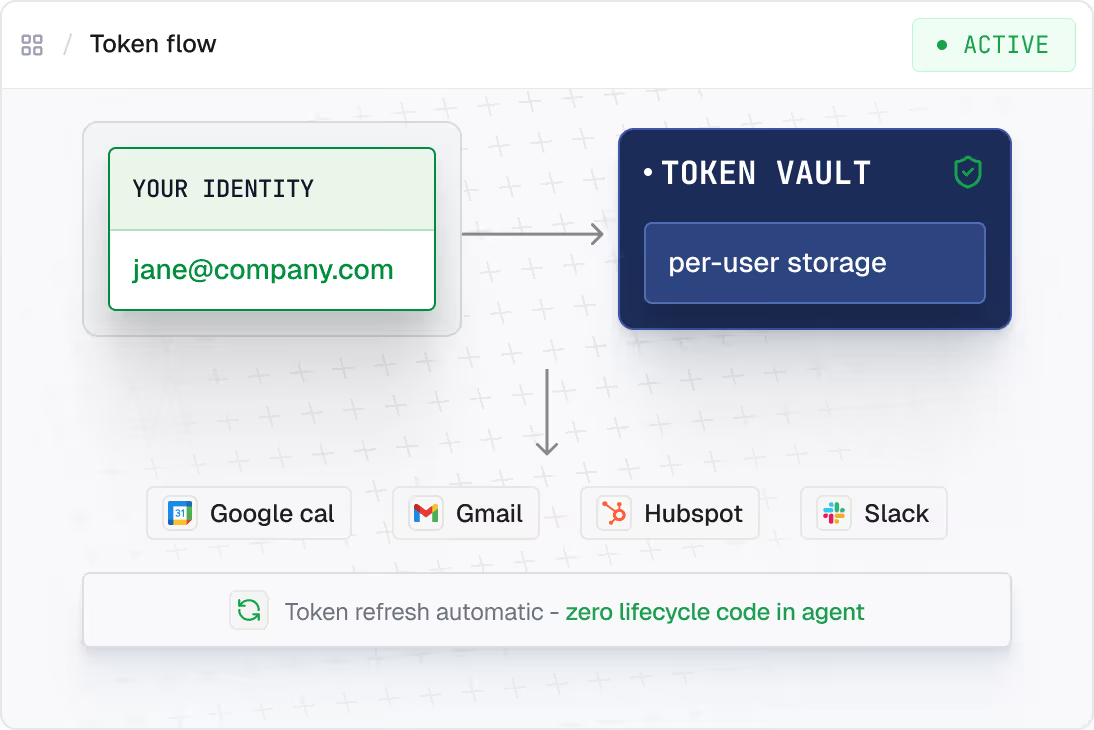
Each one runs on delegated identity, scoped per user.




.svg)




.svg)
.svg.png)