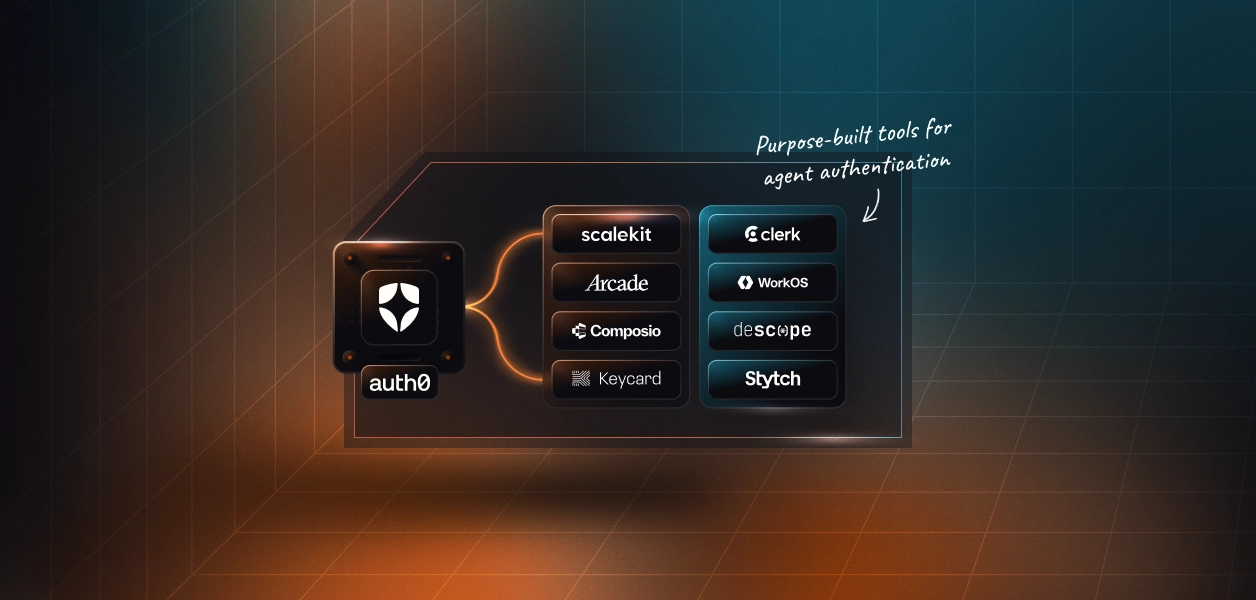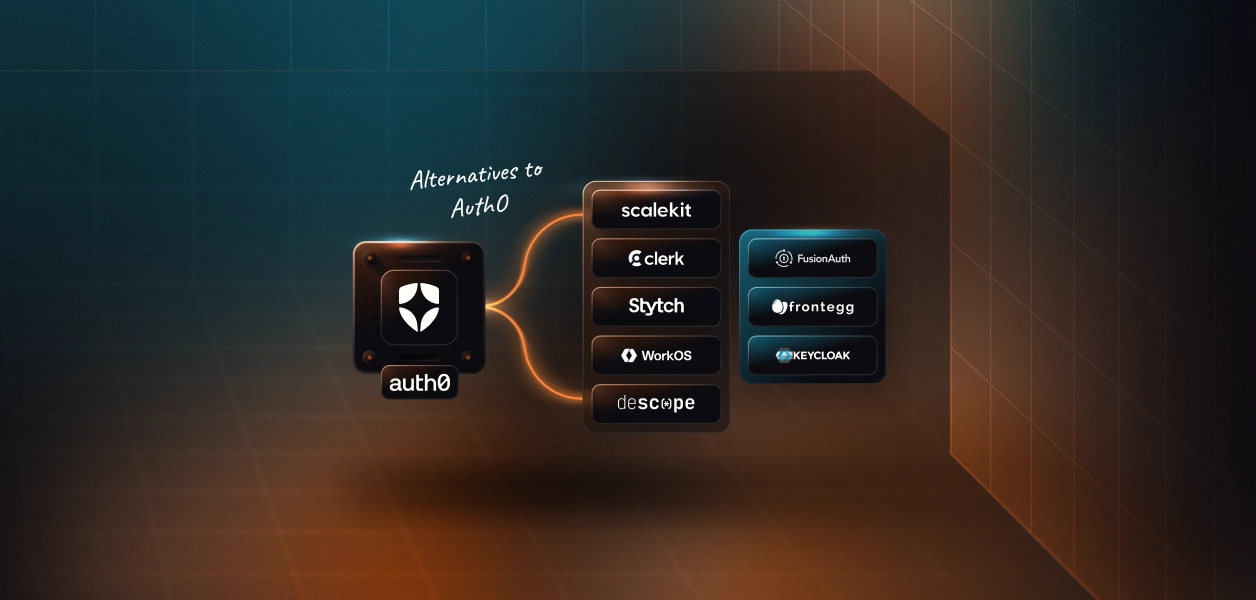


Auth0 played a significant role in standardizing how many SaaS teams implemented identity. It helped popularize OAuth and SAML and made it practical for teams to rely on a managed service rather than building authentication from scratch.
Auth0 continues to offer broad protocol support and a flexible platform for implementing authentication.
However, B2B needs in 2026 are no longer defined by flexibility or breadth alone.
For one, identity has become a control layer that determines how users and non-user actors: APIs, agents, MCP servers, background jobs, and external systems—access an application, with permissions enforced through scopes, roles, and tenant boundaries. Teams evaluating Auth0 alternatives are usually not reacting to missing authentication features. They are responding to how identity behaves when it becomes embedded in core product architecture.
This article examines common Auth0 alternatives and outlines the tradeoffs teams encounter as identity requirements expand.

Teams rarely move away from Auth0 because it stops working. More often, they reach a point where the operational cost of identity begins to outpace the value it provides.
Auth0 supports organizations, roles, and enterprise SSO, but these features are layered on top of a model where users remain the primary identity object. As B2B usage grows, teams commonly compensate by mapping users to organizations in application tables, encoding org-specific rules in code, and manually carrying organizational context through tokens, sessions, and logs.
At that point, identity still functions, but it is no longer fully contained within the identity platform. Core semantics are split between configuration, custom hooks, and application logic, making identity harder to reason about as a single system.
As products mature, access control tends to spread across multiple layers. Decisions are shaped by dashboard configuration, Actions, token claims, application-level checks, and sometimes external authorization services.
Each layer solves a real requirement, but together they fragment the identity model. Understanding why access was granted or denied increasingly requires tracing through several systems. Identity stops behaving like stable infrastructure and starts behaving like a set of moving parts that need ongoing attention.
Modern B2B platforms rarely serve only human users. Over time, products introduce agents acting on behalf of users, background jobs with side effects, API clients, CLI tools, and inbound systems such as MCP servers.
Auth0 can support these flows, but they are typically modeled indirectly as applications, scopes, or long-lived tokens. As non-user traffic grows, those abstractions blur the line between human intent and automated execution. Policy enforcement shifts deeper into application code, tokens become broader than intended, and observability becomes too shallow to explain real-world behavior.
At this stage, identity is no longer just about login. It governs how work happens across the system, often without being designed as a runtime control layer.
That is usually when teams begin looking beyond Auth0.
Recommended reading: Add enterprise SSO on top of your Auth0 setup
Note: To make pricing comparable across vendors, all estimates below use the same representative scenario:
A B2B AI app in 2026 with 200 customer organizations, ~8,000 monthly active users, and 50 customers requiring enterprise SSO (and SCIM where supported).
Each vendor section applies this scenario to the vendor’s published pricing (and published volume slabs where provided). Numbers are approximate and meant to show pricing behavior, not exact invoices or negotiated contracts. The assumptions are made to give a fair idea about auth0 alternatives to both enterprises and high-growth startups in scaleup phase who are evaluating authentication stack.
Clerk originated in the consumer and frontend-centric SaaS ecosystem, with a strong emphasis on developer experience and UI components. Its adoption remains strongest in consumer apps and developer tools where authentication is primarily user-driven.
Clerk has added B2B features over time, including Organizations, basic multi-tenancy, enterprise SSO (SAML and OIDC), and role-based access control. These additions make it usable for simpler B2B products, particularly where enterprise requirements are limited.
Where friction typically appears
B2B functionality is layered on top of a user-centric foundation. Enterprise features are add-ons rather than defaults, SCIM provisioning is not supported, and fine-grained roles require the Enhanced Organizations add-on. Authorization beyond basic RBAC and non-user actors such as services, background jobs, or agents typically live in application code.
Pricing (based on the shared scenario)
Clerk SSO uses published volume slabs and should be priced cumulatively:
Estimated monthly total: ~$3,275/month
This does not include SCIM, which would require additional tooling outside Clerk.
Estimated monthly total: ~$3,435/month
This does not include SCIM, which would require additional tooling outside Clerk.
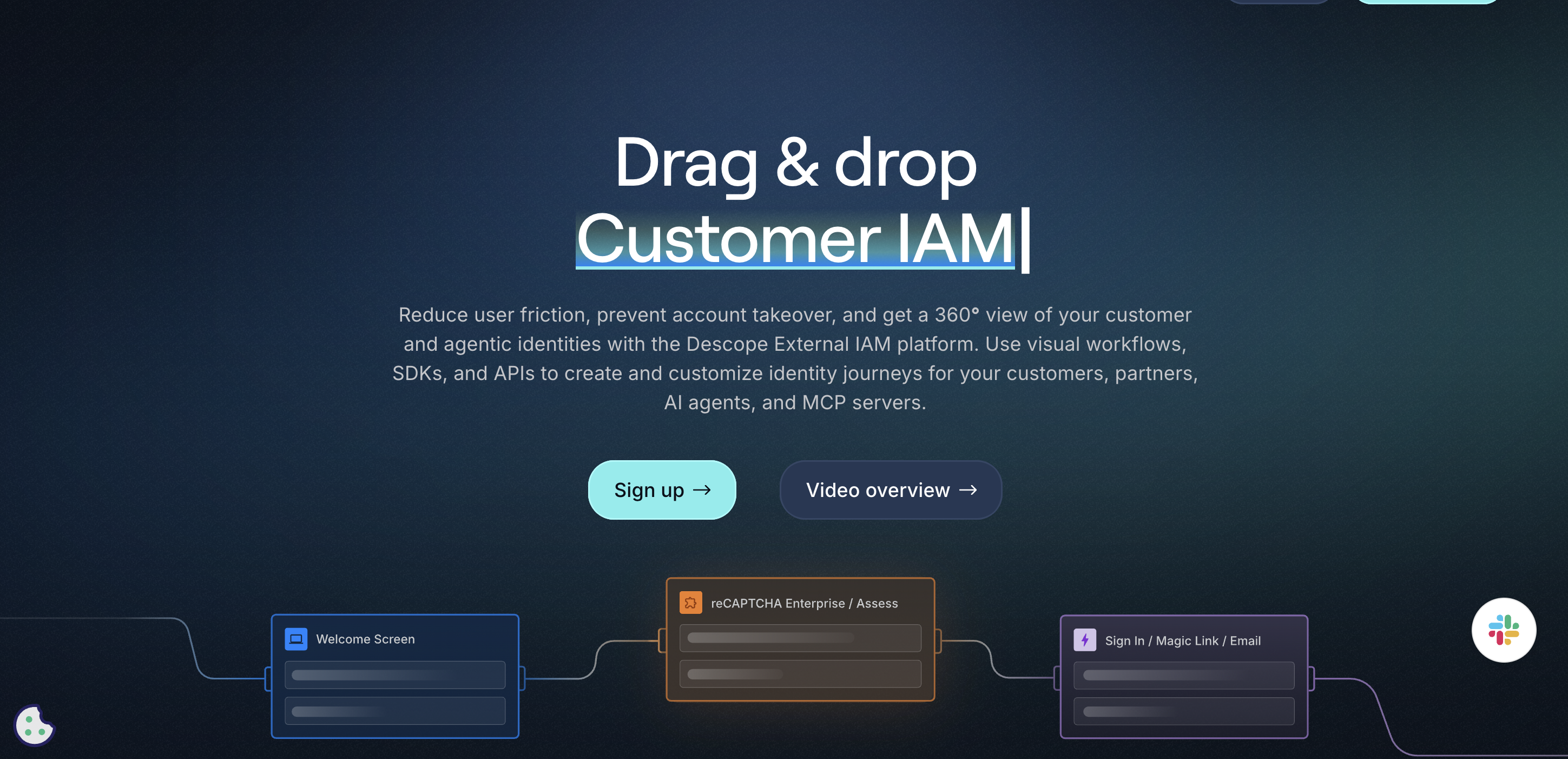
Descope approaches authentication as configurable visual workflows. Teams define login, signup, and MFA behavior through no-code or low-code tools rather than writing authentication logic directly.
Descope supports B2B use cases with organizations, enterprise SSO, SCIM provisioning, and directory sync.
Where friction typically appears
The primary abstraction is workflow configuration rather than identity architecture. Authorization logic, complex org hierarchies, and non-user actors generally live in application code. Users can exist independently of organizations, so teams building strictly org-first products often add additional enforcement themselves.
Pricing (based on the shared scenario)
With 50 SSO connections and ~8,000 MAUs, typical public plan caps are exceeded.
Estimated monthly total: ~$3,000–$4,000+ (custom pricing)
Exact pricing depends on negotiated MAU and SSO limits.

WorkOS is commonly adopted to add enterprise authentication capabilities such as SAML-based SSO, SCIM provisioning, and audit logs. It is frequently used when enterprise readiness becomes a requirement.
WorkOS participates in authentication architectures but is typically paired with another system for user login, sessions, and authorization.
Where friction typically appears
Identity logic is split across systems. Enterprise connections live in WorkOS, while core authentication and authorization live elsewhere. As products expand into APIs, services, agents, and workflows, additional policy and coordination logic is often required outside the identity layer.
Pricing (based on the shared scenario)
WorkOS volume discounts should be applied cumulatively. For 50 SSO + 50 SCIM connections:
Estimated monthly total: ~$10,950/month
This does not include the cost of the primary authentication system.
Frontegg bundles authentication, tenant management, roles, entitlements, and an admin UI into a single B2B SaaS-focused product. It’s typically chosen when teams want a bundled, UI-forward identity layer quickly.
Where friction typically appears
The platform is opinionated about SaaS identity patterns. Identity logic is closely coupled to the provided admin UI. Teams building API-first products, custom authorization models, or execution-heavy systems often encounter constraints or end up duplicating policy logic elsewhere.
Pricing (based on the shared scenario)
Using Frontegg's published SSO pricing with a free allowance on the first 5 connections:
Estimated monthly total: ~$5,625/month + base plan
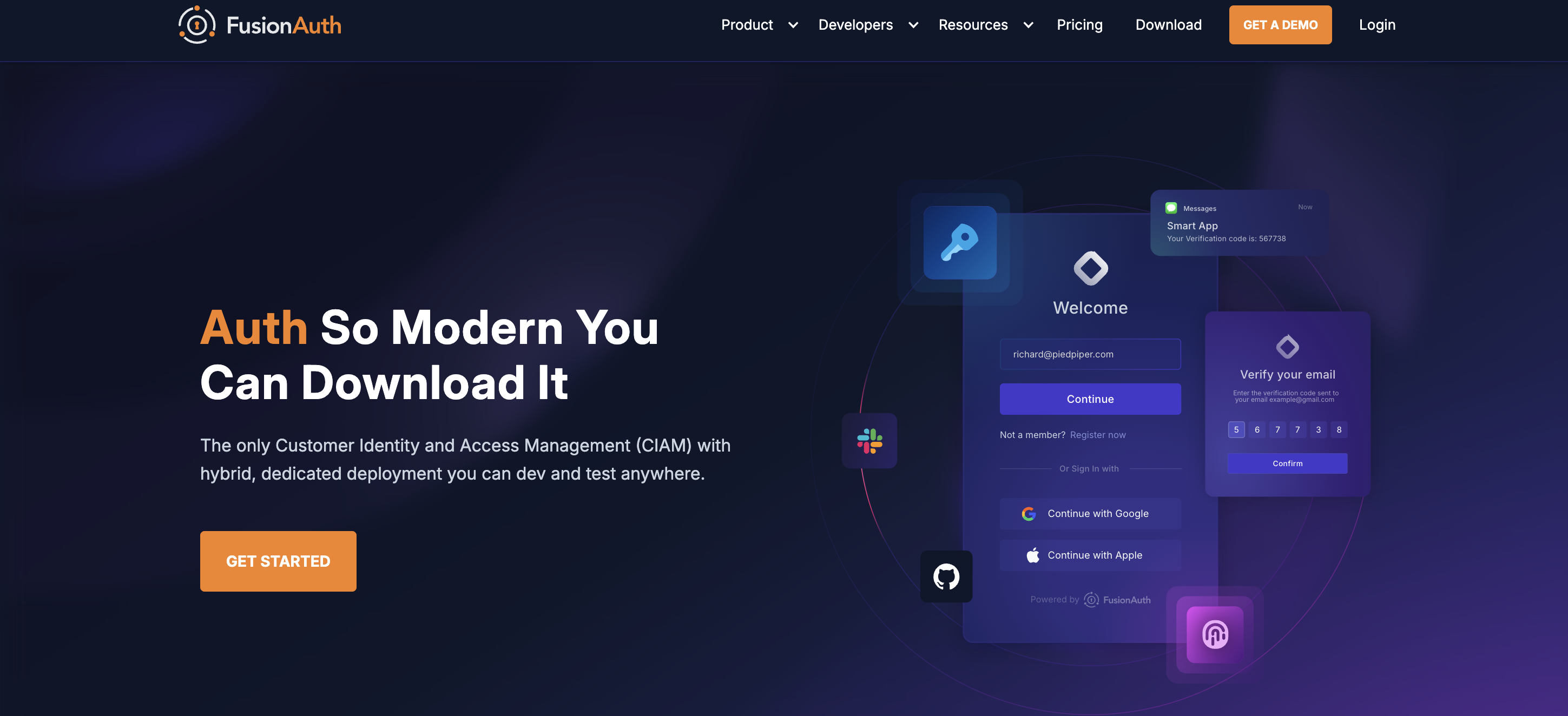
FusionAuth emphasizes flexibility and ownership. It supports standard protocols and offers hosted and self-managed deployment options.
FusionAuth Tenants act as namespaces for isolating users and configuration, not as native customer organizations within a single application.
Where friction typically appears
B2B organizational modeling, enterprise workflows, authorization systems, and admin experiences must be designed and maintained by the team. Identity becomes part of the platform engineering surface rather than a managed layer.
Pricing (based on the shared scenario)
Estimated monthly total: $500+ plus internal engineering cost
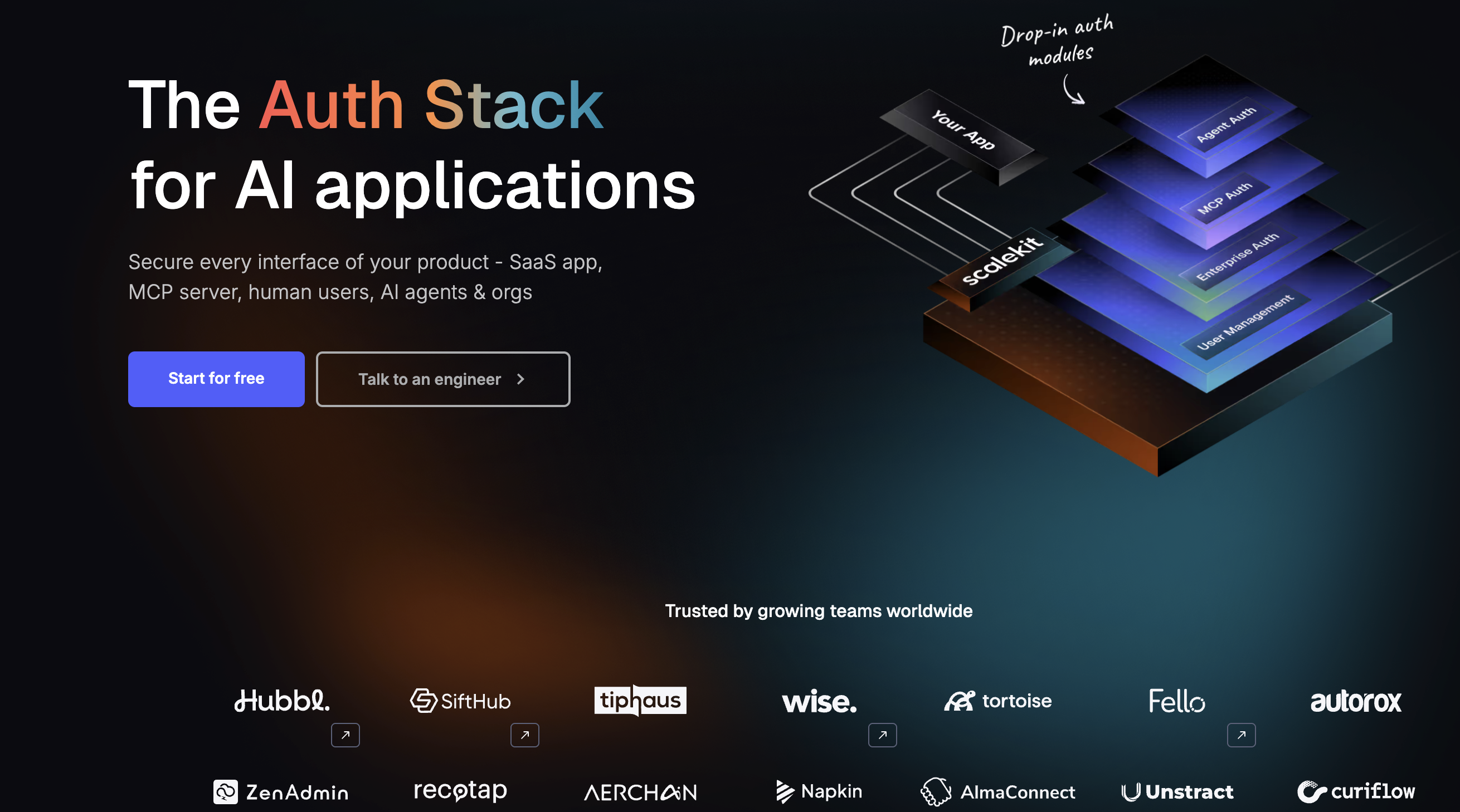
Scalekit is designed as an org-first identity layer for B2B products where identity needs to remain coherent as the product surface expands beyond user login.
Instead of treating identity as configuration attached to each application or protocol, Scalekit treats identity as shared infrastructure that sits in front of the product and governs access consistently across users, enterprise access, APIs, services, and execution paths.
This distinction becomes material once identity stops being “how users log in” and starts acting as a control layer for how work happens inside the product.
Where it differs structurally
This architecture is designed to absorb new identity surfaces over time without forcing teams to rework their model as products expand into automation, workflows, and AI-driven execution.
Pricing (based on the shared scenario)
Assumes 200 customer organizations, ~8,000 MAUs, and 50 organizations requiring enterprise SSO and SCIM:
Scalekit pricing is aligned to how B2B products actually scale: by onboarding more organizations and expanding enterprise access, not by penalizing user growth or forcing plan jumps as enterprise adoption increases.
Keycloak is an open-source identity and access management system that supports OAuth, OIDC, and SAML. It’s commonly adopted by teams that want maximum control and are comfortable operating identity infrastructure themselves.
Where complexity accumulates
Keycloak provides low-level building blocks rather than B2B-native abstractions. Organizations, memberships, roles, enterprise onboarding flows, and customer-facing admin UX are typically implemented by the product team. SSO can be supported, but per-customer configuration and lifecycle management often becomes operational work. SCIM and directory-driven lifecycle workflows usually require additional components or custom implementation. Upgrades, security posture, and operational reliability stay on your team.
Pricing (based on the shared scenario)
Estimated monthly total: $0 licensing + meaningful engineering/ops cost

Stytch offers a B2B authentication product built around Organizations and Members, with support for SSO, SCIM, directory sync, and role-based access control.
Stytch was acquired by Twilio in 2025. Some teams factor that into vendor-risk discussions, especially around long-term product direction and prioritization.
Where friction typically appears
Authorization beyond standard RBAC remains application-owned. Policy enforcement across APIs, services, and execution paths is not centralized. Non-human actors such as machine-to-machine integrations, background jobs, MCP servers, and AI agents are not modeled as distinct identity types and are commonly handled via reused Member identities or custom logic.
Pricing (based on the shared scenario)
Assumes 8,000 MAUs and 50 orgs needing both SSO and SCIM, with 5 connections included:
Estimated monthly total: ~$7,225/month
Pricing is not just a procurement concern. It shapes how teams use identity. Auth0's pricing model is driven by three main factors:
Monthly active users (MAU): This is the primary pricing dimension.
Free tier: Up to 25,000 MAU
Essentials: $150/month
Professional: $800/month
Enterprise: Custom pricing
Enterprise capabilities are locked behind plan tiers or sold as add-ons:
Each environment (dev, staging, production) requires a separate tenant. At scale, you're effectively paying 3x for the same user base across environments.
1. MAU growth outpaces revenue
if you're building a workspace product where one customer might have 500 users but generates $2,000/month in revenue, Auth0's pricing can consume 20-40% of gross margin.
The problem compounds with seat-based pricing models common in B2B SaaS.
2. Enterprise features are required earlier
SSO and directory sync aren't enterprise nice-to-haves anymore. They're table stakes the moment you go beyond selling to startup/SMBs.
But Auth0 treats them as premium features gated behind higher tiers or add-ons.
3. Machine actors multiply cost
That API service checking permissions? It counts as an MAU if it authenticates. Your nightly sync job? MAU. Your AI agent making authenticated requests? MAU.
The pricing model was built for humans logging into web apps, not modern B2B architectures with APIs, background jobs, and agent workflows.
4. Multi environment tax
Most teams run dev, staging, and production environments. Auth0 charges per tenant. At scale, infrastructure costs triple for the same logical user base.
1. Is your product fundamentally multi-tenant?
If organizations are your primary trust boundary, identity needs to model them as first-class objects. Some platforms treat organizations as core primitives. Others require you to layer organizational structure on top of a user-centric model, which adds application logic and long-term maintenance.
2. Do you already have non-user actors, or will you soon?
Modern B2B products rarely stop at human users. APIs, background jobs, automation, agents, and MCP servers all require authenticated access. Many identity systems force these actors into workarounds like application credentials or service accounts rather than modeling them directly.
3. How broadly will enterprise SSO be adopted?
If enterprise SSO is needed by a meaningful portion of your customers, it should behave like a baseline capability, not a premium upgrade. The way SSO and provisioning are priced and integrated will shape how easily you can roll it out across your customer base.
4. Are you comfortable spreading identity logic across systems?
Some platforms are intentionally scoped and expect you to combine multiple tools to cover login, enterprise access, authorization, and lifecycle management. Others aim to centralize identity decisions. The tradeoff is flexibility versus operational complexity.
5. Will user growth track revenue growth?
In many B2B products, customer value scales by organization, not by raw user count. Pricing models tied strictly to active users can become misaligned as teams and usage grow faster than revenue.
6. Do you need identity to work across multiple environments without multiplying cost?
Development, staging, testing, and production environments are table stakes for modern teams. Identity platforms vary widely in how they handle environments, isolation, and pricing as you add them.
There is no shortage of capable identity platforms. Most can authenticate users and support standard enterprise requirements.
The difference in 2026 is not who can handle login. It is who can keep identity coherent as products expand across organizations, APIs, automation, and agents.
That coherence determines whether identity remains infrastructure you rely on, or a system you continuously maintain.