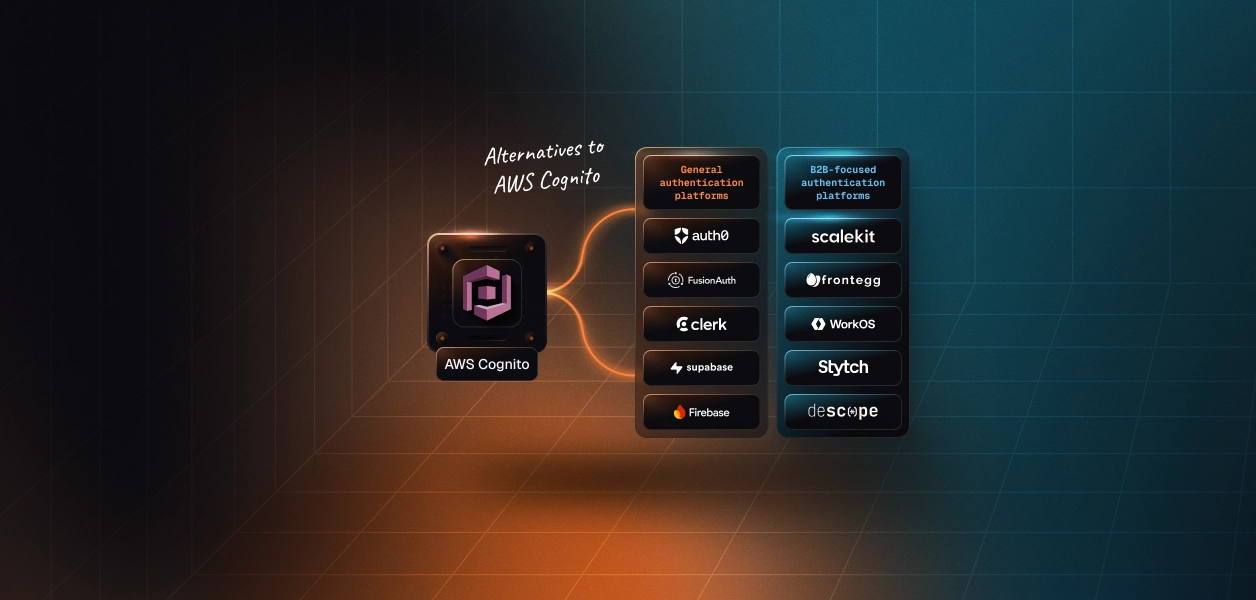


If you’re evaluating alternatives to AWS Cognito, you’re likely already past the basics.
The friction usually shows up when:
But just as importantly, it shows up inside your engineering org.
What begins as a small amount of authentication glue code gradually expands into org-user mapping logic, per-customer SSO handling, and authorization checks spread across services. Over time, Cognito doesn’t just accumulate technical debt, it creates organizational debt. Platform engineers get pulled into maintaining identity plumbing, product teams slow down because access-related changes become risky, and foundational auth decisions start competing with core product work for roadmap attention.
At that point, teams realize that Cognito’s user-centric model doesn’t scale cleanly into B2B or AI-native architectures. This article looks at the paths teams take next — and how different enterprise authentication platforms approach the problem.
Teams don’t replace Cognito because of one missing feature. They replace it because multiple pressures stack up.
SSO and multi-tenancy usually arrive together and they surface the same underlying issue.
In Cognito:
As a result, teams end up:
SSO friction isn’t the real problem.
It’s the signal that organizations were never a first-class primitive.
As B2B usage grows, identity stops being invisible infrastructure.
Customers expect:
Security and IT teams expect:
Cognito was designed to authenticate users not to operate as a product-facing identity layer.
AI-native products introduce a different class of identity problem.
Now you have:
These actors require:
Cognito supports machine tokens, but not agent semantics.
This is often the final trigger for re-evaluation.
Most teams don’t just switch tools – they switch authentication models.
In practice, Cognito alternatives fall into three broad categories:
Understanding these categories matters more than comparing feature lists.
B2B-focused authentication platforms start from a different assumption: organizations, not users, are the core unit of identity.
They aim to:
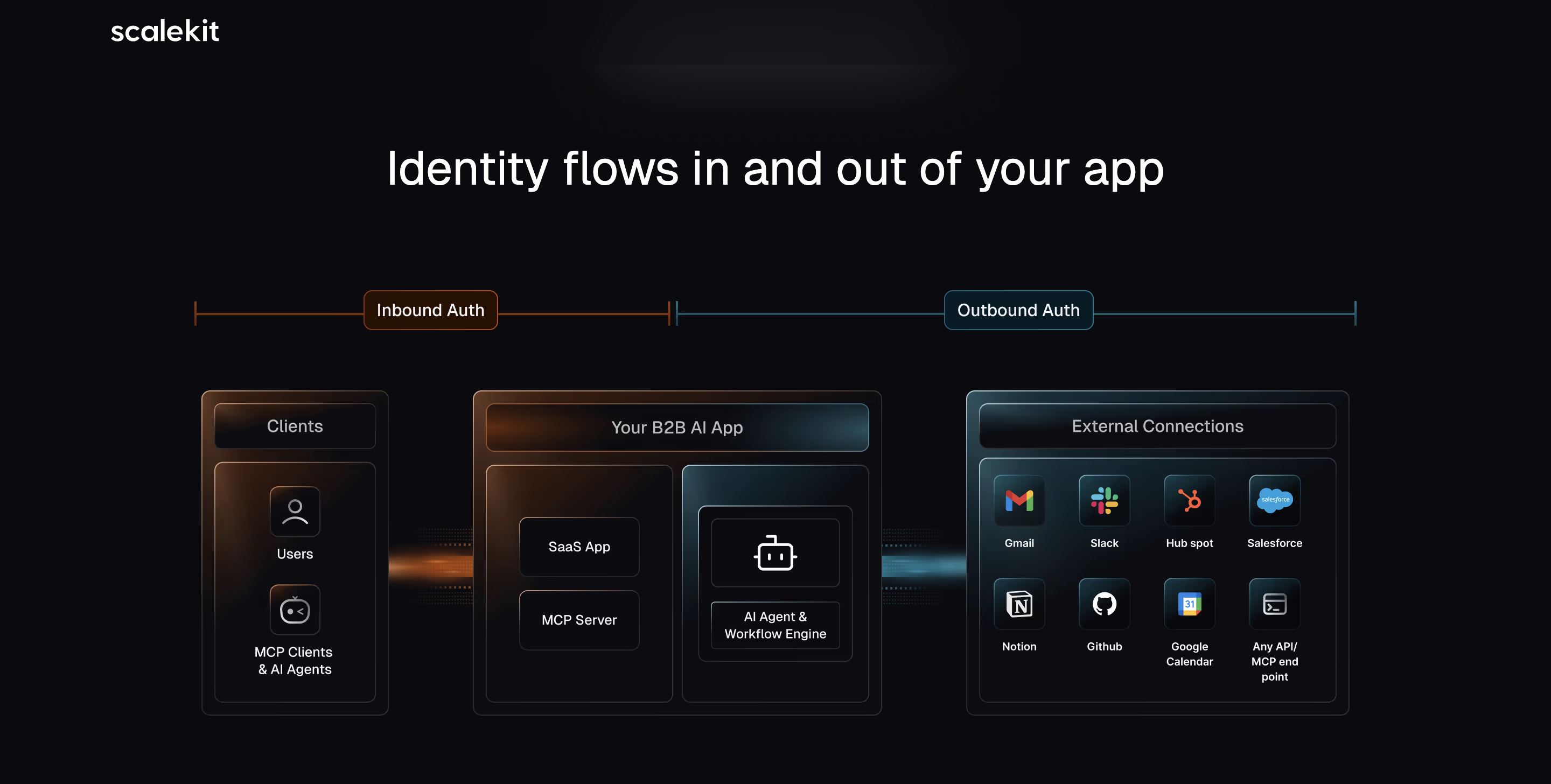
Scalekit is built on a core architectural assumption that differs sharply from Cognito and most general-purpose auth systems: B2B authentication must sit outside your application logic, not be embedded inside it.
Scalekit acts as an org-native authentication layer that intercepts identity and access decisions before they reach your product. Organizations, users, machines, and access policies are resolved as part of a shared control plane, rather than being reconstructed inside application code.
Org-native identity foundations
Organizations are the root object. Users, machine identities, roles, and permissions are all scoped explicitly to an org- not inferred through claims or metadata.
Tenant-scoped authorization via interceptors
Scalekit uses interceptors that sit in front of your APIs to resolve:
Before the request reaches business logic. Authorization is enforced once, centrally, rather than duplicated across services.
Enterprise SSO as a managed lifecycle
Scalekit's SSO is designed around real enterprise workflows:
No per-customer SSO code paths.
Clean separation of auth infrastructure and product logic
Authentication and authorization happen upstream. Product services receive requests with resolved org context and permissions, simplifying reasoning, auditing, and evolution.
Machine and service identities tied to organizations
Non-human identities are first-class citizens, enabling integrations, background jobs, and a clean path to agent-based systems.
What this changes vs Cognito
Instead of retrofitting B2B semantics, Scalekit assumes them by default - which is what makes it viable as a long-term foundation for B2B SaaS authentication and authorization.
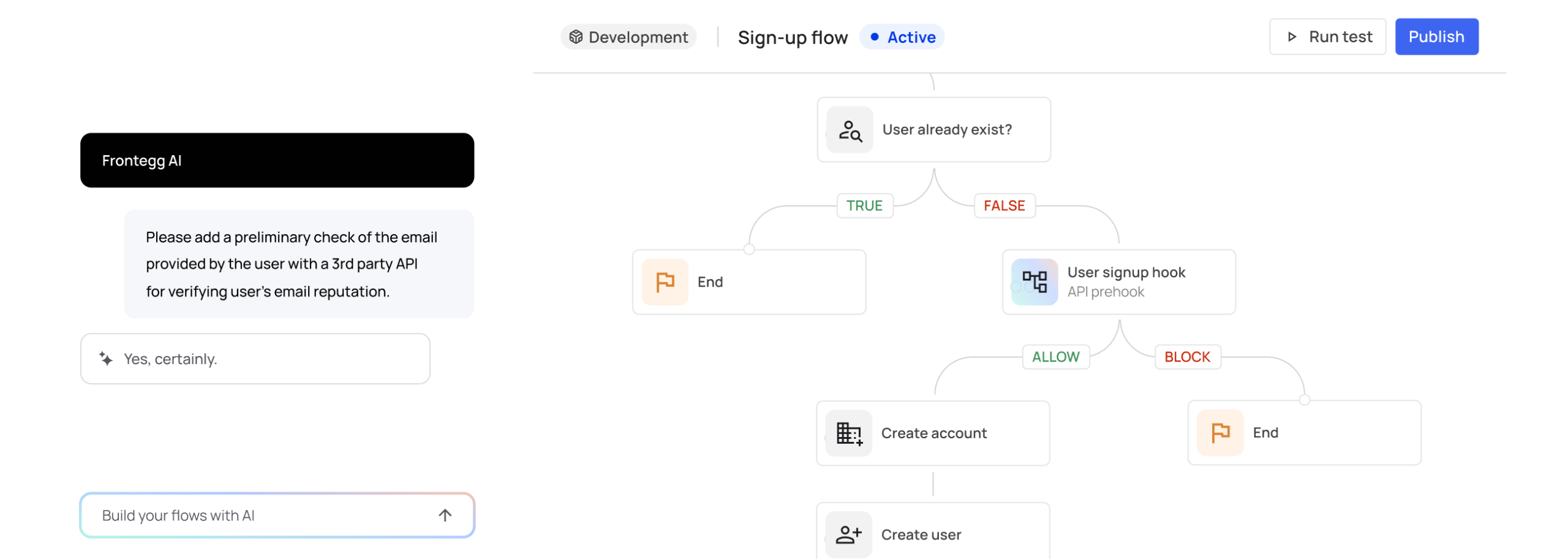
Frontegg is built for B2B SaaS teams that want authentication, tenant management, and admin experiences bundled together. It emphasizes account management and enterprise-facing workflows rather than low-level auth primitives.
Strengths
What to keep in mind
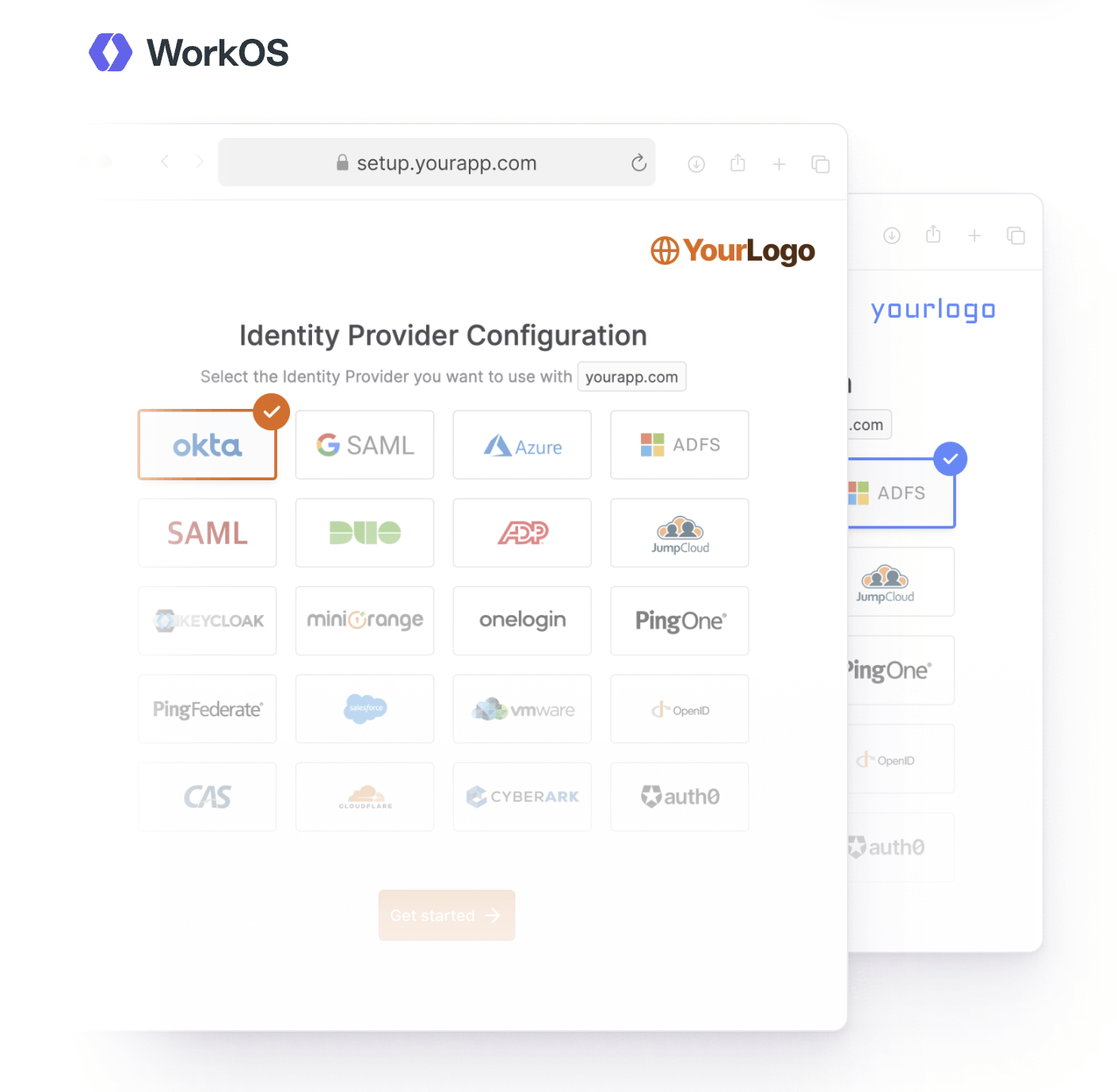
WorkOS is designed as an enterprise-readiness layer for SaaS products. It focuses on helping teams support enterprise identity requirements such as SSO and directory integrations - without building those capabilities from scratch. WorkOS is often adopted alongside an existing authentication system rather than replacing it entirely.
Strengths
What to keep in mind
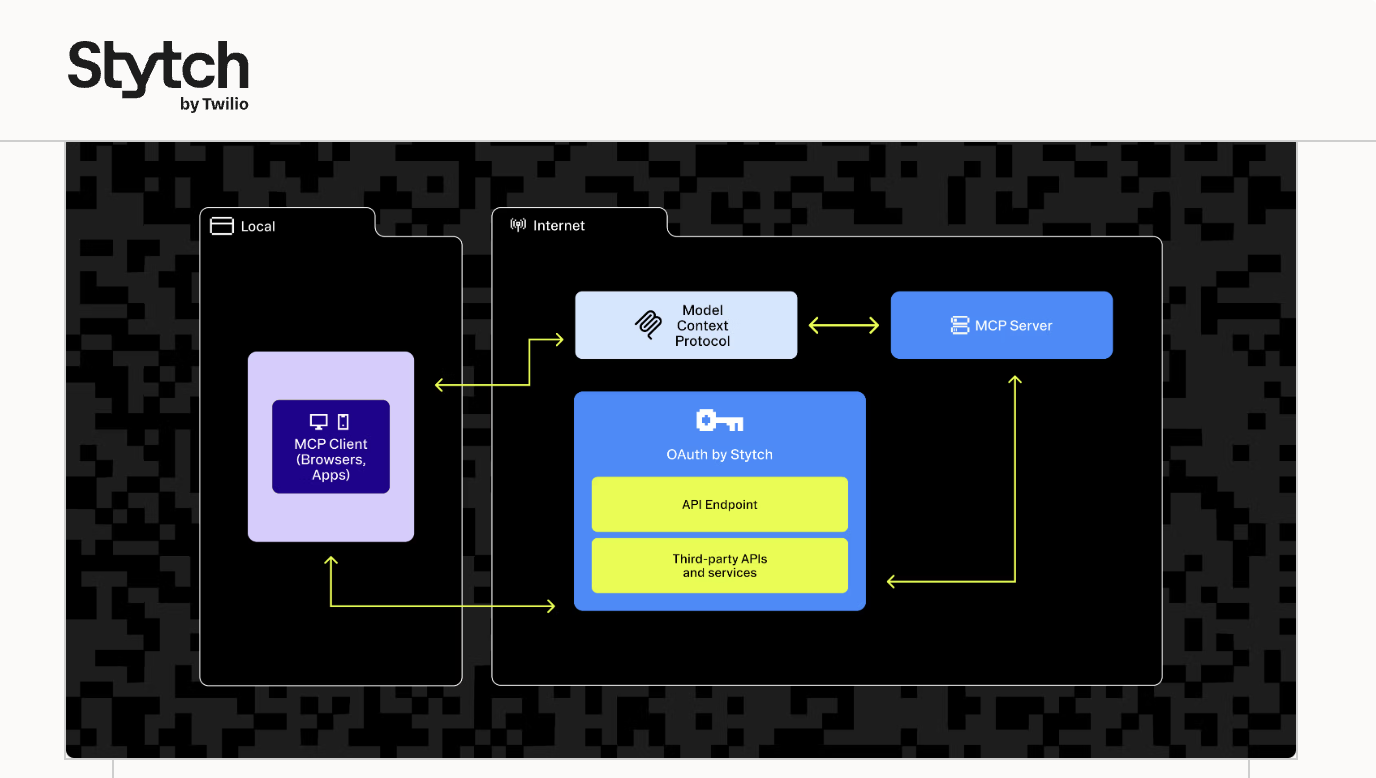
Stytch offers B2B authentication capabilities with enterprise support. Its roadmap has evolved following its acquisition by Twilio.
Strengths
What to keep in mind

Descope approaches authentication as a set of configurable workflows rather than fixed flows. Its core strength lies in abstracting authentication logic out of application code, allowing teams to iterate on login and access flows without deep rewrites.
Strengths
What to keep in mind
AI-first authentication systems start from a different question:
Who (or what) is acting, and on whose behalf?
They’re designed for agents, connectors, and delegated access - not just users.
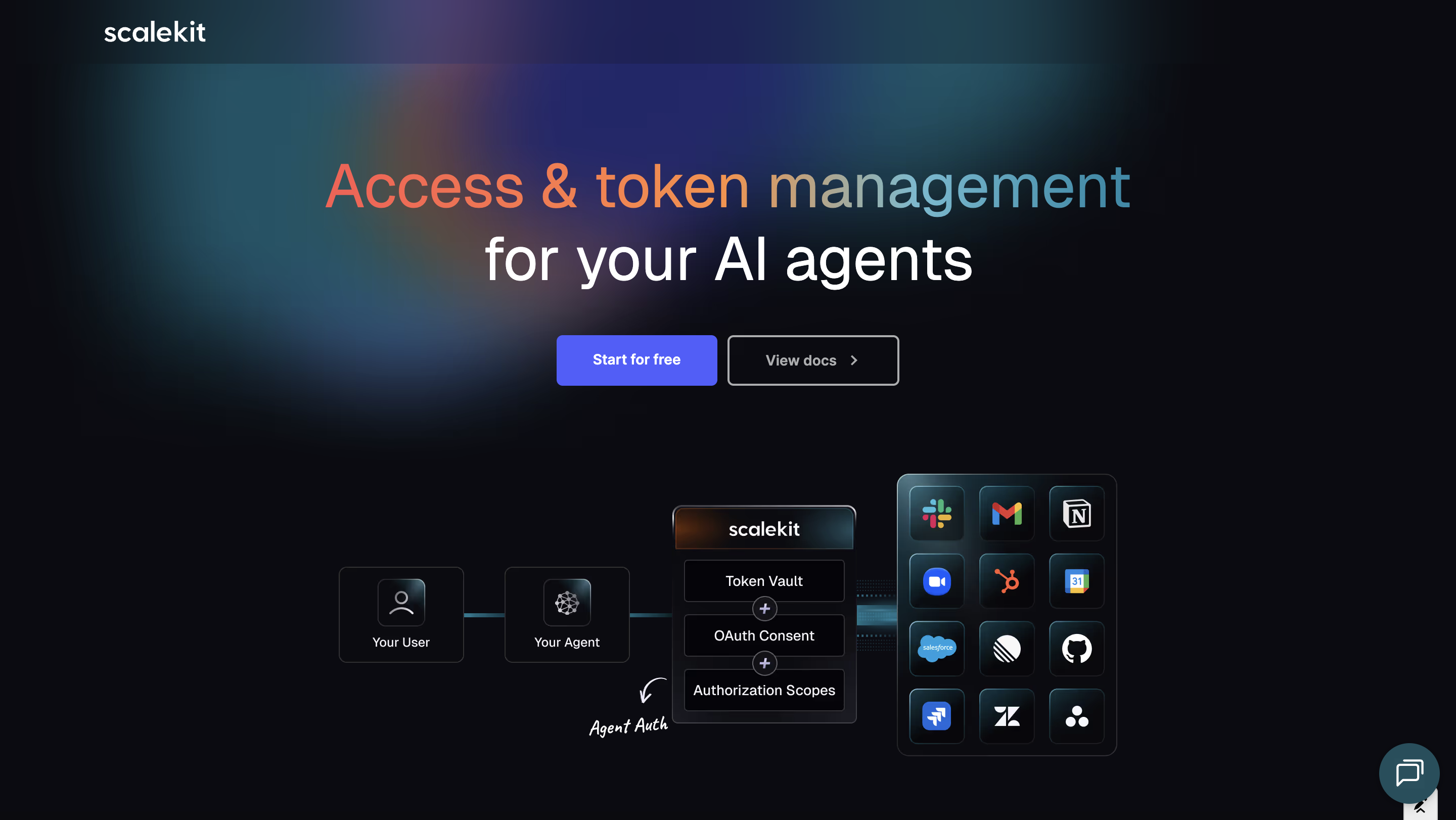
Scalekit extends its org-first model to treat agents as first-class actors, without creating a parallel identity system. Humans and agents share the same foundational primitives, which is critical as AI systems operate inside customer environments.
Shared foundations for humans and agents
Agents inherit org context, access boundaries, and policy models rather than being modeled as special-case users or standalone services.
Authentication for incoming agents (MCP Auth)
Scalekit supports authentication for incoming agents accessing your B2B product, including remote MCP servers, with org context preserved end-to-end.
Recommended: Enterprise MCP: How Identity, SSO, and Scoped Auth Actually Work
Delegated access for agents using external tools
Agents can be granted scoped, user-backed access to third-party systems, enabling safe “act on behalf of” workflows.
Centralized OAuth consent and token vault
OAuth tokens and consents are managed centrally, simplifying rotation, revocation, and policy enforcement.
Auditability for agent activity
Every agent action can be traced back to:
This creates clear authorization lineage for enterprise trust and compliance.
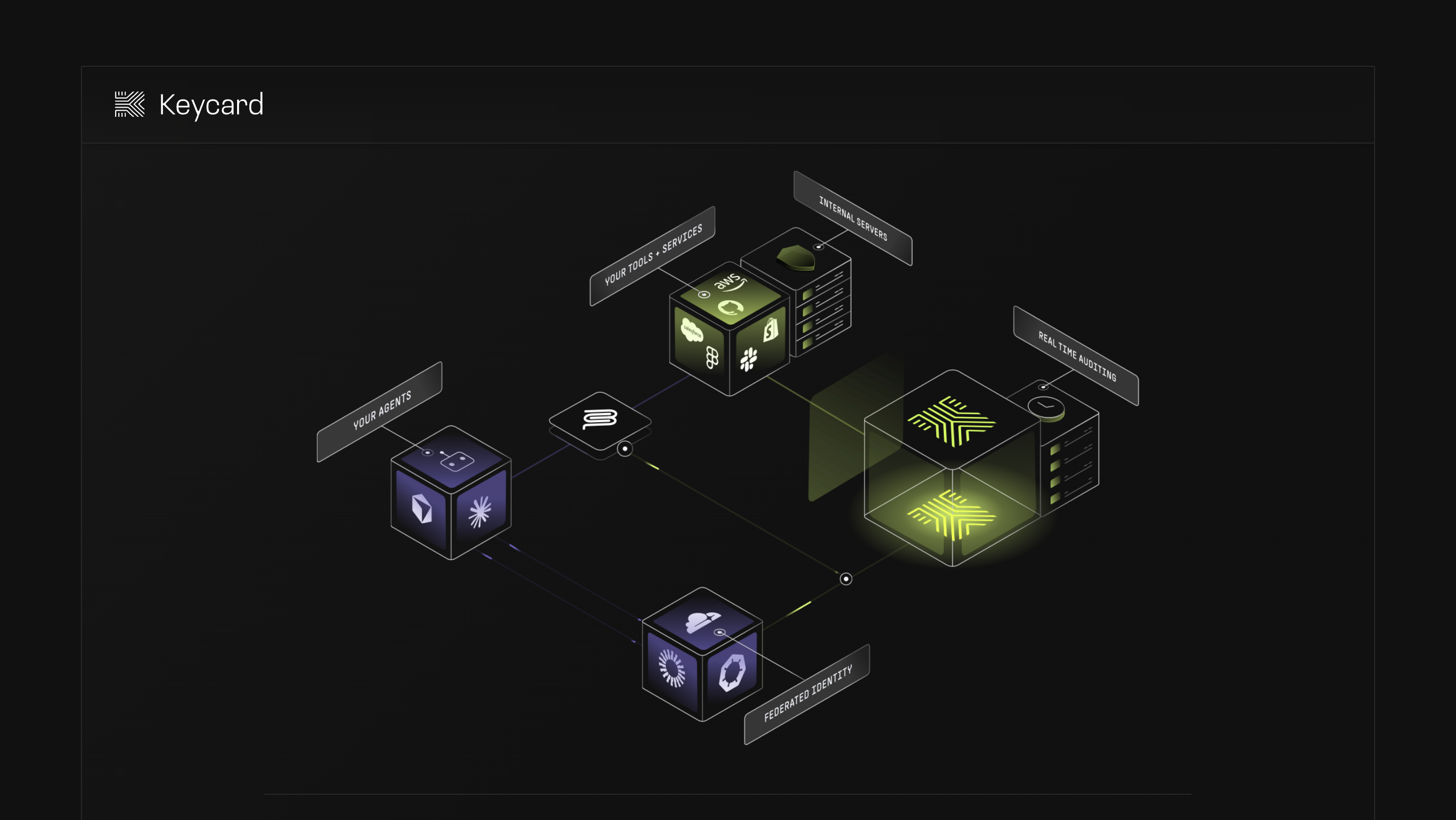
Keycard.sh is an emerging authentication system focused specifically on AI agents and connectors.
Where it shows promise
What to keep in mind
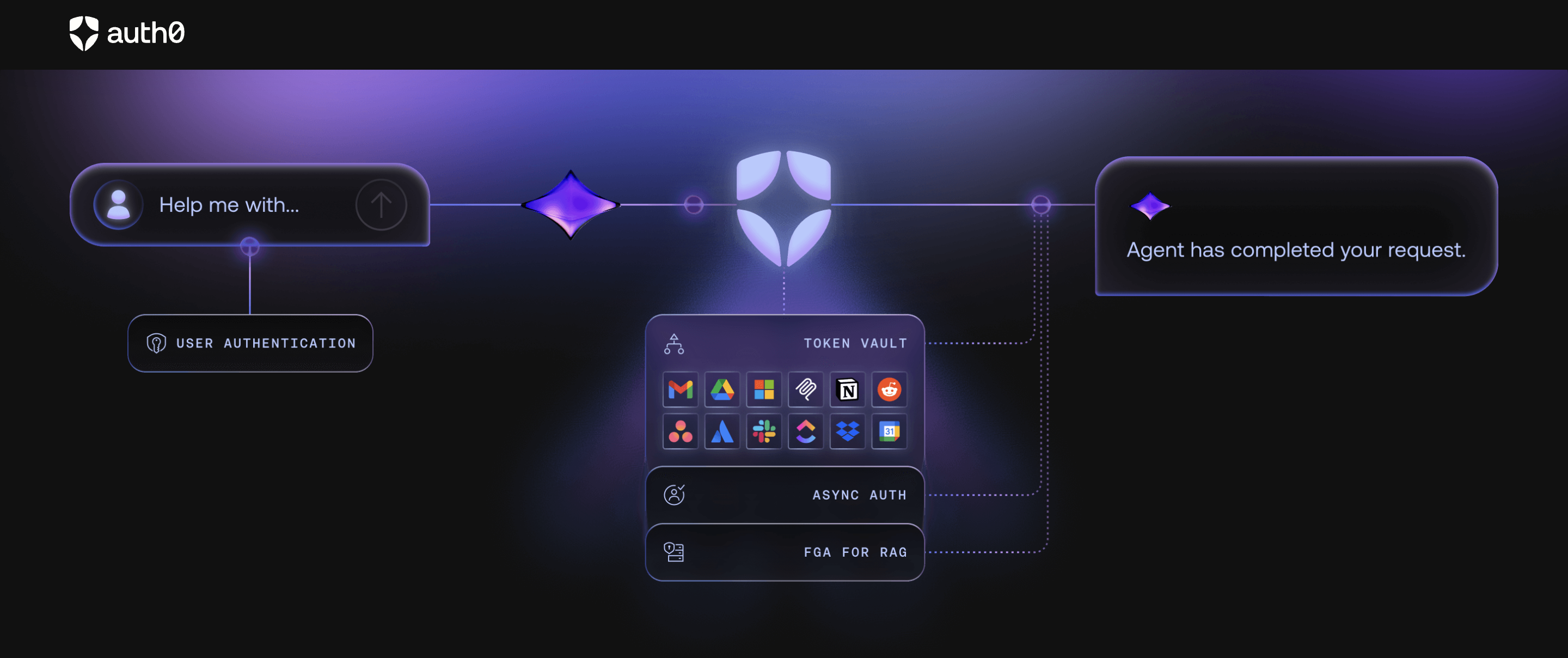
Auth0’s agent initiatives support standalone agents and RAG-based systems.
Strengths
What to keep in mind
Recommended: Auth0 alternatives for B2B SaaS Auth
These platforms are often the first stop after Cognito. They offer better DX and flexibility, but they don’t fundamentally change the auth model.
At their core:
They work best when:
Auth0 is a general-purpose authentication platform optimized for flexibility and extensibility across a wide range of application types. It provides mature SDKs, a large integration ecosystem, and configurable authentication flows, making it a common choice for teams that want control over how identity is wired into their product. While it offers B2B features like Organizations and enterprise SSO, these sit on top of a foundation that is fundamentally user-centric.
Where it improves on Cognito
What to keep in mind for B2B + AI
Auth0 is often chosen when teams want control — but it doesn’t remove the need to design B2B identity semantics yourself.
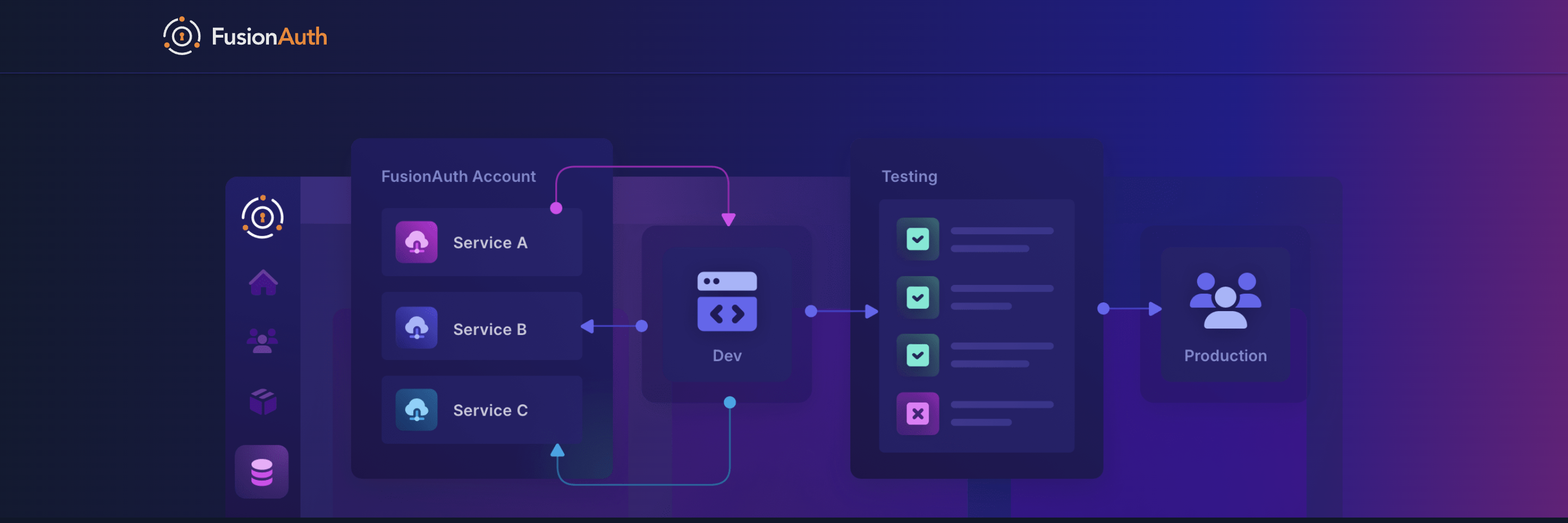
FusionAuth emphasizes flexibility and ownership, offering both managed and self-hosted deployment models. It provides strong primitives but avoids opinionated abstractions.
Where it improves on Cognito
What to keep in mind
FusionAuth appeals to teams willing to own identity complexity as part of their platform.
Clerk prioritizes developer experience and fast setup, especially for modern web stacks. It has gained significant popularity in the JavaScript ecosystem, with strong adoption among React, Next.js, and frontend-heavy teams due to its polished SDKs and out-of-the-box UI components. While Clerk has been expanding into B2B use cases with organization and role support, its foundation remains consumer-first, optimized for rapid user onboarding rather than deeply org-native identity models.
Where it improves on Cognito
What to keep in mind
These are frequently chosen because of their proximity to application data and rapid iteration loops.
Where they improve on Cognito
What to keep in mind
Teams don’t outgrow Cognito because of missing features.
They outgrow it because their product outgrows a user-centric identity model.
Choosing the right alternative is about selecting an authentication foundation that aligns with:
That decision compounds, for better or worse.
Recommended: Launch enterprise SSO, SCIM without dev overhead
AWS Cognito can work as an initial identity layer for B2B SaaS products, but it rarely holds up as a long-term foundation once enterprise requirements become core to the product. Cognito is fundamentally user-centric, meaning organizations, tenants, and account-level semantics must be inferred or reconstructed through custom tables, token claims, and application logic. As B2B complexity grows - SSO per customer, role hierarchies, environment isolation, auditability, and delegated access - the amount of glue code required expands non-linearly. This creates architectural coupling between identity and business logic, increases blast radius for access-related changes, and turns authentication into a platform responsibility rather than an invisible layer. Many teams eventually realize that Cognito is not failing at authentication; it is simply not designed to operate as an org-native identity control plane for multi-tenant SaaS.
Multi-tenancy is difficult in Cognito because tenants are not a first-class primitive in the system. Cognito provides users, groups, and user pools, but it does not natively model organizations with explicit boundaries, lifecycle management, or scoped authorization. As a result, teams encode tenant context into JWT claims, maintain user-to-org mappings in application databases, and rely on conventions rather than enforced constraints to separate access. This approach works until it doesn’t, especially when users belong to multiple organizations, when services consume tokens independently, or when authorization decisions need to be consistent across microservices. The burden of correctness shifts entirely to application code, increasing the risk of subtle access bugs that are difficult to audit or reason about at scale.
Enterprise SSO is often the inflection point where Cognito’s limitations become visible, not because SSO itself is hard, but because it exposes missing organizational semantics. In Cognito, SSO configuration is tightly coupled to user pools and authentication flows, which forces teams to implement per-customer logic for IdP configuration, role mapping, and environment-specific behavior. Over time, this results in fragmented SSO paths, brittle onboarding processes, and manual intervention for enterprise customers. More importantly, SSO turns identity into a product surface - customers expect self-serve setup, predictable role enforcement, and clean separation between organizations. Cognito can support SSO technically, but it does not provide the structural abstractions needed to operate SSO as a scalable, productized B2B capability.
Cognito supports non-human access through mechanisms like client credentials and service tokens, but it does not provide a coherent model for machine identities operating within customer organizations. Engineering teams must decide how machines relate to users, how they inherit or restrict permissions, and how their actions are audited across tenants. This becomes especially problematic as background jobs, integrations, and internal services perform actions with real side effects inside customer environments. Without org-scoped machine identity and clear delegation semantics, authorization logic becomes fragmented and difficult to secure. Cognito’s primitives are flexible, but they leave critical questions: scope, lineage, revocation, and auditability - entirely to application design.
Teams rarely replace Cognito because of a single missing feature; they replace it when identity complexity begins to compete with core product development. The tipping point usually occurs when platform engineers spend disproportionate time maintaining auth-related logic, product teams hesitate to ship access changes due to risk, and enterprise customers drive requirements like SSO, SCIM, fine-grained roles, and auditability. At that stage, Cognito is no longer just an authentication service; it has become an implicit identity framework embedded across the codebase. Replacing it is not about finding better login APIs, but about adopting an identity model that aligns with how B2B SaaS products actually operate: org-first, policy-driven, and increasingly compatible with automation and AI-driven workflows.