.png)
.png)
.png)
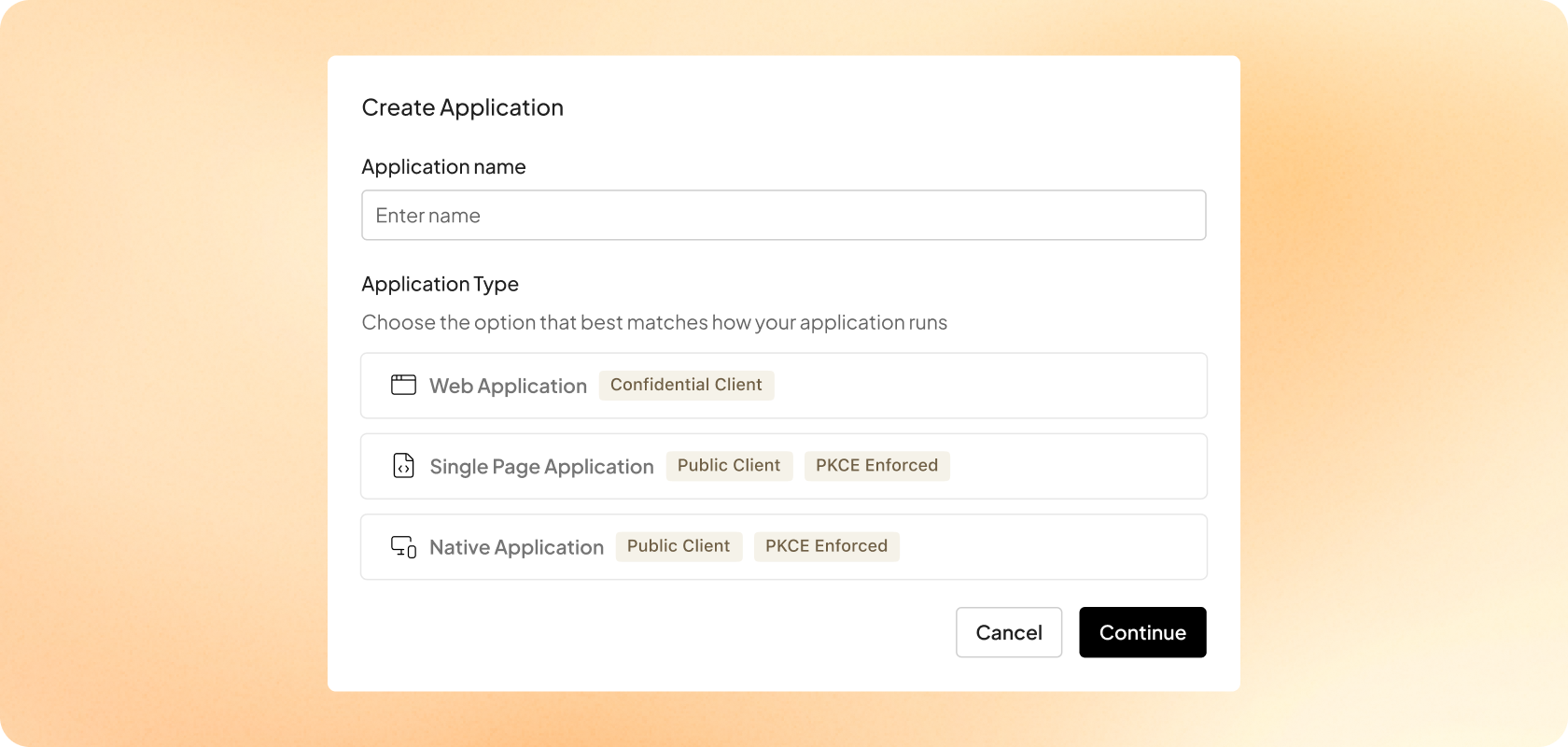
Modern B2B products are not a single surface. You ship a core app, an admin portal, MCP servers, internal tools, maybe a mobile client. Each needs authentication. Each needs different scopes. All of them must feel seamless to the user.
Multi-Application Support is now live in Scalekit.
You can define multiple applications inside a single Scalekit environment. Each app gets its own OAuth client, redirect URIs, and scopes, while your users can sign in once and maintain sessions across all of them.
What this enables
Within one environment, you can:
- Create separate OAuth clients per application
- Define app-specific scopes and permissions
- Isolate redirect URIs and configuration
- Maintain concurrent sessions across apps
This keeps boundaries clean. Your admin portal does not inherit MCP scopes. Your mobile app does not share configuration with your internal dashboard. Yet the user experience remains unified.
Why this matters
As your product grows, auth often fragments. Teams reuse one OAuth client across everything and accumulate scope sprawl. Or they duplicate environments and increase operational overhead. Or they build custom session stitching between apps.
Multi-Application Support removes that complexity.
You get isolation without duplication.
You get seamless sessions without custom glue code.
We dog-food this ourselves
Scalekit runs on this model.
- app.scalekit.com is one application.
- docs.scalekit.com is another.
They live in the same environment but use separate OAuth clients and scopes. Users move between them smoothly. Configuration stays isolated. Edge cases get caught internally before they reach you.
If you are building multi-surface SaaS or AI products, this architecture becomes foundational.
One identity layer.
Multiple applications.
Clean scope boundaries.