

Clerk made authentication modern and approachable.
For many product teams, it simplified login, sessions, and user management into something clean and developer-friendly. Drop in components, wire up a few API calls, and you have a polished auth experience.
For a long time, that was enough.
But the shape of B2B software has changed significantly.
In 2026, B2B AI applications increasingly include:
When that happens, authentication stops being a UI layer.
It becomes infrastructure.
Teams rarely look for Clerk alternatives because of one missing feature. They start looking when their identity model no longer fits their product model.
When evaluating identity for B2B AI products, the decision is rarely about SDK ergonomics.
It is about architecture.
There are four paradigms that matter.
In B2B SaaS, the organization is the security boundary.
An org-first model means:
In user-first systems, organizations exist, but enforcement often extends into application code.
The question is not which model is “correct.”
The question is where complexity accumulates as enterprise customers scale.
AI introduces two identity directions.
Inbound agent auth
AI hosts authenticate users into your MCP server.
Outbound agent auth
Your agents call third-party APIs or internal systems on behalf of users.
Supporting OAuth 2.1 is baseline.
The deeper questions are:
If agent auth is layered on top of a user-centric model, enforcement often lives in your application. If it is first-class, it lives in the identity layer.
Enterprise identity is not just SSO.
It includes:
When onboarding requires engineering involvement for each tenant, identity becomes a sales bottleneck.
Beyond login and OAuth, identity increasingly requires:
Some platforms provide identity primitives.
Others function more like an identity control plane.
As enterprise and AI complexity increases, workflow cohesion matters more than feature checklists.
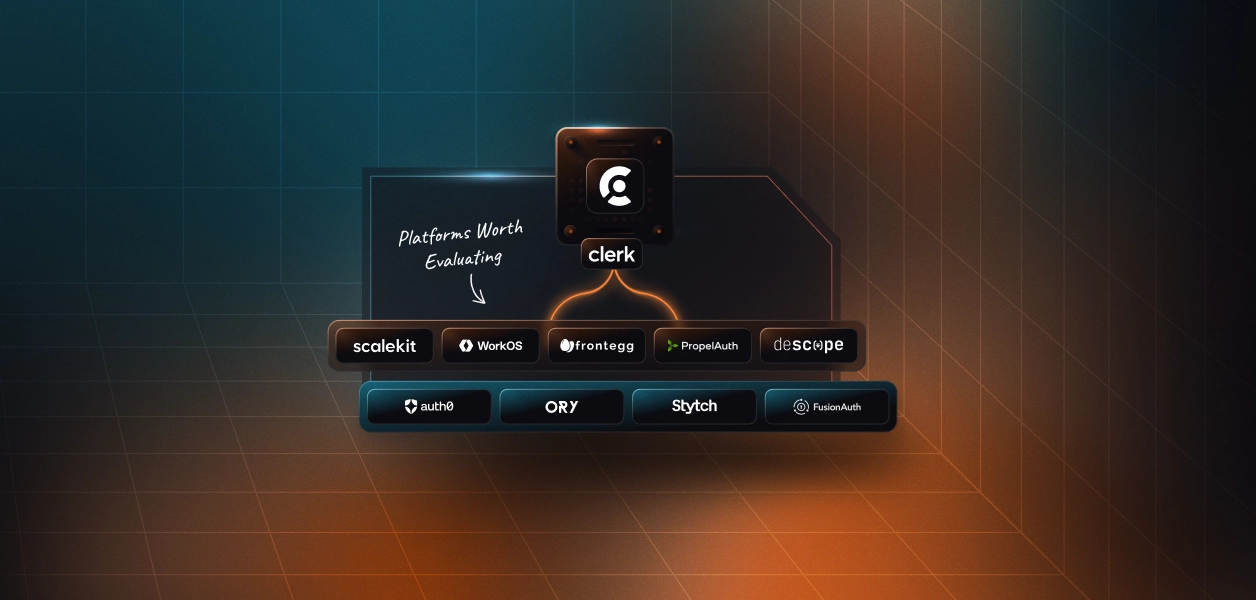
Rather than comparing feature lists, it is more useful to understand how different platforms model identity — especially when multi-tenancy, enterprise onboarding, and agent workflows become central.
The architectural assumptions underneath each system tend to matter more than individual capabilities.
WorkOS focuses on enterprise SSO and directory integrations. It is often used to add enterprise features to an existing authentication system rather than replace it.
Architectural consideration:
WorkOS is composable. Tenant enforcement, authorization modeling, and delegation semantics typically remain partially implemented in application code alongside the platform.
In practice: Best suited when enterprise SSO is the primary requirement, rather than full tenant-scoped identity control.

Frontegg combines authentication, tenant management, and admin experiences into a unified system.
It reduces the need to assemble multiple tools for enterprise onboarding.
Architectural consideration:
Because the system is bundled rather than modular, deeper customization can depend on how closely its abstractions match your product’s identity model. Complex authorization rules may still require careful architectural handling.
In practice: Useful for accelerating enterprise readiness, with enforcement boundaries still requiring clear ownership.

Descope models authentication as configurable workflows, including a visual flow builder for login and access paths.
This can simplify standard authentication configuration.
Architectural consideration:
For more specialized multi-tenant or delegation-heavy environments, visual workflows may require additional engineering to align with strict tenant boundaries and policy requirements.
In practice: Strong for workflow-driven auth, less opinionated about org-first enforcement.
Recommended Insight: A better Descope alternative for org-first enforcement

Auth0 is a general-purpose identity platform with broad extensibility and ecosystem reach.
It supports enterprise SSO, OAuth, and a wide range of integration patterns.
Architectural consideration:
Its flexibility introduces operational responsibility. Multi-tenant authorization models, delegation semantics, and enforcement consistency often remain application-owned and may require ongoing maintenance.
In practice: Mature and flexible, but tenant semantics are not foundational.
Recommended Reading: Auth0 Alternatives for B2B Startups and Enterprises

Scalekit is built around an organization-first identity model.
Organizations are the primary boundary. Users, machine identities, SSO, SCIM lifecycle management, and delegated access all resolve against that boundary before requests reach application services. Tenant context is structural, not inferred.
MCP authentication and agent delegation operate within the same org-scoped system, with interceptors enforcing policy during auth flows and audit trails remaining tenant-aware across humans and agents.
Architectural consideration:
For products with minimal multi-tenancy or limited enterprise requirements, the depth of org-native modeling may exceed immediate needs. Scalekit is designed for B2B platforms where tenant enforcement, delegation, and lifecycle workflows are central.
In practice: Designed for B2B AI applications where identity must unify users, machines, and agents under one tenant boundary.

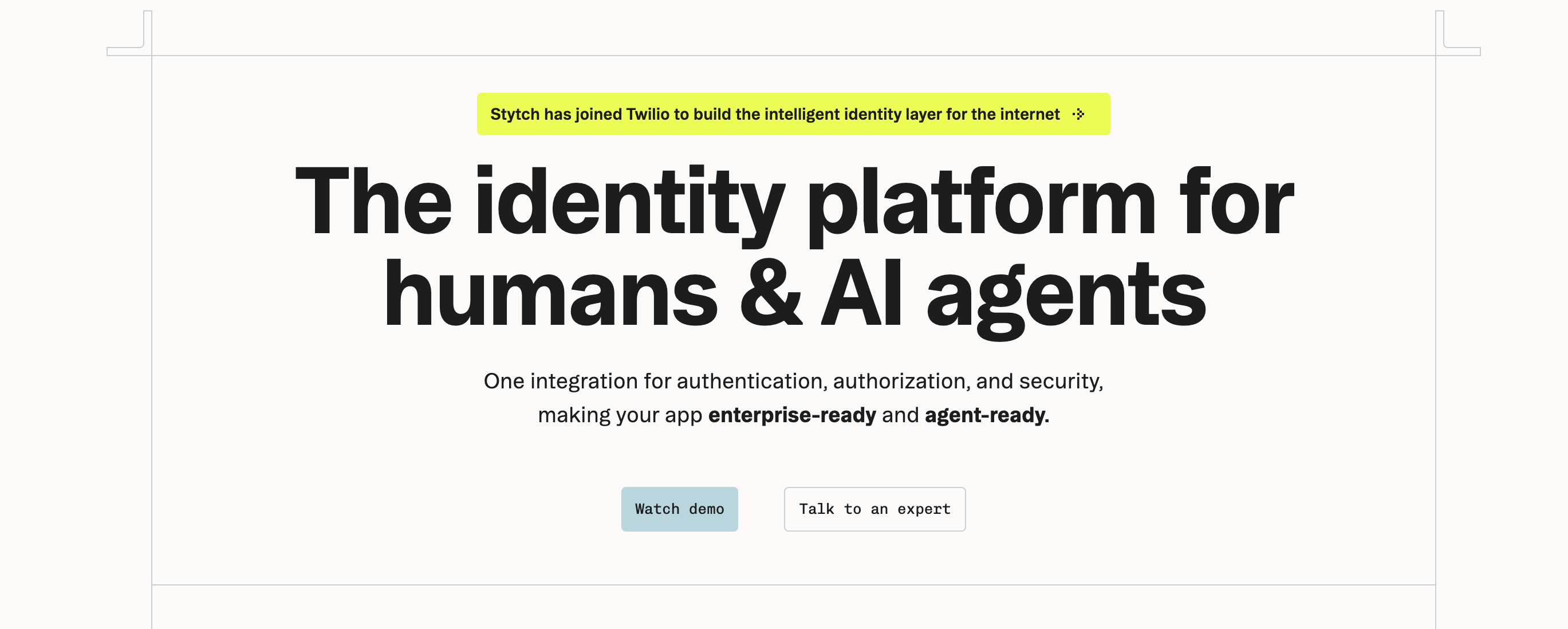
Stytch provides managed B2B authentication flows and enterprise SSO support built on OAuth foundations.
It supports organization-aware features and reduces some infrastructure overhead.
In 2025, Stytch was acquired by Twilio. The product continues to operate, but long-term roadmap alignment may factor into evaluation.
Architectural consideration:
Tenant-scoped enforcement and lifecycle cohesion depend on how identity is integrated into the broader product architecture.
In practice: Simplifies B2B auth flows, with deeper enforcement remaining application-defined.
Recommended Reading: The Stytch alternative built for B2B
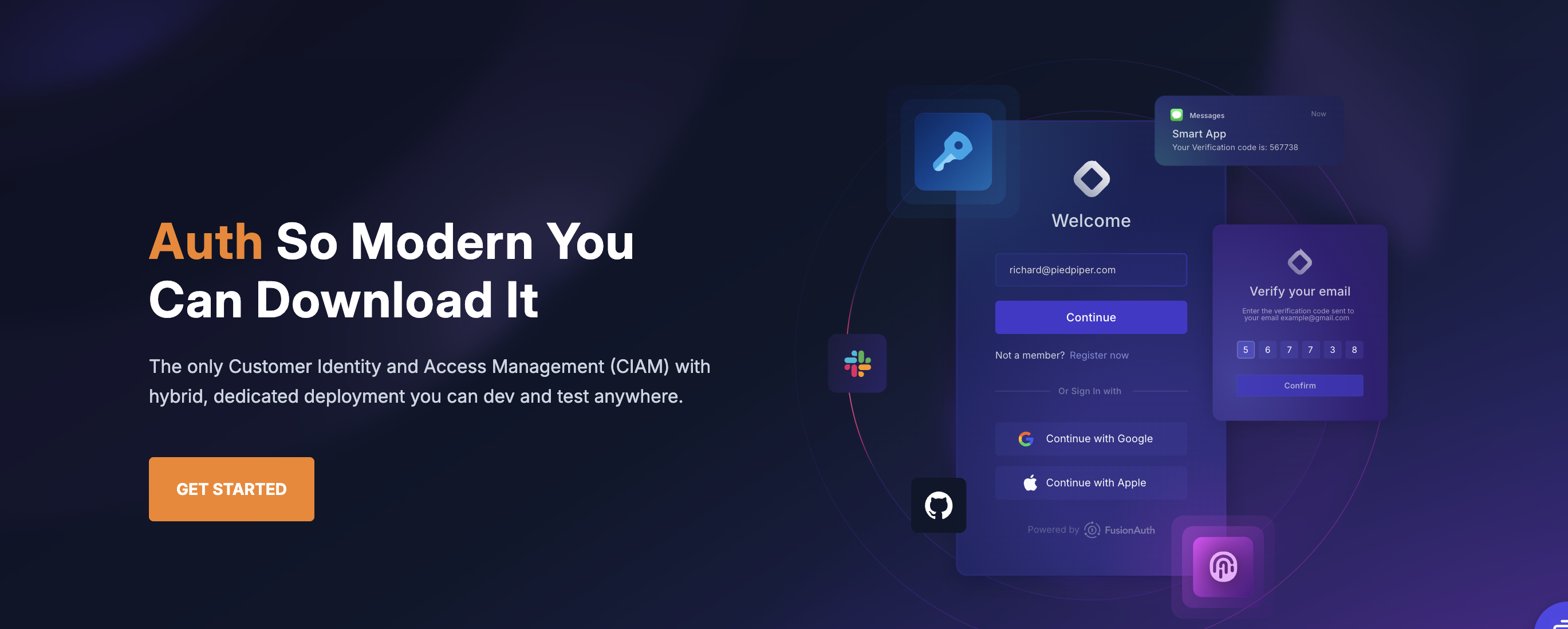
FusionAuth emphasizes deployment flexibility, including self-hosted models, and provides identity primitives without strong opinionation.
Architectural consideration:
Organizations, delegation semantics, and enterprise lifecycle workflows are largely application-defined. This provides flexibility but increases architectural ownership.
In practice: Suitable for teams willing to design and maintain their own tenant model.
Ory provides open-source identity and OAuth components with a high degree of customization.
Architectural consideration:
Enterprise onboarding, tenant enforcement, and delegation modeling are fully application-owned. Operational complexity can increase as systems scale.
In practice: High control, high ownership. Requires dev ownership to maintain.

Okta’s customer identity platform offers enterprise federation, policy controls, and broad integration capabilities.
Architectural consideration:
The platform is comprehensive but can be operationally heavy. Aligning multi-tenant SaaS semantics and AI delegation workflows with the system typically requires deliberate integration design.
In practice: Enterprise-grade coverage, with integration complexity and the resources to maintain.

Not inherently. Clerk works well when users are primary identities and organizations are lightweight.
It becomes strained when enterprise lifecycle management, delegation, and strict tenant enforcement become central to your product.
Most serious vendors now support OAuth-based MCP flows.
The difference lies in how tenant routing, delegation semantics, and enforcement are modeled.
Enterprise customers think in terms of tenants, not users.
Audit reviews, compliance requirements, and policy discussions are framed at the organization boundary.
Evaluating based on feature checklists rather than identity architecture.
SSO, SCIM, and OAuth can exist across platforms.
The more important question is whether the identity model aligns with how your product is evolving.